The Hidden Danger of Magnesite Flooring: Identification, Removal Costs, and Concrete Cancer Risks
The Hidden Danger of Magnesite Flooring: Identification, Removal Costs, and Concrete Cancer Risks explains how to identify magnesite, why testing matters and when concrete repair specialists may be needed.
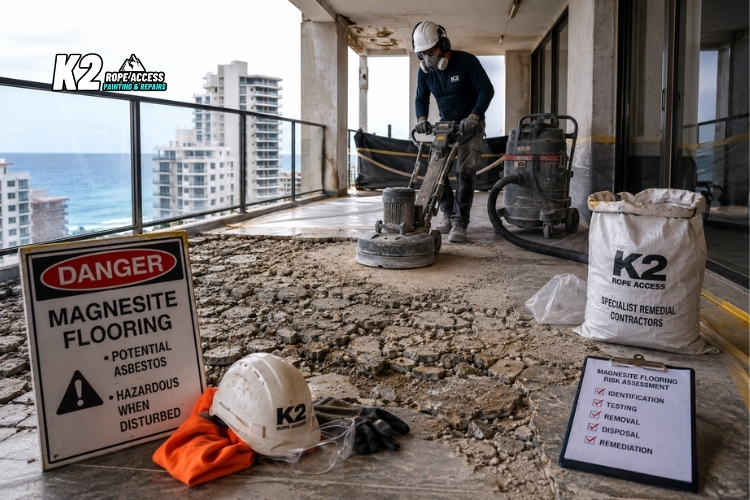
The Hidden Danger of Magnesite Flooring: Identification, Removal Costs, and Concrete Cancer Risks is a serious issue for many older strata buildings, especially when moisture has reached the concrete slab beneath.
Magnesite flooring was widely used in apartments as a lightweight levelling compound and acoustic underlay. For years, it can sit unnoticed under carpet, vinyl, tiles or timber flooring. The problem begins when magnesite becomes wet. Because it contains magnesium chloride, moisture can allow chlorides to migrate into the concrete slab and accelerate reinforcement corrosion. That is where the magnesite concrete cancer risk becomes costly.
For strata committees, building managers and owners, the key is early identification, proper testing and a clear remediation plan.
What is magnesite flooring and why can it be dangerous?
Magnesite is a cement-like floor topping commonly found in older apartment buildings. It was often installed over concrete slabs to level floors and improve acoustic performance. On its own, dry and stable magnesite may not always be an immediate problem. The risk increases when it absorbs water from leaks, wet areas, windows, balconies, laundries, bathrooms or failed waterproofing.
Once moisture is present, chlorides can move from the magnesite into the concrete. Over time, this can cause concrete reinforcement rust, concrete spalling from magnesite and eventually concrete cancer from magnesite.
That is why magnesite floor remediation should be treated as a building durability issue, not just a flooring upgrade.
How to identify magnesite flooring
If you are wondering how to identify magnesite flooring, start by checking under existing floor coverings. Magnesite is often pink, reddish-brown, orange, grey or beige. It may look like a hard screed layer between the finished floor and the concrete slab.
Common signs of magnesite flooring include:
- a brittle or crumbly floor topping
- uneven or raised flooring
- musty odours after leaks
- soft or drummy sections underfoot
- cracking near wet areas
- staining or corrosion signs in the slab below
- historic apartment flooring installed before modern levelling systems
Visual inspection can help, but it is not enough. Magnesite flooring testing may be needed to confirm the material, check moisture levels, assess chloride contamination and identify whether asbestos is present.
Magnesite flooring asbestos risk
One of the most important dangers of magnesite flooring is the potential asbestos risk. Not every magnesite floor contains asbestos, but some older flooring systems or associated layers may contain asbestos-containing materials.
This means removing magnesite screed should not be treated as a simple DIY demolition task. Before disturbing the floor, owners should arrange proper testing and follow the building’s asbestos management requirements where applicable. Even when asbestos is not present, removal can create dust and silica exposure risks if handled poorly.
For strata buildings, approvals and documentation matter. The owners corporation may also need to confirm whether the magnesite is considered common property and who is responsible for removal and reinstatement under the relevant by-laws.
Magnesite flooring removal cost: what affects the price?
Magnesite flooring removal cost varies depending on the size of the apartment or affected area, access, floor coverings, asbestos testing, waste disposal, grinding, levelling and slab condition.
As a broad planning guide, removal may be quoted per square metre for straightforward jobs, but the total cost can rise quickly when concrete cancer, chloride contamination, waterproofing failure or structural slab repairs are found underneath.
Factors that affect magnesite floor replacement cost include:
- total floor area
- thickness of the magnesite layer
- whether carpet, tiles or timber flooring must be removed first
- lift or stair access
- asbestos testing and hazardous waste requirements
- concrete grinding after removal
- floor levelling after removal
- waterproofing reinstatement
- concrete spalling or corrosion repairs
- engineering inspection or reporting
A low removal quote may not include the full cost of making the slab safe, level and ready for new flooring.
Strata magnesite flooring repair and who pays
Strata magnesite flooring repair can become complicated because the floor topping, slab and concrete structure may be treated differently depending on the building’s by-laws and local strata advice.
In many strata schemes, concrete slabs and structural elements are common property. However, owners may still be responsible for floor finishes, renovation works, levelling compounds or reinstatement above the slab. Because rules vary, owners should not assume who pays until the owners corporation, strata manager and relevant by-laws have been reviewed.
For strata committees, the safest path is to obtain a proper condition assessment, identify the extent of affected units and separate flooring removal costs from concrete remediation costs.
Concrete cancer from magnesite: what happens after removal?
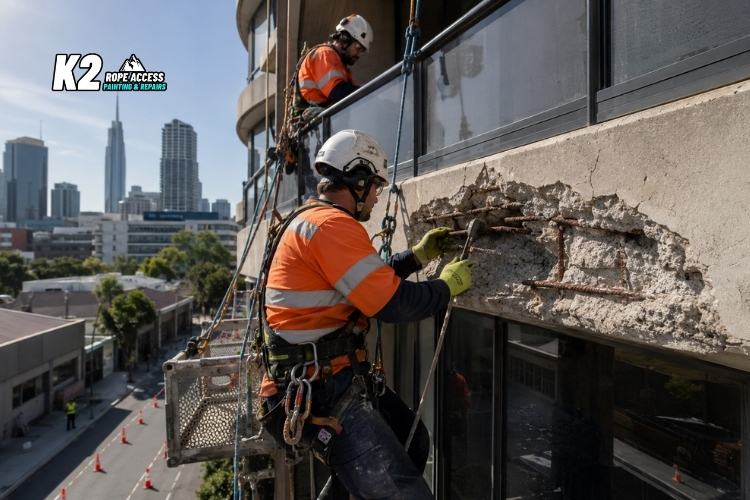
The biggest shock often comes after the magnesite is removed. The concrete slab may look rust-stained, cracked, hollow or spalled. In severe cases, reinforcement may be exposed or corroded.
If concrete cancer is present, the repair may involve breaking out defective concrete, cleaning and treating steel reinforcement, reinstating the slab with suitable repair mortar and applying protective systems. This is no longer just magnesite floor levelling compound removal. It becomes structural concrete repair.
Where magnesite has contributed to spalling or corrosion, professional concrete spalling repair services can help assess and repair damaged concrete before the issue spreads further.
Why high-rise and apartment buildings need careful planning
Apartment concrete repair projects can be disruptive if not planned properly. Access, noise, dust controls, resident communication, waste handling and sequencing all matter. If damage is widespread across multiple units or common areas, the building may need a staged remedial program.
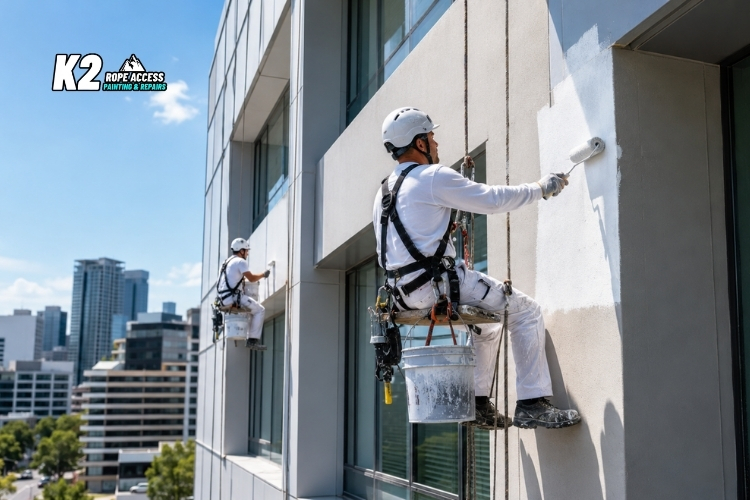
For strata and high-access properties, specialist high-rise maintenance planning can help connect floor-related concrete issues with broader building maintenance risks such as façade spalling, water ingress and external concrete degradation.
When to call a specialist
Call a specialist if magnesite has been exposed to water, the floor is uneven or crumbling, rust stains appear, concrete sounds hollow, or removal reveals cracking and corrosion. These are signs that the problem may extend beyond flooring.
If your building has magnesite flooring and possible concrete cancer, contact K2RA for concrete repair advice before approving a patch-only solution.
Protect the slab before the cost grows
The dangers of magnesite flooring are often hidden until renovation, leaks or floor replacement reveal what is happening below. Early testing, clear strata approvals and proper concrete assessment can reduce risk and help owners plan costs more realistically.
Magnesite removal contractors may handle the flooring layer, but concrete cancer and slab deterioration need specialist repair planning. The right approach protects the building, reduces safety concerns and helps prevent avoidable long-term damage.

Move from research to the right remedial scope
Related K2RA insights

Need this assessed on an actual building?
Send the building location, photos, defect information and available scope documents. K2RA can review the project context and help determine the next practical step.