Strata Insurance & Concrete Spalling: Why “Gradual Deterioration” Claims Get Denied
Strata Insurance & Concrete Spalling: Why “Gradual Deterioration” Claims Get Denied explains why concrete cancer and water damage claims are often rejected, and how strata teams can reduce risk.
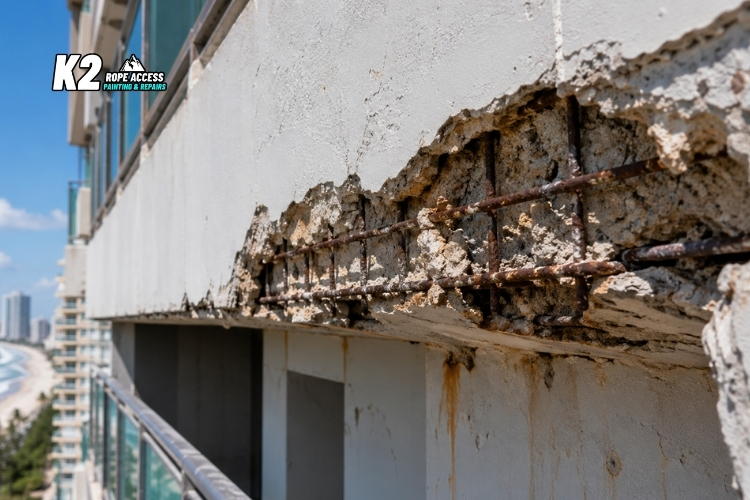
Strata Insurance & Concrete Spalling: Why “Gradual Deterioration” Claims Get Denied is a question many strata committees only ask after rust stains, cracking or loose concrete have already become expensive.
Concrete spalling can look sudden when a section breaks away, but insurers often look deeper. If the damage is linked to long-term water ingress, corrosion, wear and tear, failed coatings or poor maintenance, it may fall under a gradual deterioration insurance exclusion rather than an insured event. For owners corporations, that difference can decide whether repairs are funded by insurance or by the strata scheme.
This article is general information only. Always check the policy wording and speak with the insurer, broker or legal adviser before relying on a claim outcome.
Why concrete spalling insurance claims are often difficult
Strata insurance is usually designed to respond to sudden, accidental damage, not defects that develop slowly over time. Concrete cancer strata issues often begin when moisture reaches the steel reinforcement inside concrete. As the steel rusts, it expands, cracking and pushing away the concrete around it.
By the time concrete breaks away, the corrosion may have been developing for years. That is why a concrete spalling insurance claim can be challenged if the insurer believes the root cause is maintenance-related deterioration rather than a sudden event.
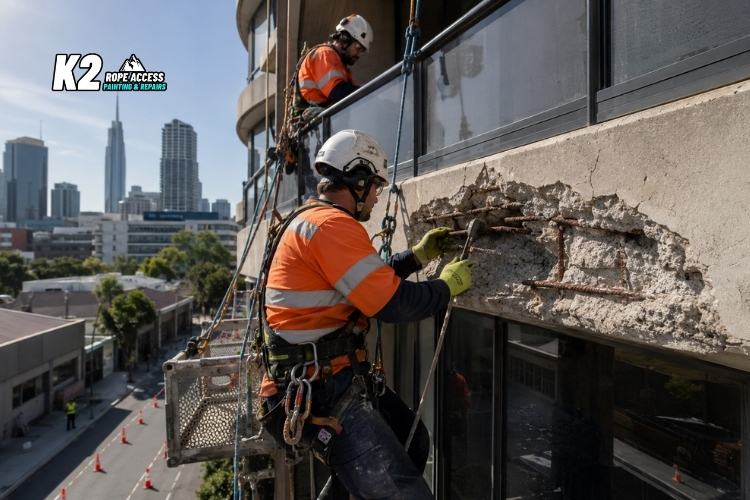
For buildings showing early signs of corrosion or cracking, professional concrete spalling repair services can help identify the likely repair scope before the issue spreads.
What “gradual deterioration” means in strata insurance
Gradual deterioration usually refers to damage that happens progressively, rather than from one sudden incident. In practical terms, it can include wear and tear insurance exclusions, ageing materials, ongoing water seepage, corrosion, failed waterproofing, long-term coating breakdown or deferred maintenance.
A claim may be denied if the insurer decides the damage was caused by ongoing exposure rather than an insurable event. This is common in property insurance gradual damage disputes because the visible damage may be recent, while the underlying cause is not.
For example, a loose section of concrete may fall after heavy rain. But if the engineer finds years of reinforcement corrosion caused by water ingress, the insurer may argue that the rain revealed the defect rather than caused it.
Does strata insurance cover concrete repair?
The answer depends on the policy, the cause and the evidence. Does strata insurance cover concrete repair after sudden impact, storm damage or another insured event? Sometimes, yes. Does it usually cover concrete cancer repair costs caused by long-term corrosion, water ingress or building defects? Often, no.
This is why documentation matters. A strata insurance claim denied on gradual deterioration grounds may come down to whether the owners corporation can show the damage resulted from a sudden event, or whether the insurer can show an exclusion applies.
For strata committees, the safest approach is to treat insurance as one part of the process, not the whole repair strategy.
Concrete spalling water damage and the maintenance problem
Concrete spalling water damage is often where claims become complicated. Water might enter through cracks, failed sealants, balcony membranes, façade joints, roof details or deteriorated coatings. Over time, that moisture can reach steel reinforcement and cause corrosion.
If the water damage came from a sudden burst pipe or storm event, insurance may be considered differently. If it came from years of failed waterproofing or unmaintained common property, it may be treated as maintenance.
That distinction is especially important for strata building maintenance responsibilities. Owners corporations generally have a duty to maintain common property, which can include façades, balcony slabs, structural elements and exterior building systems depending on the scheme.
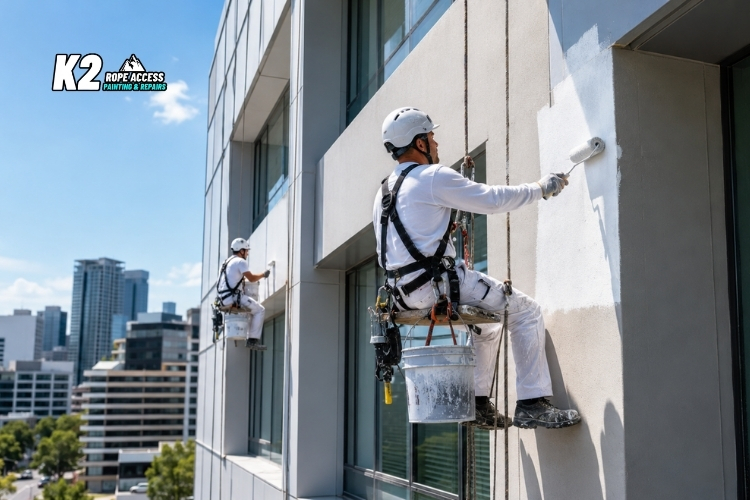
For high-access façades where inspection and maintenance are difficult, rope access high-rise maintenance planning can help strata teams identify defects before they become major capital works issues.
Strata council duty of care and concrete defects
A strata council or owners corporation should not ignore visible signs of concrete deterioration. Rust staining, cracking, spalling, hollow concrete, water ingress and falling fragments can create safety, compliance and financial risks.
The longer defects are left, the harder it becomes to argue that the issue was unexpected. Delayed action can also increase repair costs because corrosion may spread beyond the original defect.
Strata building defect claims should be handled with a clear paper trail. Keep inspection records, engineer reports, maintenance logs, photos, contractor recommendations and correspondence with insurers or brokers.
How to prevent concrete spalling strata disputes
The best way to prevent concrete spalling strata disputes is to act early. Regular façade inspections, sealant maintenance, waterproofing reviews, crack repairs and protective coatings can reduce the risk of moisture entering the concrete.
A practical prevention plan may include:
- annual visual inspections of façades and balconies
- prompt investigation of rust stains or cracks
- repair of failed sealants and expansion joints
- waterproofing checks around balconies and wet areas
- documentation of all maintenance actions
- planned concrete repairs before safety issues develop
Preventing concrete spalling strata problems is usually cheaper than waiting for loose concrete, emergency access and urgent remedial works.
What to do if a strata insurance claim is denied
If a claim is denied, review the insurer’s reasons carefully. Ask what evidence was used to determine gradual deterioration. Compare the decision with engineer reports, repair histories and the exact wording of the policy.
A broker, strata manager or legal adviser may help assess whether the decision should be challenged. However, even while that process happens, the building still needs to be made safe and the repair scope should be planned.
If the issue affects façades, balconies or exterior concrete, contact K2RA for a concrete spalling assessment to understand the likely remediation requirements.
Insurance is not a replacement for maintenance
Strata insurance can be valuable when genuine sudden damage occurs, but it should not be treated as a substitute for building maintenance. Concrete spalling is often the result of moisture, corrosion and time. Those issues need inspection, repair and prevention.
For strata buildings, the strongest position is proactive maintenance: find defects early, document actions clearly and repair causes before visible damage becomes a denied claim or major levy discussion.
Move from research to the right remedial scope
Related K2RA insights

Need this assessed on an actual building?
Send the building location, photos, defect information and available scope documents. K2RA can review the project context and help determine the next practical step.