Special Levies for Concrete Repairs: Tax Deductibility and Payment Rules for Investors
Special Levies for Concrete Repairs: Tax Deductibility and Payment Rules for Investors explains how strata levies, concrete cancer repairs and capital works deductions may affect property investors.
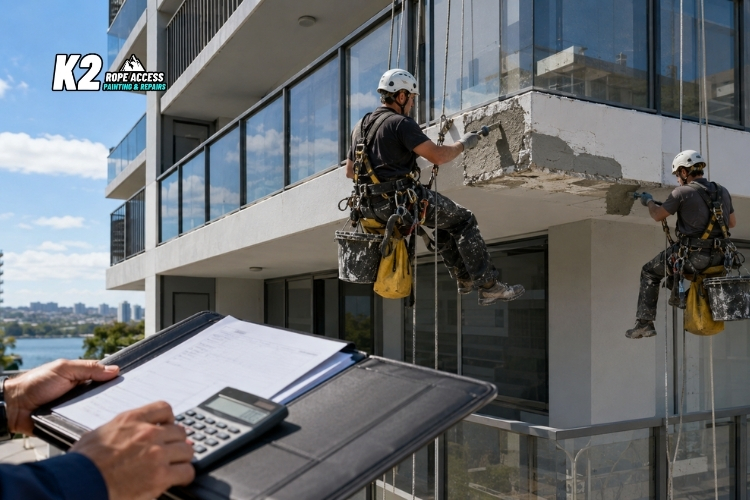
Special Levies for Concrete Repairs: Tax Deductibility and Payment Rules for Investors can become a major concern when an owners corporation or body corporate raises funds for concrete cancer repairs, façade remediation or urgent structural works.
For property investors, the first question is usually simple: “Can I claim this special levy as a tax deduction?” The answer is not always simple. It depends on why the levy was raised, what type of work is being funded, whether the property is income-producing, and whether the cost is treated as a repair, capital improvement or capital works deduction.
This article is general information only. Investors should always speak with a qualified accountant or tax adviser before claiming strata scheme tax deductions.
Why special levies for concrete repairs are different
A strata special levy is usually raised when normal funds are not enough to cover a specific cost. In older apartment buildings, this can happen when concrete cancer repairs, balcony remediation, waterproofing failure or façade deterioration need urgent attention.
Special levies investment property owners receive can be large, especially when works involve structural concrete repair, rope access, engineering reports, coatings and staged access to occupied buildings. Unlike regular strata fees, special levies often need closer tax treatment because they may relate to a specific major repair or capital project.
If your building is planning façade or concrete remediation, specialist façade remediation and painting advice can help clarify the repair scope before owners approve the levy.
Concrete repairs tax deduction: repair or capital improvement?
Concrete repairs tax deduction treatment usually depends on whether the work restores something that has deteriorated or improves the property beyond its original condition.
An immediate tax deduction repairs claim may be possible where the work is genuinely repairing damage that occurred while the property was used to produce rental income. For example, like-for-like repairs to damaged common property may be treated differently from major upgrades, replacements or improvements.
The difficult line is capital improvement vs repair. If the work replaces a major building element, upgrades the property or improves it beyond its previous condition, the cost may not be immediately deductible. Instead, it may fall under capital works deduction rules.
That distinction is important for concrete cancer repairs because remedial works can include both repair and improvement elements.
ATO special levy treatment and capital works
ATO special levy treatment generally looks at the purpose of the levy. Regular administrative levies and general sinking fund contributions may be treated differently from special purpose levies raised for specific major works.
If a levy is paid into a special purpose fund for significant capital works, it is usually not treated as an immediate deduction in the same way as ordinary body corporate fees. Instead, investors may need to claim a capital works deduction once the work is completed and the cost has been charged to the fund.
This is why property investor tax returns should not treat every strata special levy the same way. The tax outcome depends on the nature of the work, timing, ownership, rental use and documentation.
Sinking fund tax deduction vs special purpose levy
A sinking fund tax deduction may be available where regular contributions are made to a general-purpose fund used for anticipated repairs and maintenance. However, a special purpose levy raised for one specific major project can be treated differently.
This is where advice from accountants and strata tax specialists becomes important. Industry discussions from Washington Brown, PICA Group, Cordato Partners and BAN TACS often point investors back to the same practical issue: look at what the levy is actually funding before assuming deductibility.
If the levy funds concrete cancer repairs, the accountant may need to review whether the work is a repair, capital works or a mix of both.
Special levy payment rules investors should check
Special levy payment rules are usually set by the owners corporation or body corporate. The levy may be payable as one lump sum or in instalments. Some schemes approve staged payments to reduce pressure on owners, while urgent remedial works may require faster collection.
Investors should check:
- the levy notice and due dates
- whether payment can be made by instalments
- what happens if payment is late
- whether interest or recovery costs apply
- whether the levy relates to capital works, repairs or both
- whether the work has been completed
- what records are available for tax purposes
An owners corporation special levy can affect cash flow, borrowing capacity and investment yield, so it should be reviewed early.
Why documentation matters for tax and resale
For tax purposes, investors should keep levy notices, AGM minutes, remedial reports, invoices, engineer scopes and accountant advice. For resale, these same records help future buyers understand whether the building has active concrete cancer repairs or unresolved capital works.
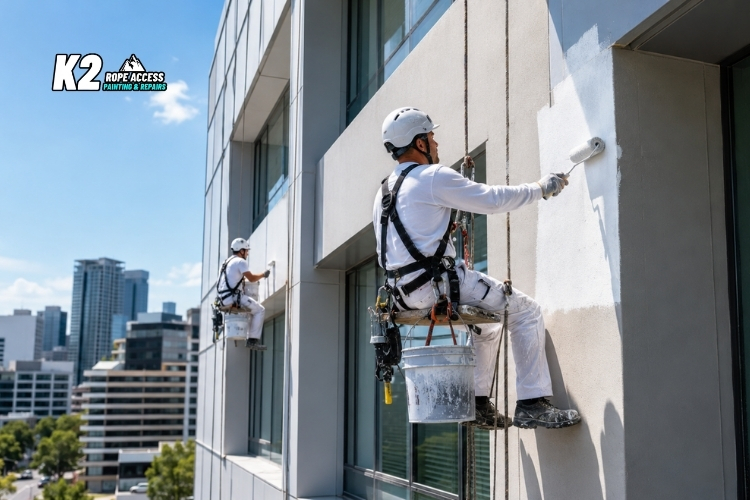
For buildings with concrete deterioration, K2RA’s high-access remediation team can support owners corporations and building managers with practical repair planning for façades, concrete defects and exterior maintenance.
Concrete cancer repairs and investor risk
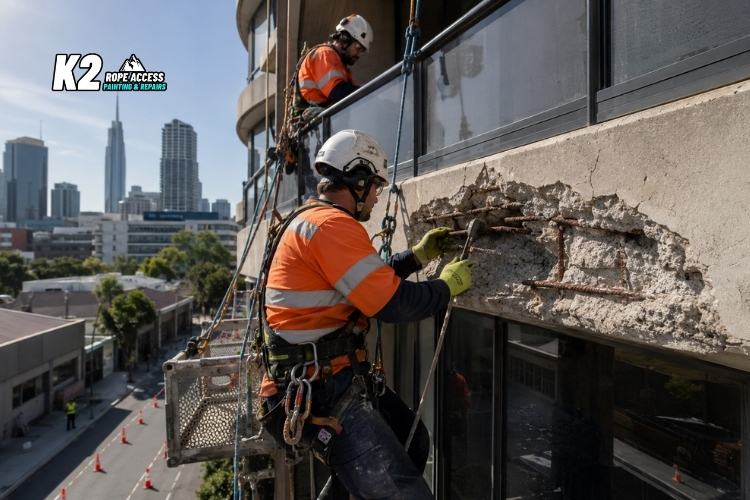
Concrete cancer repairs can be expensive because they may involve access systems, engineering, concrete breakout, steel treatment, repair mortar, waterproofing and protective coatings. A levy may also signal broader building maintenance risk.
Investors should not only ask whether the levy is deductible. They should also ask whether the building has a long-term maintenance plan, whether more levies are likely, and whether the repair scope addresses the cause of the concrete deterioration.
If your strata building is planning concrete or façade works, contact K2RA for a remedial building assessment before the scope becomes harder to control.
The bottom line for investors
Special levies for concrete repairs can be tax-sensitive and cash-flow heavy. Some costs may be immediately deductible, while others may need to be claimed as capital works over time. The difference depends on the facts.
Before claiming a deduction, investors should review the levy purpose, confirm whether the property is income-producing, keep full records and get tax advice. A good repair strategy protects the building; good documentation protects the investor.
Move from research to the right remedial scope
Related K2RA insights

Need this assessed on an actual building?
Send the building location, photos, defect information and available scope documents. K2RA can review the project context and help determine the next practical step.