Paintings of Buildings: How Exterior Coatings Protect and Upgrade Commercial Façades is about much more than changing the colour of a property.
For commercial, strata and high-rise buildings, exterior painting is part of a broader protection strategy. The right coating system can improve presentation, protect the building envelope, slow moisture entry and extend the life of the façade. The wrong approach, however, can hide defects, trap moisture or fail early because the surface was not properly prepared.
That is why commercial exterior painting should always begin with the condition of the building, not just the finish.
Why commercial building painting needs a technical approach
Commercial property painting is different from repainting a small residential wall. A commercial façade is exposed to UV, rain, wind, pollution, coastal air, movement and temperature changes. Over time, these conditions can break down coatings and expose the substrate underneath.
Protective coatings for buildings help create a barrier between the exterior surface and the environment. On concrete, render, masonry, FC sheet or cladding, the coating system can support commercial wall protection and reduce the risk of early surface deterioration.
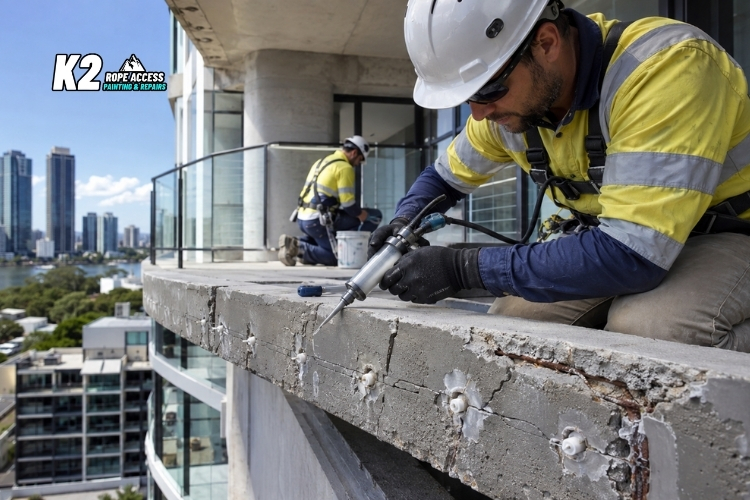
For buildings with cracking, water ingress, peeling paint or concrete defects, specialist façade remediation and painting can help ensure the repainting work is connected to a proper repair strategy.
Exterior coatings protect more than appearance
A clean painted façade can improve street appeal, tenant confidence and asset presentation. But durable exterior finishes also play a practical role in building maintenance.
Exterior architectural coatings can help manage weather exposure, reduce surface absorption and protect repaired areas from further deterioration. Weatherproof coatings commercial buildings rely on are often selected for flexibility, adhesion, UV resistance and compatibility with the substrate.
This is especially important for high-rise and multi-level properties where access is more complex and repeated maintenance can become expensive. A coating failure on a difficult façade is not just inconvenient; it can create major access and repair costs.
Choosing the right exterior coating system
Exterior coating systems should be selected based on the building’s surface, age, exposure and existing defects. A standard paint may be suitable for some low-risk areas, but other façades may require more specialised systems.
Acrylic coatings
Acrylic coatings are commonly used for commercial facade painting because they offer good colour retention and weather resistance when applied over properly prepared surfaces.
Elastomeric wall coatings
Elastomeric wall coatings are useful where minor movement or hairline cracking is expected. Their flexibility can help bridge small surface movement and support long-term façade protection.
UV resistant exterior coatings
UV resistant exterior coatings are important for exposed elevations that receive strong sunlight. They help reduce fading, chalking and premature coating breakdown.
Industrial exterior paint
Industrial exterior paint may be needed in harsher environments where durability, adhesion and resistance to pollutants or moisture are priorities.
A professional contractor should be able to explain why a specific coating system suits the building, rather than recommending the same product for every façade.
Preparation decides how long the coating lasts
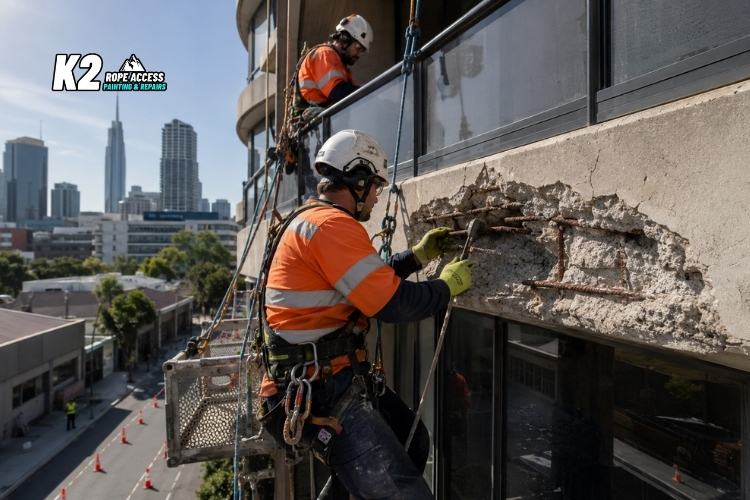
Even the best product will fail if preparation is poor. Before commercial building exterior upgrades begin, the façade should be inspected for cracking, loose coatings, chalking, water ingress, failed sealants, rust staining and concrete spalling.
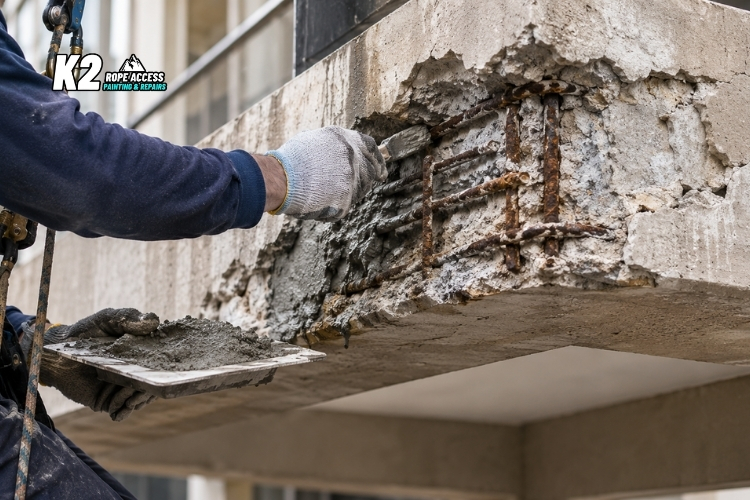
Preparation may include washing, scraping, sanding, crack repair, sealant replacement, primer application and concrete repairs. If defects are ignored, the new coating may blister, peel or crack soon after application.
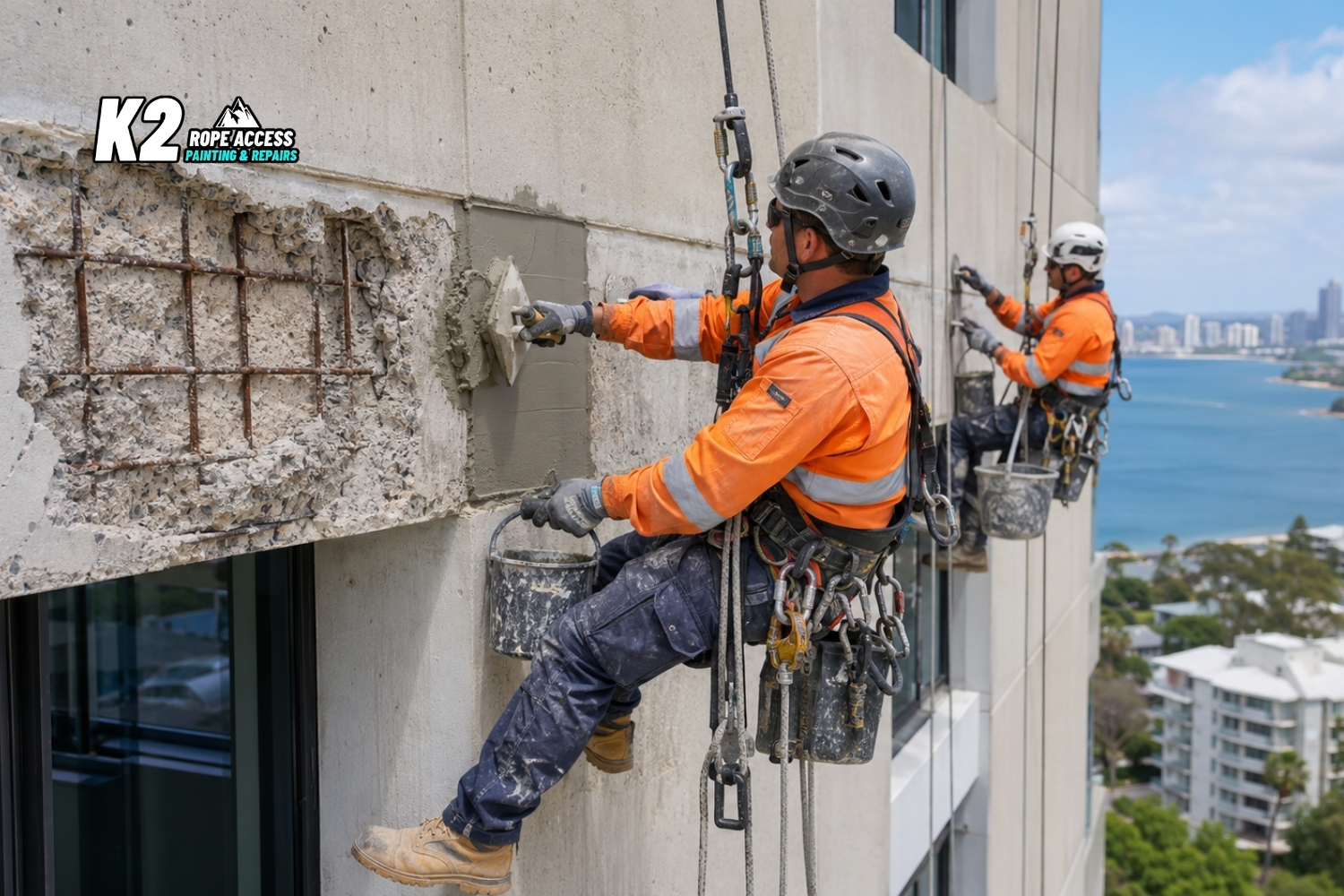
Where concrete damage is visible, professional concrete spalling repair services may be needed before painting begins. Repainting over spalling or rust stains does not stop the cause of deterioration.
Façade restoration and painting should work together
Facade restoration and painting are strongest when they are treated as one coordinated process. For older commercial or strata buildings, repainting is often the perfect time to assess the entire exterior.
This may include checking expansion joints, waterproofing details, balcony edges, parapets, window surrounds and coating failures. If the building has recurring water ingress or cracking, a simple repaint may not be enough.
The goal is not only to make the building look refreshed. It is to upgrade the façade, improve durability and reduce future maintenance risk.
Why access method matters for high-rise painting
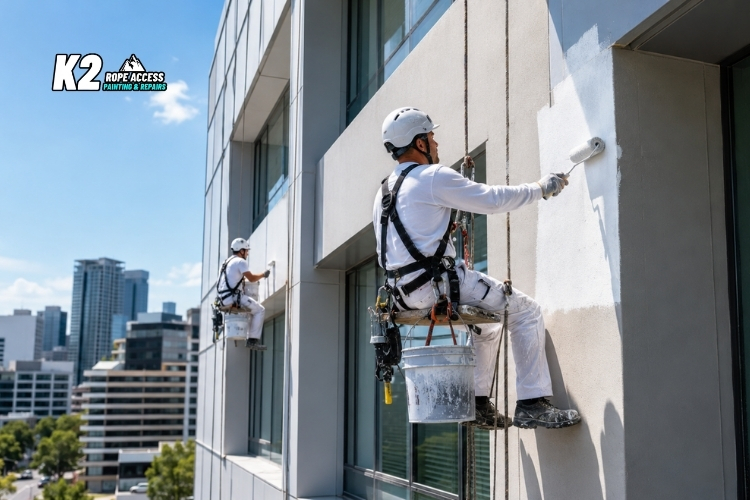
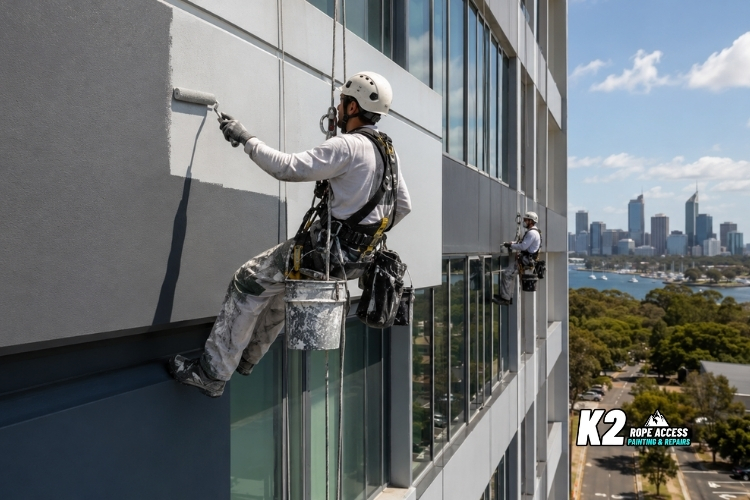
High-rise commercial painting often depends on safe, efficient access. Scaffolding, elevated work platforms, swing stages and rope access may all have a place depending on the building.
Rope access can be especially useful for targeted façade works, inspections and difficult-to-reach areas where traditional access may create more disruption. For strata, commercial and government buildings, reducing disruption to residents, tenants and operations can be a major advantage.
If your building needs exterior maintenance or coating works in difficult-access areas, K2 Rope Access façade specialists can help assess the best approach.
Signs your building may need repainting or coating work
Building managers should consider exterior painting or coating assessment if they notice:
- peeling, flaking or bubbling paint
- faded or chalky surfaces
- cracks in render or concrete
- rust stains around façade elements
- water ingress after rain
- failed sealants or expansion joints
- patchy previous repairs
- exposed or porous surfaces
These signs do not always mean the whole building needs immediate repainting, but they do indicate that the façade should be reviewed before the damage spreads.
A better painted façade starts with the right scope
Paintings of buildings should never be reduced to colour selection alone. For commercial properties, exterior painting is a protective investment that should consider surface condition, coating performance, access, repairs and long-term maintenance.
A well-planned coating system can improve the building’s appearance, protect the façade and support stronger asset performance. A rushed repaint can hide problems that return later at a higher cost.
For commercial, strata and high-rise buildings, the best results come from careful inspection, correct preparation, suitable coatings and a contractor who understands façade performance.