Exterior Paint Commercial: Choosing the Right Coating for Long-Term Façade Protection
Exterior Paint Commercial projects need more than a fresh colour. Choosing the right coating for long-term façade protection helps commercial buildings resist weather, UV, moisture and surface deterioration.
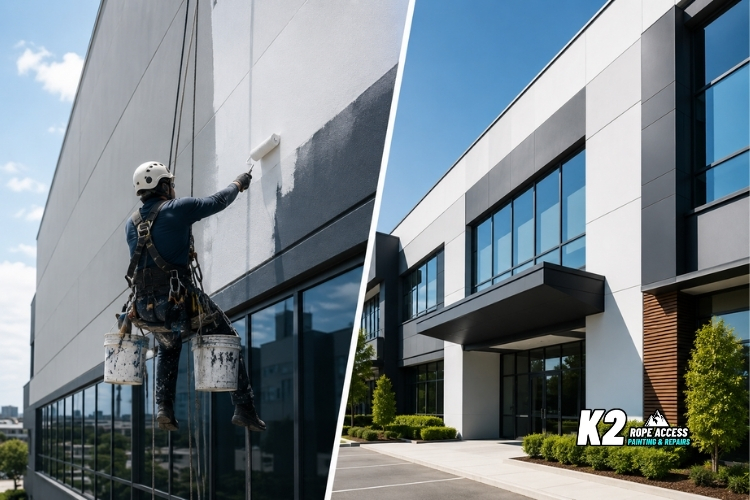
Choosing the Right Coating for Long-Term Façade Protection is one of the most important decisions in any exterior paint commercial project.
For commercial, strata and high-access buildings, paint is not just a finishing layer. It is part of the building’s protective system. The right façade protection coating can help resist UV exposure, rain, wind, pollutants, coastal air and daily movement in the building envelope. The wrong coating, or poor preparation, can lead to peeling, bubbling, staining, water ingress and repeated maintenance costs.
That is why choosing the right façade coating should start with the condition of the building, not just the colour chart.
Why commercial exterior paint needs to do more than look good
A clean, freshly painted façade improves presentation, but appearance is only one part of the job. Commercial building exterior coatings need to protect surfaces that are constantly exposed to weather and environmental stress.
On many buildings, the paint system is expected to support exterior wall protection, reduce moisture absorption, slow surface deterioration and extend the life of the substrate beneath it. This is especially important for rendered walls, concrete façades, masonry surfaces, FC sheet cladding, parapets and exposed elevations.
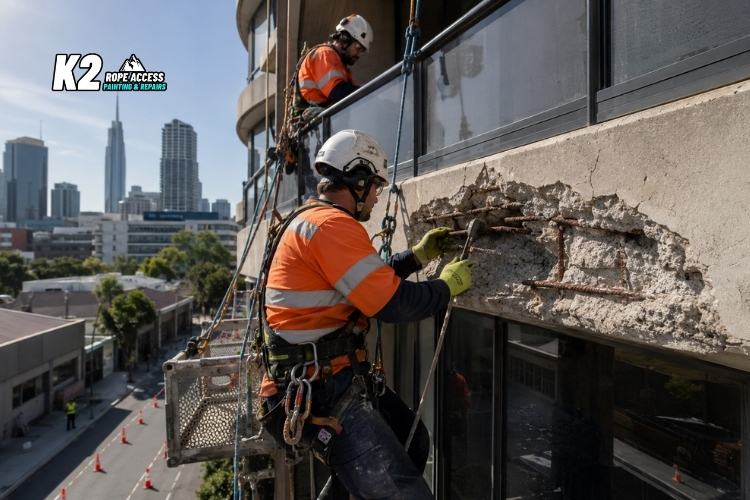
If the façade already has cracks, spalling, failed sealants or water ingress, repainting alone will not solve the problem. In those cases, specialist façade remediation and painting services can help make sure the coating is applied as part of a proper repair strategy.
What makes a good façade protection coating?
A good façade protection coating is selected for the building’s real conditions. It should suit the substrate, exposure level, previous coatings, movement, moisture risk and maintenance expectations.
For a coastal or high-exposure commercial building, weather-resistant exterior coatings and UV-resistant exterior coating systems may be needed to withstand sun, salt air and driving rain. For a building with minor movement or hairline cracking, flexible coatings or membrane systems may be more appropriate than a standard exterior paint.
The best paint for building exteriors is rarely the cheapest product. It is the system that performs well after preparation, primer, repair and topcoat are considered together.
Common exterior façade coatings for commercial buildings
Different exterior façade coatings serve different purposes. A contractor should be able to explain why a particular system suits the building instead of treating all façades the same.
Acrylic façade coatings
Acrylic coatings are commonly used on commercial exteriors because they offer good colour retention, weather resistance and flexibility. They can be suitable for rendered, masonry and previously coated surfaces when the substrate is sound and properly prepared.
Elastomeric and membrane coatings
Elastomeric coatings and membrane systems are often used where flexibility, weather resistance and crack-bridging performance are important. A waterproof façade coating may be considered where moisture exposure is a known issue, but the surface must be prepared correctly for the system to perform.
Masonry façade paint
Masonry façade paint is designed for mineral surfaces such as brick, blockwork, render and concrete. It should allow the surface to perform properly while helping protect against weathering, staining and surface deterioration.
Anti-corrosion façade coating systems
Anti-corrosion façade coating systems may be required where metal components, fixings, exposed reinforcement or rust-prone details are part of the façade. Rust staining should never be ignored, as it may indicate a deeper durability problem.
Preparation decides how long the coating will last
Even durable exterior wall coatings can fail if preparation is rushed. Surface preparation may include pressure washing, removing loose coatings, sanding, treating rust, repairing cracks, replacing failed sealants, priming exposed surfaces and addressing concrete defects before painting.
This step is where long-term façade protection really begins. A coating applied over weak, damp or contaminated surfaces is likely to fail early. A coating applied over a properly repaired and prepared façade has a much better chance of protecting the building for years.
For K2RA, the goal is not simply to make a building look refreshed. The goal is façade maintenance and protection that supports long-term building performance.
Choosing the right façade coating for NSW and ACT buildings
Buildings across NSW and ACT can face very different conditions. Coastal properties may be exposed to salt air, high UV and wind-driven rain. Urban commercial buildings may face pollution, heat, shade, moisture and difficult access constraints. Canberra and surrounding ACT buildings may have different temperature swings and maintenance cycles.
This means choosing the right façade coating should be based on location, exposure and asset type. Strata buildings, commercial properties and government assets often need a specification that balances durability, appearance, safety, access and disruption.
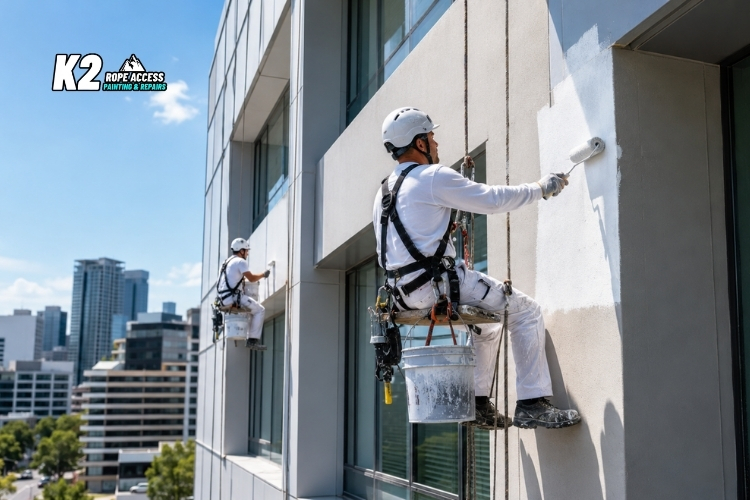
If your building requires a coating system that works with rope access and high-rise maintenance conditions, K2 Rope Access façade specialists can help assess the building and recommend the right approach.
Warning signs your existing coating is failing
Most coating failures give early warning signs before they become major issues. Building managers and owners corporations should look for:
- peeling or flaking paint
- bubbling or blistering coatings
- chalky residue on the surface
- staining below windows, joints or cracks
- rust marks around concrete or metal details
- water ingress after rain
- cracking render or concrete
- faded or uneven colour
- failed sealants around joints and penetrations
These signs may indicate that the paint system has reached the end of its life, or that moisture and substrate issues are affecting the façade from underneath.
Coating selection should be part of a wider façade plan
A commercial repaint is often the right time to assess the broader façade condition. If the access is already being planned, it makes sense to check concrete spalling, cracks, sealants, anchor points and high-exposure areas before applying new coatings.
This approach avoids repainting over problems that will soon reappear. It also helps owners plan maintenance budgets more intelligently. A façade coating should be viewed as one part of a wider asset protection system, not a standalone cosmetic upgrade.
For buildings with visible defects, water ingress or ageing coatings, request a commercial façade coating and remediation assessment before choosing the final paint system.
Long-term protection comes from the right system, not just the right product
Choosing the right exterior paint commercial system means looking beyond the tin of paint. The building’s exposure, defects, access method, substrate condition and repair requirements all affect the final result.
A well-selected coating can improve presentation, protect the façade, reduce future maintenance risk and support the long-term value of the asset. A poorly selected system can fail early and create more work later.
For commercial, strata and high-access buildings, the best result comes from combining proper inspection, remediation, preparation and coating selection into one clear façade protection strategy.
Move from research to the right remedial scope
Related K2RA insights

Need this assessed on an actual building?
Send the building location, photos, defect information and available scope documents. K2RA can review the project context and help determine the next practical step.