Concrete Repair Brisbane: What Building Owners Should Know About Cracks, Spalling and Structural Damage starts with one simple truth: visible concrete damage is often only part of the problem.
In Brisbane’s warm, humid and storm-exposed environment, concrete can deteriorate through moisture ingress, carbonation, chloride exposure, poor waterproofing, movement and ageing protective coatings. For apartment buildings, commercial assets and strata properties, a small crack or rust stain should not be dismissed as cosmetic. It may point to concrete cancer, spalling concrete repair needs or deeper structural concrete repair Brisbane concerns.
Why concrete damage needs early attention
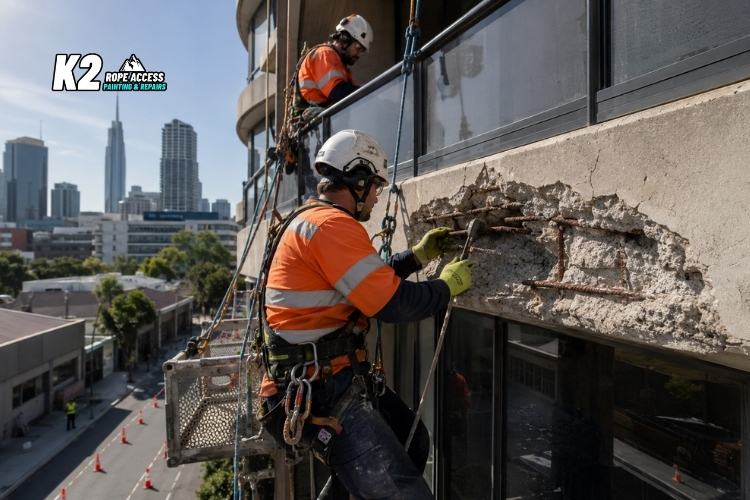
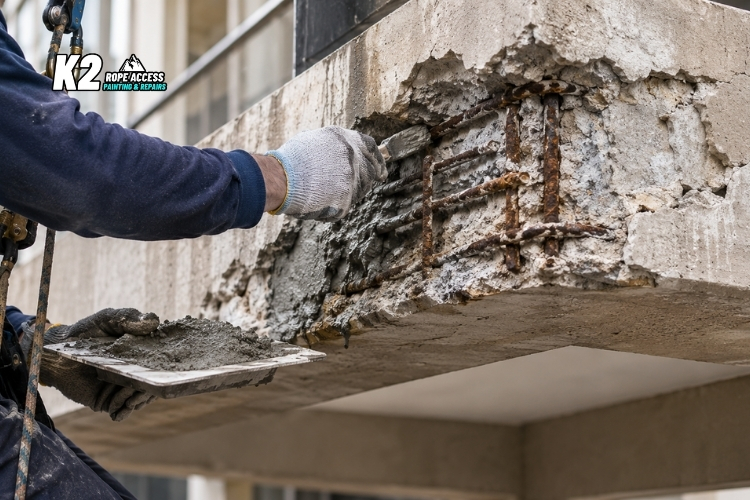
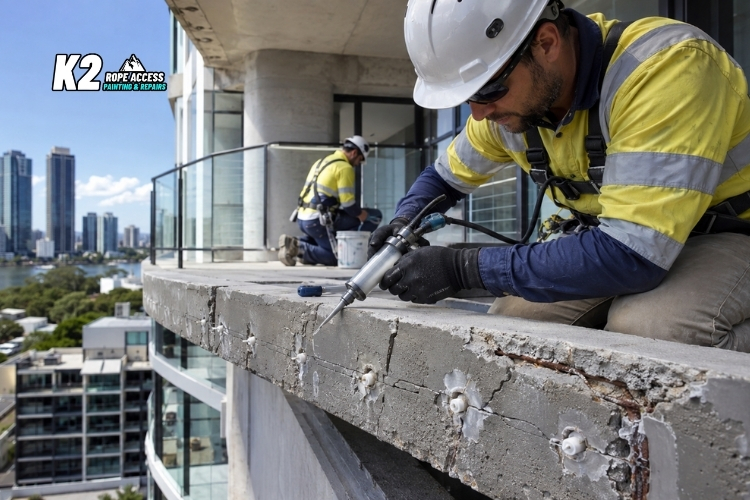
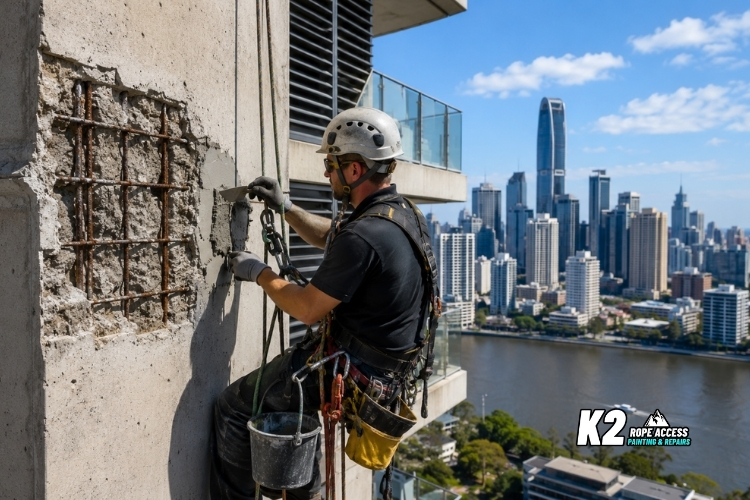
Concrete is strong, but it is not maintenance-free. Over time, cracks, water penetration and corrosion can weaken the protective cover around steel reinforcement. Once reinforcement starts to rust, it expands. That expansion creates pressure inside the concrete, leading to cracking, flaking, hollow sections and spalling.
This is why concrete repair Brisbane searches often come from building owners who have noticed visible deterioration but are unsure how serious it is. A driveway crack and a high-rise balcony edge defect are very different problems. The repair method must match the risk.
For similar high-access strata and commercial buildings in NSW and ACT, specialist concrete spalling repair services can help identify whether cracking is superficial or part of a broader remedial issue.
Common signs your building may need concrete repair
Building managers and owners should arrange an assessment if they notice:
- cracking around balconies, slabs or façade edges
- rust stains on concrete surfaces
- bubbling or peeling paint over concrete
- loose, flaking or falling concrete
- exposed reinforcement steel
- hollow or drummy concrete when tapped
- recurring water leaks
- failed sealants or waterproofing
- previous patch repairs that keep failing
These warning signs can indicate concrete structural damage, especially in multi-level and high-rise buildings. In strata properties, early action can also reduce safety risks, emergency repairs and future special levy pressure.
Concrete cancer repair Brisbane: what causes the issue?
Concrete cancer repair Brisbane usually refers to the process of treating reinforcement corrosion inside concrete. The problem often begins when moisture and oxygen reach the steel reinforcement. In some locations, salts and pollutants can accelerate corrosion.
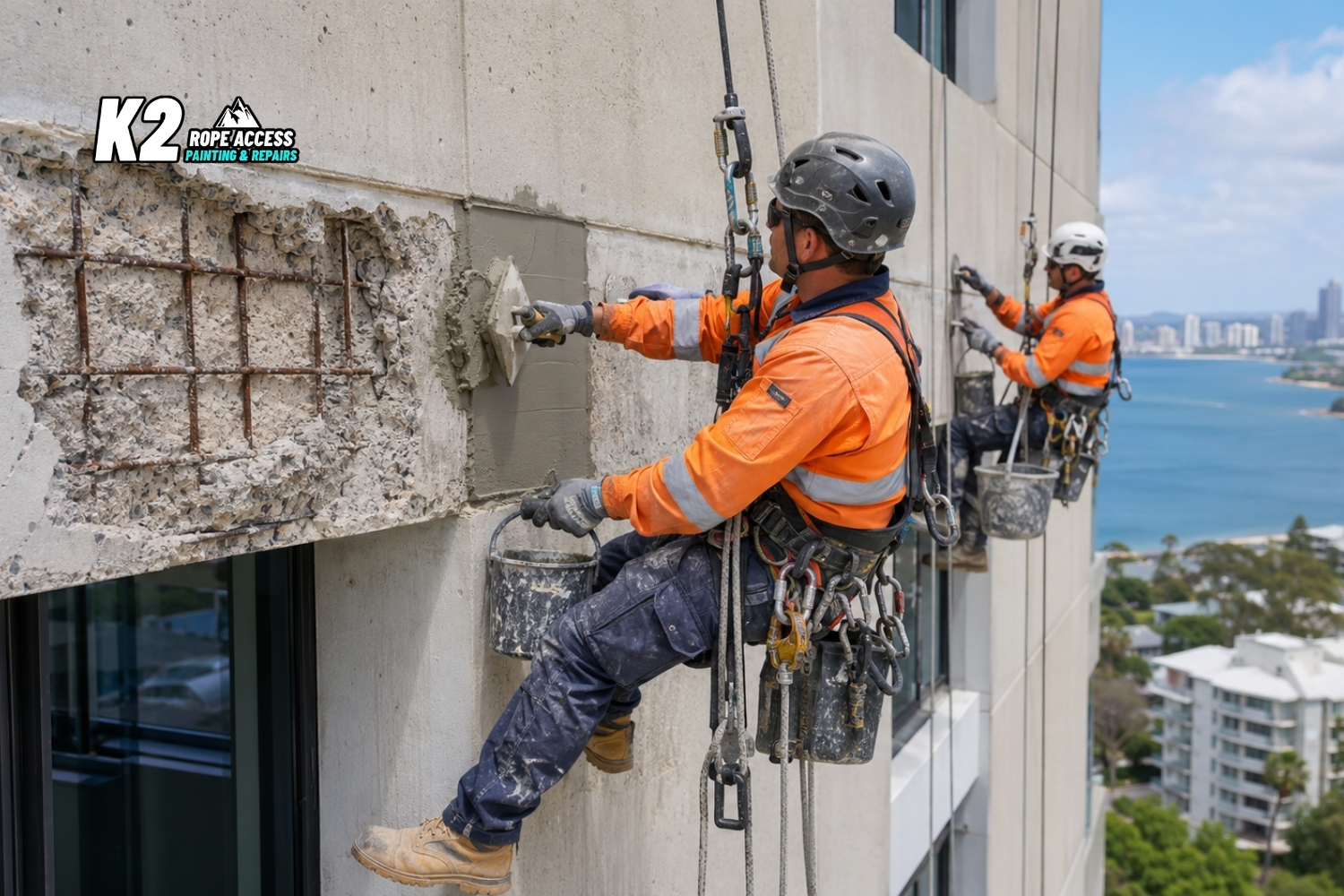
Once the steel rusts, it expands and cracks the surrounding concrete. This can lead to concrete spalling, which is the breaking away of concrete from the surface. If ignored, the damage can spread along balcony fronts, car park ceilings, façade panels and exposed slab edges.
The goal is not simply to patch the missing concrete. A proper repair should treat the cause, restore the damaged section and protect the surface from future exposure.
Concrete crack repair Brisbane: when is it serious?
Concrete crack repair Brisbane can range from simple non-structural patching to specialist structural remediation. Hairline shrinkage cracks in low-risk areas may be monitored or sealed. Wider cracks, moving cracks or cracks linked to water ingress need more careful investigation.
A crack is more concerning when it appears near:
- balcony edges
- structural columns or beams
- car park ceilings
- façade panels
- retaining walls
- suspended slabs
- waterproofed areas
- rust staining or loose concrete
Building crack repair should always begin with diagnosis. If the cause is not understood, the repair may fail quickly.
Spalling concrete repair methods
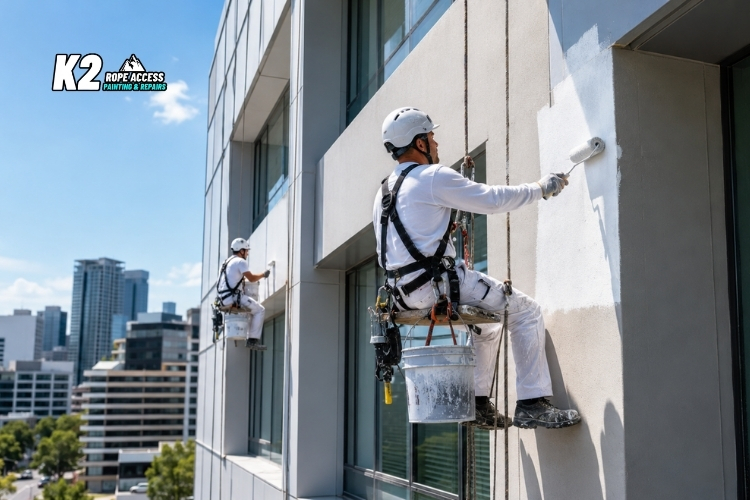
Spalling concrete repair usually follows a controlled process. The damaged concrete is inspected, loose material is removed, corroded reinforcement is cleaned or treated, and the area is reinstated using compatible repair mortar. Protective coatings or waterproofing may then be applied to reduce future moisture entry.
More complex concrete remediation Brisbane projects may require engineering advice, access planning, staged works and coordination with building managers or owners corporations.
For high-rise assets, high-rise maintenance and concrete repair planning can help connect visible damage with broader façade, waterproofing and coating maintenance.
Commercial concrete repair requires more than patching
Commercial concrete repair involves different risks from a small domestic repair. A commercial or strata building must consider public safety, tenant disruption, access requirements, documentation, compliance and long-term asset protection.
Concrete repair specialists Brisbane are often needed when damage affects façades, balconies, car parks or structural areas. The same principle applies in any major city: if the defect is high-access, safety-sensitive or connected to reinforcement corrosion, it should be treated as a remedial building issue rather than a handyman patch.
How to choose the right concrete repair contractor
When comparing concrete repair specialists, building owners should ask:
- Do they understand concrete cancer and reinforcement corrosion?
- Can they identify the cause of the defect?
- Do they provide a written repair scope?
- Can they work safely on high-access areas?
- Will the repair include protective coatings if needed?
- Do they understand strata and commercial building requirements?
Concrete patching and repair should never be quoted only from a photo when the defect may be structural. A proper assessment gives owners a clearer idea of cost, risk and repair sequence.
Cost to fix concrete spalling
The cost to fix concrete spalling depends on access, severity, repair depth, reinforcement condition, waterproofing needs, coating specification and whether engineering is required. A small local repair may be relatively simple. A building-wide concrete restoration Brisbane project can require staged access and a much larger budget.
The cheapest quote is not always the best value if it only covers the visible patch and ignores the cause of deterioration.
Repair early, protect the asset long term
Concrete maintenance Brisbane should be proactive, especially for strata and commercial buildings exposed to storms, heat, humidity and moisture. Regular inspections, crack repairs, sealant maintenance, waterproofing checks and protective coatings can help reduce future damage.
For building owners managing similar façade and concrete issues across NSW and ACT, K2 Rope Access remedial specialists support long-term building protection through concrete repairs, façade remediation and high-access maintenance.
Final thoughts
Concrete repair Brisbane is not just about filling cracks. It is about understanding whether the damage is cosmetic, waterproofing-related, corrosion-driven or structurally significant.
For building owners, the safest approach is to inspect early, document defects clearly, choose the right repair method and avoid short-term patches that allow deeper problems to continue. Whether the issue is concrete crack repair, concrete cancer, spalling concrete repair or full concrete remediation, early action protects both safety and asset value.