Coastal Salt Attack: Managing Concrete Spalling on the Gold Coast and Sydney Harbour is a serious concern for strata, commercial and high-rise buildings exposed to marine air, wind-driven rain and salt-laden moisture.
In coastal environments, concrete deterioration can develop faster because salt particles travel through the air and settle on façades, balconies, car park edges and exposed concrete surfaces. Over time, chlorides can penetrate the concrete and reach the steel reinforcement inside. Once reinforcement begins to rust, it expands, cracks the surrounding concrete and can lead to spalling, also known as concrete cancer.
Whether the building is near Sydney Harbour, the Gold Coast coastline or another exposed marine environment, early inspection and maintenance are essential.
What causes concrete spalling in coastal buildings?
If you are wondering what causes concrete spalling, the short answer is usually moisture, oxygen and corrosion. In marine locations, chloride exposure makes the problem more aggressive.
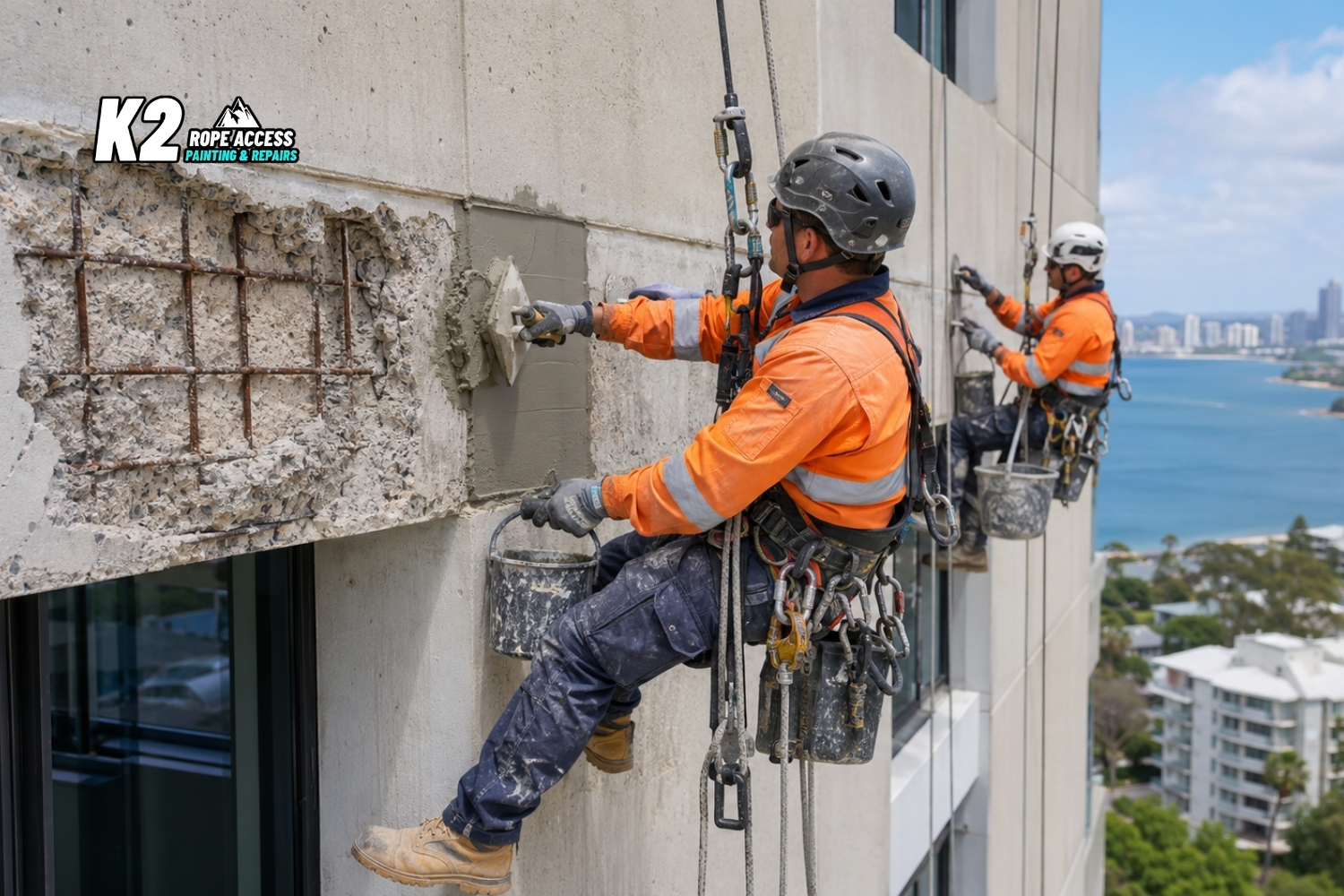
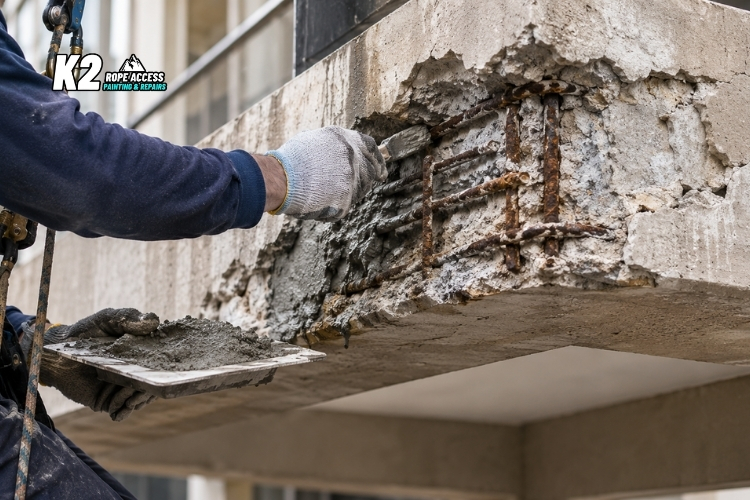
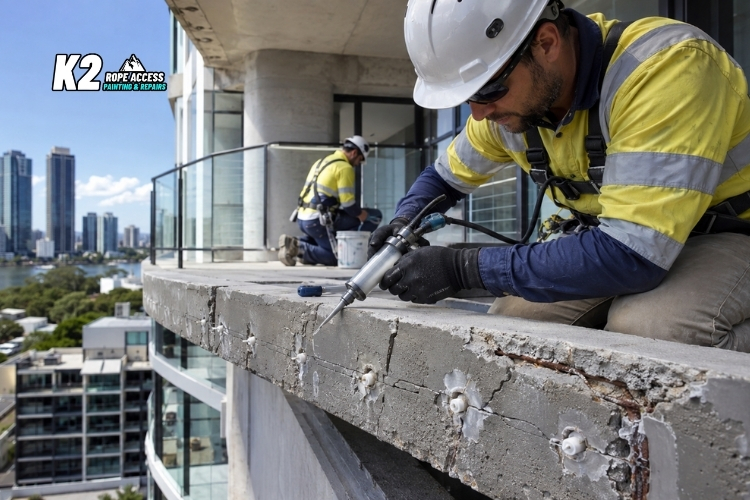
Concrete is designed to protect the steel reinforcement inside it. But when salt, water and carbon dioxide penetrate through cracks, failed coatings, porous concrete or weak cover, the steel can begin to corrode. As the rust expands, it pushes against the surrounding concrete. That pressure causes cracking, flaking, delamination and eventually loose concrete.
This is why coastal salt attack concrete damage should never be treated as a simple cosmetic issue. The visible defect may be only one part of a wider deterioration process.
Concrete spalling on the Gold Coast and Sydney Harbour: similar risks, different buildings
Concrete spalling Gold Coast searches often come from owners of high-rise apartment buildings near surf, sea breeze and constant salt exposure. Concrete cancer Gold Coast issues are common in older buildings where balconies, slab edges and façade elements have been exposed for decades.
Concrete spalling Sydney Harbour risks are similar, especially around waterfront strata buildings, commercial assets and older concrete façades. Sydney Harbour buildings may also face wind-driven rain, pollution, façade movement and access limitations.
The exact repair approach depends on the building, not just the location. A beachfront tower, harbour apartment block and commercial waterfront asset may all need different concrete spalling repair methods.
For buildings in NSW showing rust stains, loose concrete or façade cracking, specialist concrete spalling repair services can help identify the right repair scope.
Signs of concrete cancer in marine environments
The signs of concrete cancer can start subtly. Building managers, strata committees and owners should look for:
- rust staining on walls, balconies or slab edges
- cracking around balcony fronts or façade panels
- flaking or drummy concrete
- bubbling paint or failed coatings
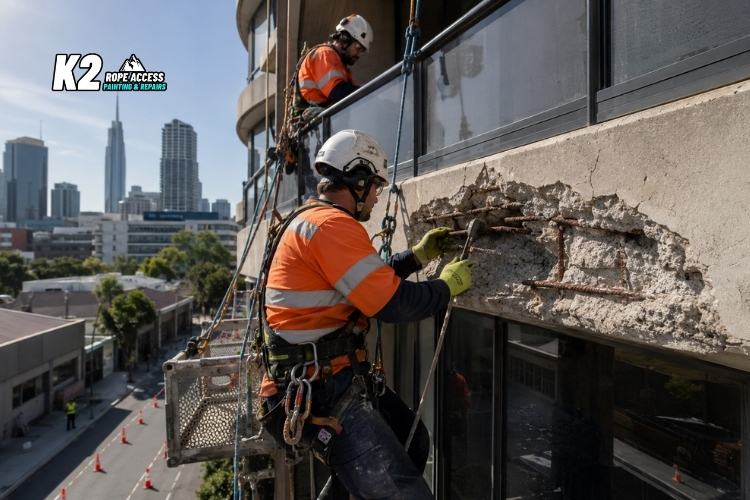
- exposed reinforcement
- loose concrete near walkways or car parks
- recurring water ingress
- patched areas that keep failing
In coastal buildings, these signs should be taken seriously because salt damage concrete repair often becomes more expensive when corrosion spreads beyond the visible area.
Why patching alone may fail
A quick patch may hide the problem temporarily, but it rarely solves coastal salt attack. If contaminated concrete remains in place, or if reinforcement is not properly treated, corrosion can continue behind the repair.
Proper marine environment concrete repair may involve removing damaged concrete, cleaning or treating reinforcement, reinstating the section with suitable repair mortar and applying protective coatings or waterproofing systems.
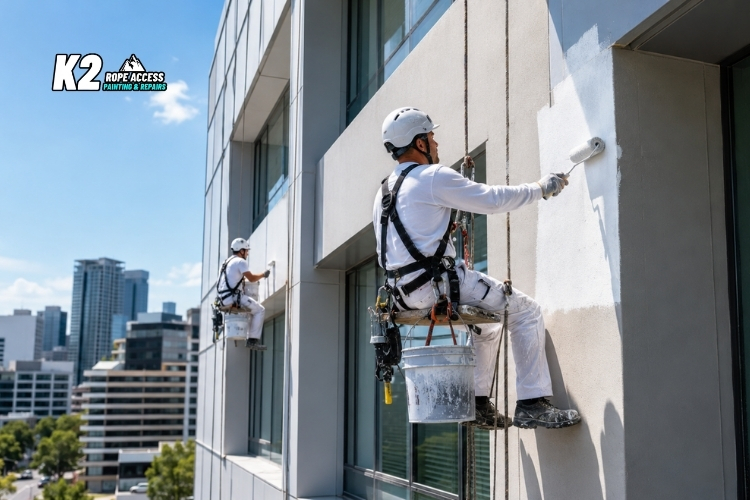
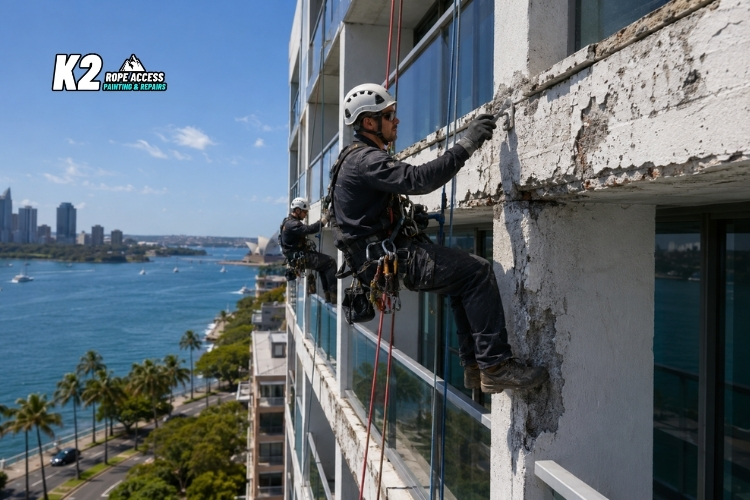
For high-rise buildings, access planning is also critical. Rope access may allow targeted repairs on difficult façades with less disruption than large access systems where suitable.
If the building requires ongoing inspection and exterior maintenance, high-rise maintenance and façade repair planning can help prevent small coastal defects from becoming major remedial works.
Preventing salt attack concrete damage
Preventing salt attack concrete deterioration starts with regular maintenance. Coastal buildings need more than occasional repainting. They need a planned approach to façade protection.
Useful prevention steps include:
- regular façade and balcony inspections
- washing down salt-exposed surfaces where appropriate
- repairing cracks early
- replacing failed sealants and expansion joints
- maintaining waterproofing systems
- using suitable protective coatings
- checking rust stains before concrete breaks away
- documenting defects and repairs over time
For strata managers and owners corporations, this type of preventative maintenance can support better budgeting and reduce the risk of urgent special levies.
Concrete cancer treatment options for coastal buildings
Concrete cancer treatment options depend on severity. Minor early-stage defects may be managed with targeted repairs and protective coating. More advanced deterioration may need breakout, reinforcement treatment, structural concrete repair, waterproofing review and façade coating.
Structural concrete repair Sydney projects often require careful sequencing because buildings are occupied, access is limited and safety risk must be managed. For strata concrete repair Gold Coast buildings, similar planning principles apply, even if the contractor, regulations and access logistics differ by location.
The cost to fix concrete spalling depends on repair depth, access, engineering, coating systems and whether the cause of moisture ingress is addressed. A low-cost patch can become expensive if the defect returns.
When to call a specialist
Call a specialist when concrete is cracking, rust-stained, hollow, loose or located on a balcony, façade, car park ceiling or high-access elevation. These are not ideal DIY repairs, especially in coastal environments where corrosion may be active behind the surface.
For NSW and ACT buildings affected by salt exposure, contact K2RA for concrete cancer and façade remediation advice before the damage spreads further.
Protect the building before corrosion spreads
Coastal salt attack is not just an appearance problem. It can affect safety, durability, insurance discussions, maintenance budgets and long-term asset value.
The best approach is early detection, proper diagnosis and repair methods that treat the cause, not just the surface. For buildings near Sydney Harbour, the Gold Coast or other marine environments, proactive concrete maintenance is one of the most effective ways to reduce long-term repair costs.
K2RA supports strata, commercial and government buildings with specialist rope access façade remediation solutions focused on long-term building protection.