Buying an Apartment with Concrete Cancer: Negotiation Strategies and Risk Assessment
Buying an Apartment with Concrete Cancer: Negotiation Strategies and Risk Assessment explains how buyers can assess repair risks, strata levies and negotiation options before committing.
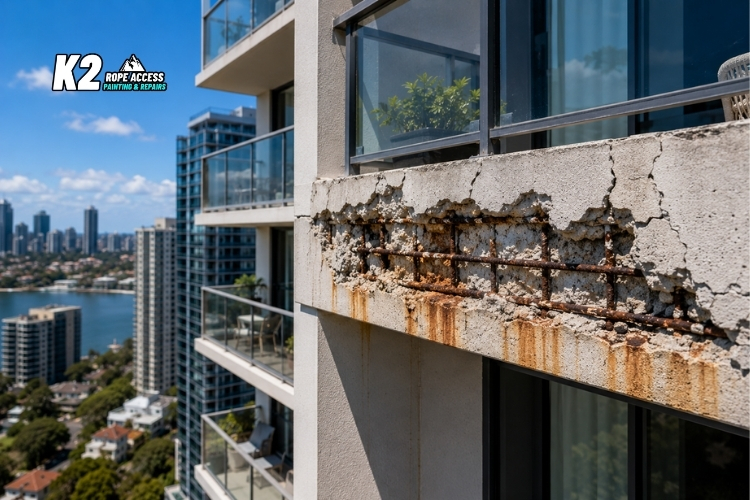
Buying an Apartment with Concrete Cancer: Negotiation Strategies and Risk Assessment is not just about spotting a defect. It is about understanding the repair risk, likely strata costs, future levies and whether the property still makes financial sense.
Concrete cancer in apartment blocks usually refers to concrete deterioration caused by corrosion of steel reinforcement inside the slab, balcony, façade or structural element. It may appear as cracking, rust stains, bubbling paint, loose concrete or spalling. For buyers, the real question is not only “can it be repaired?” but “who pays, how much, and when?”
This article is general information only. Always obtain independent building, strata, legal and financial advice before buying property with structural defects.
Why concrete cancer changes the purchase risk
Concrete cancer can affect more than the apartment you are buying. In strata buildings, the issue may involve common property, balconies, car park ceilings, façade edges or structural slabs. That means the repair responsibility may sit with the owners corporation, the lot owner, or both, depending on the strata plan and by-laws.
A proper concrete cancer property risk assessment should consider the location of the defect, the cause, the repair method, the building’s maintenance history and whether the capital works fund can cover the work.
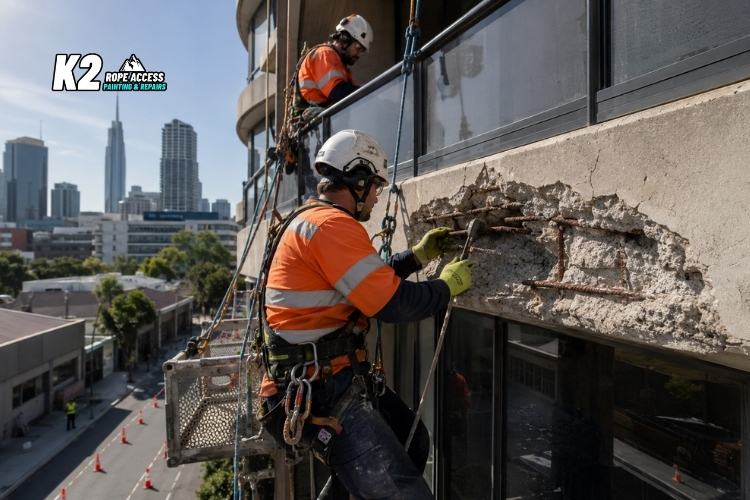
If visible cracking, rust staining or spalling is already present, professional concrete spalling repair services can help clarify the likely technical repair scope.
Signs of concrete cancer when buying
During an inspection, look beyond cosmetic presentation. Fresh paint, new flooring or renovated interiors can hide long-term building issues.
Common signs of concrete cancer when buying include:
- rust stains on balconies, façade edges or ceilings
- cracking near slab edges, columns or external walls
- flaking, drummy or hollow-sounding concrete
- bubbling paint or coating failure
- exposed reinforcement steel
- recurring water leaks
- loose concrete around balcony soffits or car parks
- repeated references to concrete repairs in strata minutes
If these signs appear, do not rely only on a standard visual inspection. A structural survey for concrete cancer may be needed before you proceed.
What to check in the strata report
Before buying an apartment with concrete cancer, review the strata records carefully. Look for engineer reports, remedial scopes, special levy discussions, insurance claims, defect disputes and capital works planning.
Pay close attention to:
- previous concrete spalling repair costs strata records
- upcoming façade or balcony remediation projects
- capital works fund balance
- proposed or approved special levies
- building defect reports
- waterproofing complaints
- disputes between owners and the committee
- previous quotes from remedial contractors
If the issue appears in multiple locations, the risk is usually higher than a single isolated patch.
How much does concrete cancer devalue a property?
There is no single percentage for how much concrete cancer devalues a property. The impact depends on severity, repair cost, buyer confidence, strata funding and whether the works are already planned.
A minor, clearly scoped repair with funds available may have limited impact. A widespread, unresolved issue with no budget, no engineering report and possible special levies can significantly weaken the property’s value and marketability.
When negotiating house price concrete cancer issues, the question is not just the current repair cost. It is the uncertainty. Buyers often discount for risk, disruption, future levies and the possibility that more defects will be uncovered.
Negotiation strategies before making an offer
If you still want the apartment, use the defect as a structured negotiation point, not just a vague concern.
Ask for evidence, not reassurance
Request engineer reports, strata minutes, repair quotes, levy notices and maintenance plans. Verbal reassurance from an agent is not enough.
Estimate the real exposure
Consider repair costs, possible levies, temporary access disruption and whether your lot entitlement affects your share of costs.
Adjust the offer
If the repair risk is known, negotiate the price based on documented costs. If the risk is unclear, negotiate more conservatively or request conditions that allow further due diligence.
Ask about timing
A repair scheduled after settlement may become your financial responsibility through levies, even if the defect existed before you bought.
Should I buy a house with concrete spalling?
If you are asking “should I buy a house with concrete spalling?” or an apartment with concrete cancer, the answer depends on the evidence. Some properties can still be good purchases if the issue is limited, priced in, properly scoped and funded.
However, buying property with structural defects becomes risky when:
- no engineer has assessed the damage
- strata records are incomplete
- several areas show similar deterioration
- special levies are likely but not quantified
- the seller will not provide documentation
- the repair responsibility is disputed
- the capital works fund is weak
In these situations, walking away from property concrete cancer risk may be the safest financial decision.
Investment property risk and future resale
Concrete cancer investment property risk is not only about repair cost. It can affect rental disruption, special levies, future buyer confidence, lender concerns and resale timing.
A future buyer may ask the same questions you are asking now. If the building has unresolved structural defects, your exit strategy may be weaker. Before buying real estate with concrete spalling, think about whether the problem is being actively managed or simply deferred.
When to involve a specialist before purchase
A building inspector may identify signs of damage, but a concrete repair specialist or engineer can help assess likely repair complexity. For high-rise buildings, access, façade systems, waterproofing and corrosion treatment all matter.
If the apartment block has visible spalling, balcony deterioration or façade cracking, contact K2RA for concrete repair guidance before you rely on assumptions about repair cost.
The safest approach: price the risk before you buy
Buying an apartment with concrete cancer is not automatically a mistake. But buying without understanding the risk can be expensive.
Before exchange or settlement, confirm the defect, review the strata records, understand the likely repair method, check the capital works position and negotiate accordingly. If the numbers still work after the risk is priced in, the property may still be viable. If the uncertainty is too high, walking away may protect you from a costly surprise.
For buildings with façade, balcony or concrete deterioration concerns, K2RA’s high-access concrete repair team can help assess the technical side of the problem so buyers, committees and managers can make clearer decisions.
Move from research to the right remedial scope
Related K2RA insights

Need this assessed on an actual building?
Send the building location, photos, defect information and available scope documents. K2RA can review the project context and help determine the next practical step.