Who Pays for Concrete Spalling in Strata Buildings? NSW Guide
Concrete spalling in NSW strata buildings can raise difficult questions about who is responsible for repairs. This guide explains the role of common property, lot boundaries, strata plans and technical assessments.
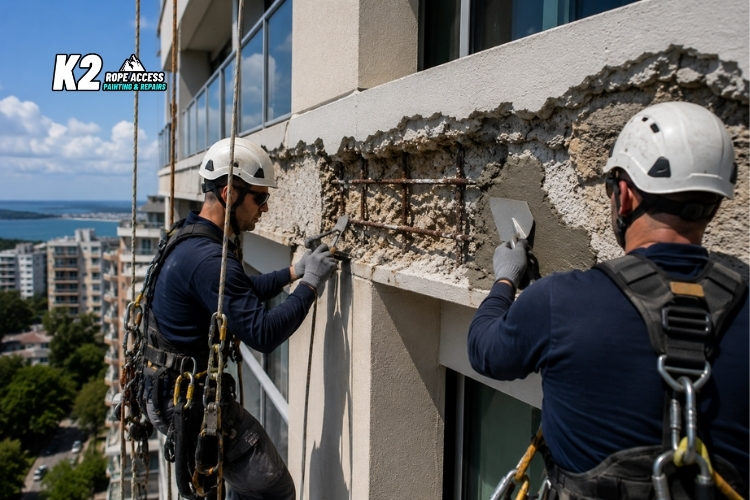
Concrete spalling in a strata building can quickly raise an important question: who is responsible for arranging and paying for the repair?
The answer is not determined simply by where the damaged concrete is visible. A crack or spalled area may appear beside a balcony, inside a lot or along an external wall, while the affected structural element may actually form part of the building’s common property.
In NSW, the starting point is generally to determine whether the affected element belongs to the individual lot or to common property. Owners corporations are generally responsible for maintaining and repairing common property, while owners are generally responsible for property within their own lot. The registered strata plan, by-laws and circumstances of the defect can affect the final answer.
This article provides general information only and is not legal advice. Responsibility for a particular defect should be confirmed using the strata plan, by-laws and appropriate professional advice.
What Is Concrete Spalling?
Concrete spalling occurs when sections of concrete crack, delaminate or break away from a structure.
One common cause is corrosion of the steel reinforcement embedded inside the concrete. When reinforcement corrodes, the corrosion products expand and place pressure on the surrounding concrete.
Over time this can lead to:
- Cracking
- Rust staining
- Hollow or drummy concrete
- Delamination
- Exposed reinforcement
- Loose sections of concrete
- Recurring failures around previous patch repairs
Concrete spalling can affect balconies, slab edges, façades, columns, car parks, parapets and other structural or external building elements.
Where deterioration occurs at height, loose concrete may also create a safety concern for occupants, pedestrians or property below.
The First Question: Is the Concrete Common Property?
For NSW strata buildings, responsibility often begins with identifying whether the affected concrete is part of common property.
Concrete slabs, balconies, boundary walls, roofs and other shared building elements may form part of common property. However, individual strata schemes can differ, so the registered strata plan should always be checked.
Examples of concrete spalling that may involve common property include deterioration affecting:
- External façades
- Structural floor slabs
- Balcony slabs
- Slab edges
- Common-area ceilings
- External walls
- Structural columns
- Car park structures
- Shared building elements
If the damaged concrete forms part of common property, the owners corporation will generally need to investigate the defect and arrange the necessary repair process.
When Might a Lot Owner Be Responsible?
Not every concrete-related defect automatically becomes an owners corporation responsibility.
A lot owner may potentially have responsibility where the affected element belongs entirely to the lot or where the damage has resulted from something associated with the owner’s property or alterations.
Examples may include situations involving:
- Owner-installed alterations
- Unauthorised penetrations
- Renovations that affect surrounding building elements
- Damage caused directly by an owner
- Fixtures or finishes belonging to the individual lot
The exact boundary between common property and lot property can sometimes be difficult to determine visually.
This is why a repair should not be assigned to an owner or the owners corporation purely because of where the damage appears.
Why Balconies Can Be Complicated
Balconies are a common source of confusion in strata buildings.
A balcony may contain several different components, including:
- Structural concrete slab
- Tiles or finishes
- Waterproofing
- Balustrades
- Doors
- Façade interfaces
- Drainage
- Sealants
Different components may have different maintenance responsibilities depending on the strata plan, by-laws, building history and any renovations that have taken place.
If concrete spalling is occurring in the structural balcony slab or external slab edge, a technical inspection can help determine the physical extent and likely cause before responsibility discussions progress.
The Cause of the Spalling Also Matters
Identifying who owns the affected building element is important, but understanding why the concrete is deteriorating is equally valuable.
Concrete spalling may be associated with:
- Reinforcement corrosion
- Water ingress
- Chloride or coastal exposure
- Carbonation
- Cracking
- Insufficient concrete cover
- Failed waterproofing
- Deteriorated façade coatings
- Failed joints and sealants
- Previous repairs that did not address the underlying cause
If water ingress from another building element is contributing to the deterioration, the repair scope may need to address more than the visibly damaged concrete.
For example, repairing a spalled balcony edge while leaving failed waterproofing or façade joints untreated can allow deterioration to continue.
Why a Technical Assessment Should Come Before the Liability Debate
When concrete deterioration is visible, it is useful to separate two questions:
- What has physically failed and what repair is required?
- Who is responsible for arranging or funding that work?
The first question is technical.
The second may involve strata boundaries, by-laws and legal considerations.
A technical assessment can help identify:
- The extent of delaminated or unsound concrete
- Whether reinforcement is corroding
- Likely sources of moisture ingress
- Whether deterioration extends beyond the visible defect
- Access requirements
- Repair methodology
- Surrounding façade defects that should be included
This information can make discussions between strata managers, committees and owners much more productive.
For high-access defects, K2 Rope Access provides concrete spalling repair services for strata and managed buildings across Sydney and NSW.
What Should a Strata Committee Do When Spalling Is Found?
When visible concrete deterioration is identified, the issue should be documented and reported promptly.
A practical process may include:
- Photograph the affected area.
- Record the location and extent of visible deterioration.
- Notify the strata manager or strata committee.
- Review the strata plan and relevant by-laws.
- Arrange an appropriate inspection.
- Identify whether there is an immediate safety concern.
- Obtain a written repair scope.
- Determine the appropriate access method.
- Obtain quotations for the required remedial work.
- Seek strata or legal advice if responsibility remains disputed.
The important point is to establish the physical condition of the building before allowing uncertainty over responsibility to delay necessary investigation.
What If the Owners Corporation Delays Concrete Repairs?
Concrete spalling generally becomes more difficult and expensive when deterioration is allowed to continue.
Corrosion can spread along reinforcement, cracks can widen and additional concrete can become delaminated.
Where the deterioration affects common property, the owners corporation should investigate the defect and determine the required maintenance or remedial work.
If loose concrete creates an immediate safety risk, temporary make-safe measures may also be required while the permanent repair scope is being developed.
Who Pays for Large Concrete Spalling Programs?
Where concrete spalling affects multiple areas of common property, the work may become a broader capital repair program rather than an isolated patch.
Examples include deterioration across:
- Multiple balconies
- Façade bands
- Slab edges
- Car park ceilings
- External columns
- Parapets
- Multiple elevations
For substantial projects, the strata committee may need to coordinate technical reports, budgeting, quotations, access planning and staged remedial works.
The larger the affected area, the more important it becomes to establish a consistent repair methodology rather than treating individual patches in isolation.
Can the Owners Corporation Recover Costs From an Owner?
There may be situations where damage to common property is linked to the actions, alterations or negligence of a particular owner.
Examples could include unauthorised building penetrations, owner modifications or other works that contribute to deterioration.
Whether costs can be recovered from an owner depends on the circumstances, scheme documents and applicable law.
This is one area where strata-specific legal advice may be necessary.
Where there is an active safety or deterioration issue, the technical repair requirements should still be identified promptly even if responsibility for costs remains under discussion.
Why Documentation Matters
Concrete spalling disputes become harder to resolve when there is little information about the building’s history.
Useful records can include:
- Engineer reports
- Defect inspections
- Photographs
- Previous concrete repair records
- Waterproofing records
- Renovation approvals
- Strata meeting minutes
- Maintenance records
- Façade inspection reports
- Original plans and specifications
These documents can help identify whether a defect is isolated, recurring or part of a larger deterioration pattern.
They can also help contractors and consultants understand what work has already been attempted and whether previous repairs have performed as expected.
How Rope Access Can Help With Concrete Spalling Assessment and Repairs
Concrete deterioration often appears on difficult-to-access areas such as external façades, balcony edges, slab bands and upper-level elevations.
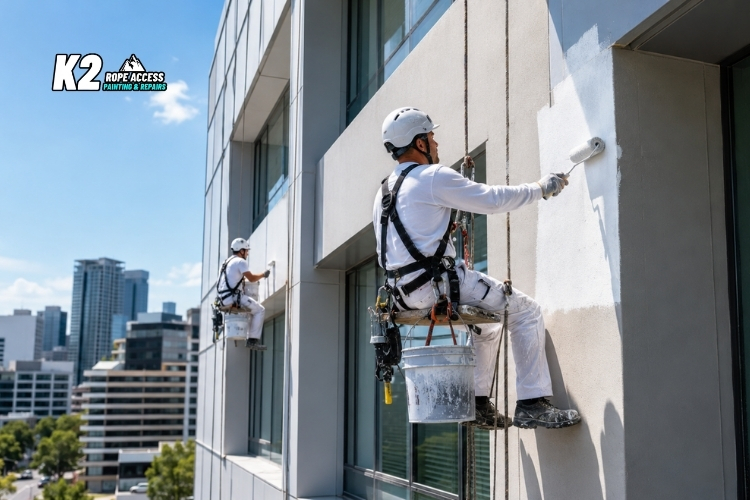
Where appropriate, rope access can provide a practical method for inspecting and repairing these areas while reducing the need for extensive scaffolding.
A high-access concrete repair scope may involve:
- Close visual inspection
- Removal of loose or unsound concrete
- Reinforcement preparation
- Corrosion treatment where specified
- Concrete reinstatement
- Protective coating systems
- Sealant or joint repairs
- Related façade remediation
For larger remediation programs, access methodology should be selected according to the repair scope, building conditions and project requirements.
Where surrounding coatings, cracks, sealants or water ingress also require attention, a broader façade remediation and painting program may be more appropriate than isolated concrete patching.
Concrete Spalling Repairs for NSW Strata Buildings
The question “Who pays for concrete spalling?” usually cannot be answered from the visible defect alone.
The correct starting point is to determine:
- What building element has failed
- Whether it is common property or lot property
- What caused the deterioration
- Whether renovations or owner works are involved
- What the strata plan and by-laws say
- What repair scope is technically required
For defects affecting common property, responsibility will generally sit with the owners corporation, but individual circumstances can differ. The strata plan, by-laws and appropriate professional advice should always be considered.
K2 Rope Access supports strata and managed buildings across Sydney and NSW with high-access concrete repairs, façade remediation and related exterior maintenance.
If your strata building has rust staining, cracking, loose concrete or an existing engineer’s report, send K2RA the building location, photographs and available documentation to discuss the appropriate next step.

Move from research to the right remedial scope
Related K2RA insights


Need this assessed on an actual building?
Send the building location, photos, defect information and available scope documents. K2RA can review the project context and help determine the next practical step.