Concrete Cancer Repair: How to Stop Structural Damage Before It Spreads
Concrete cancer repair helps stop corrosion, spalling and structural damage before it spreads. Learn the signs, causes and when to call a professional specialist.
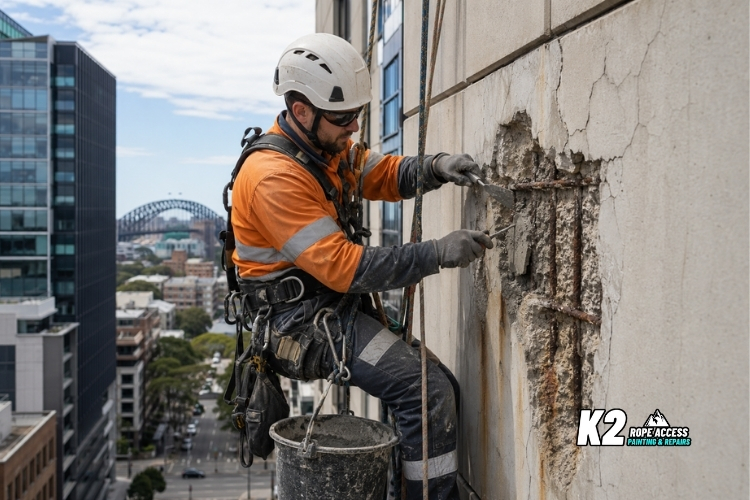
Concrete cancer repair should never be treated as a cosmetic patch, because the visible damage is often only the surface sign of corrosion, moisture movement and concrete deterioration beneath.
For strata, commercial and high-access buildings, concrete cancer can affect façades, balconies, car park ceilings, parapets, columns and exposed concrete edges. Left untreated, it can spread, weaken the surrounding concrete and increase the cost of future repairs. The earlier the problem is investigated, the easier it is to protect the building and reduce long-term risk.
What is concrete cancer?
Concrete cancer is a common term for concrete deterioration caused when steel reinforcement inside the concrete begins to rust. As the steel corrodes, it expands. That expansion places pressure on the surrounding concrete, which can lead to cracking, flaking, delamination and spalling.
This is why concrete cancer and concrete spalling repair are closely connected. Spalling is often one of the most visible signs that reinforcement corrosion is happening beneath the surface.
Moisture, salt, carbonation, poor original cover to reinforcement, failed coatings and cracks can all contribute to the issue. In coastal areas or exposed high-rise buildings, concrete degradation may develop faster because the façade is constantly exposed to weather, salt air and movement.
Signs of concrete cancer building owners should not ignore
The signs of concrete cancer can start small, but they usually become more obvious over time. Common warning signs include:
- cracked or flaking concrete
- rust stains on the surface
- bubbling or delaminating coatings
- exposed reinforcement steel
- hollow or drummy concrete when tapped
- chunks of concrete breaking away
- cracks near balcony edges, slabs or façades
- recurring water ingress around the affected area
Repairing cracked and flaking concrete early can prevent a small defect from becoming a larger structural concrete repair issue. If pieces of concrete are loose or falling, the area should be treated as a safety concern.
For buildings showing these signs, professional concrete spalling repair services can help assess whether corrosion has already affected the reinforcement.
What causes concrete cancer?
The main cause of concrete cancer is concrete reinforcement rust. Steel reinforcement is designed to sit protected within the concrete, but moisture and oxygen can reach it when the protective concrete cover is compromised.
Common causes include cracking, poor waterproofing, failed sealants, inadequate concrete cover, coastal salt exposure, carbonation, water ingress and ageing protective coatings. Once rust begins, the expanding steel creates more pressure, which causes more cracking and allows more moisture to enter. That cycle is how concrete cancer spreads.
Stopping the problem means breaking that cycle, not just covering the damaged area with mortar or paint.
How to fix concrete cancer properly
A proper repair process depends on the severity of the defect, but most professional concrete cancer specialists follow a controlled sequence.
1. Inspect and identify the full extent of damage
The visible crack may not show the full problem. Surrounding areas should be checked for hollow concrete, rust staining, moisture and coating failure.
2. Remove loose or damaged concrete
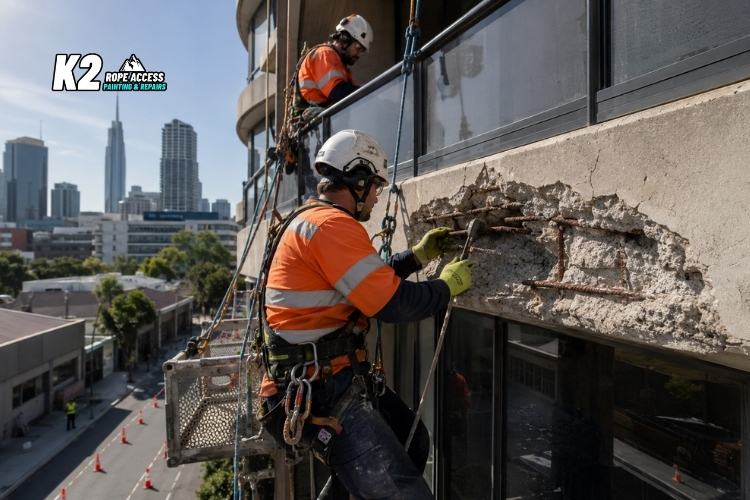
Weak, drummy or contaminated concrete is carefully removed until sound material is reached. This prevents the repair from being applied over unstable substrate.
3. Treat or replace corroded reinforcement
Repairing rusted rebar in concrete is one of the most important steps. The steel may need to be cleaned, treated with corrosion protection or replaced if it is too badly affected.
4. Reinstate the concrete with repair mortar
The damaged area is rebuilt using suitable repair mortar or structural repair materials. The system must be compatible with the building and exposure conditions.
5. Protect the repaired surface
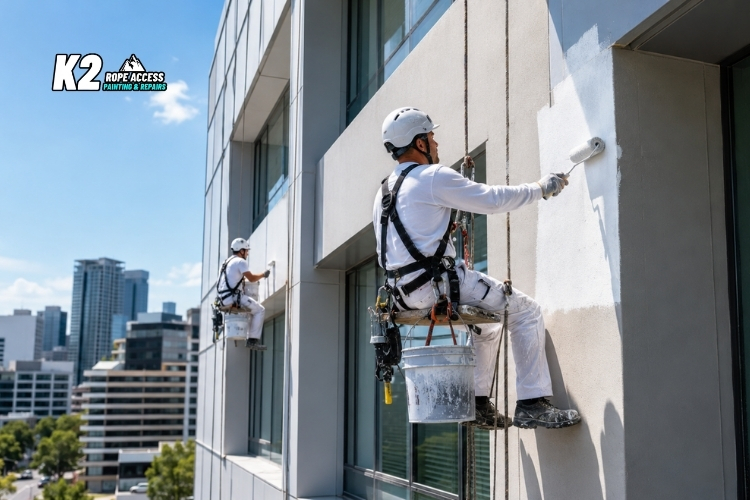
To stop concrete cancer from spreading, the repaired area usually needs protective coatings, waterproofing, sealant replacement or façade painting as part of a broader maintenance plan.
Where concrete damage is linked to coatings, cracks or water ingress, specialist façade remediation and painting can help protect the full exterior system after repairs are complete.
Why quick patches often fail
A quick patch may make the surface look better, but it does not always address the underlying corrosion. If rusted reinforcement is left untreated, the steel continues expanding behind the repair. The patch can crack, detach or fail within a short time.
This is why treating spalling concrete needs the right preparation, not just a surface filler. Long-term repair requires removing damaged concrete, dealing with corrosion and protecting the façade from further moisture exposure.
Concrete cancer treatment cost: what affects the price?
Concrete cancer treatment cost varies because every building and defect is different. The main cost factors include access requirements, building height, extent of concrete damage, amount of reinforcement corrosion, repair depth, waterproofing needs, coating specification and safety documentation.
For high-rise and multi-level buildings, access planning is a major part of the scope. Rope access may reduce disruption compared with heavy scaffolding where suitable, especially for targeted façade and balcony repairs.
A cheaper patch may seem attractive at first, but if the cause is not repaired, the same area can fail again and become more expensive later.
Preventing concrete degradation after repair
Preventing concrete degradation is about maintenance, not just one repair. Buildings should be inspected regularly for cracks, failed sealants, coating breakdown, water ingress and early rust staining.
Protective façade coatings, waterproofing details, expansion joint maintenance and timely crack repairs all help reduce moisture movement into the concrete. For strata and commercial buildings, this type of preventative maintenance can support safer, more predictable capital works planning.
When to call a concrete cancer repair specialist
A specialist should be called when concrete is cracking, flaking, rust-stained, hollow, loose or located on a façade, balcony, car park ceiling or structural element. These are not ideal DIY repairs, especially when the building is occupied or publicly accessible.
If your building is showing early signs of concrete cancer, contact K2RA for a concrete repair assessment before the damage spreads further.
Stop the cause before repairing the surface
Concrete cancer repair is most effective when the underlying cause is treated properly. That means identifying moisture pathways, removing damaged concrete, treating reinforcement, reinstating the surface and protecting the façade against future exposure.
For commercial, strata and high-access buildings, a repair should protect structural integrity, improve safety and support long-term façade performance. The sooner the problem is assessed, the more control building owners have over cost, disruption and repair outcomes.
Move from research to the right remedial scope
Related K2RA insights

Need this assessed on an actual building?
Send the building location, photos, defect information and available scope documents. K2RA can review the project context and help determine the next practical step.