How to Repair Cracks in Concrete: When DIY Fixes Are Enough and When You Need a Specialist
How to repair cracks in concrete depends on the crack type, location and risk level. Learn when DIY concrete repair is enough and when a specialist should inspect the damage.
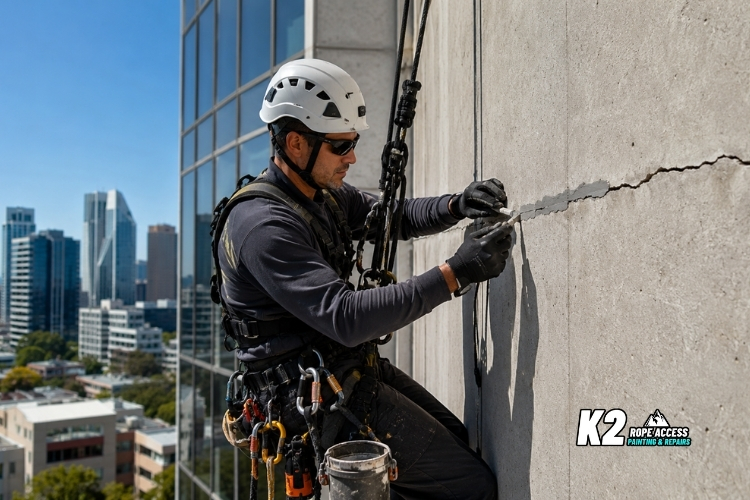
How to repair cracks in concrete depends on where the crack is, how wide it is, whether it is moving, and whether water or corrosion is involved.
Small cracks in a driveway, path or concrete floor can often be repaired with DIY concrete repair products. But cracks in commercial façades, balconies, suspended slabs, foundations or high-rise structures need more care. A quick patch may improve appearance for a short time, but it will not solve deeper problems such as water ingress, concrete spalling, reinforcement corrosion or structural movement.
Understanding the difference between a minor surface crack and a warning sign is the first step toward a safer, longer-lasting repair.
When DIY concrete repair can be enough
DIY concrete repair can be suitable when the crack is narrow, dry, stable and located on a low-risk surface. For example, repairing hairline cracks in concrete paths, small patios or ground-level slabs may only require cleaning, preparation and a suitable concrete crack filler.
A simple filler or best concrete patch compound may also help seal cracks in concrete floor areas where the issue is cosmetic and not exposed to heavy structural load. The key is stability. If the crack has not widened, there is no water coming through, and the surrounding concrete is sound, a DIY repair may be practical.
For a cracked driveway, the process usually involves cleaning the crack, removing loose material, applying filler or patching compound, smoothing the surface and allowing it to cure properly. This can help fix cracked concrete driveway surfaces where the damage is shallow and localised.
How to repair cracks in concrete properly
The right repair depends on the crack type. Before applying any product, inspect the concrete carefully.
1. Clean and open the crack
Remove dust, loose concrete, weeds, failed coatings and debris. A repair product will not bond well to a dirty or unstable surface.
2. Check for moisture or rust staining
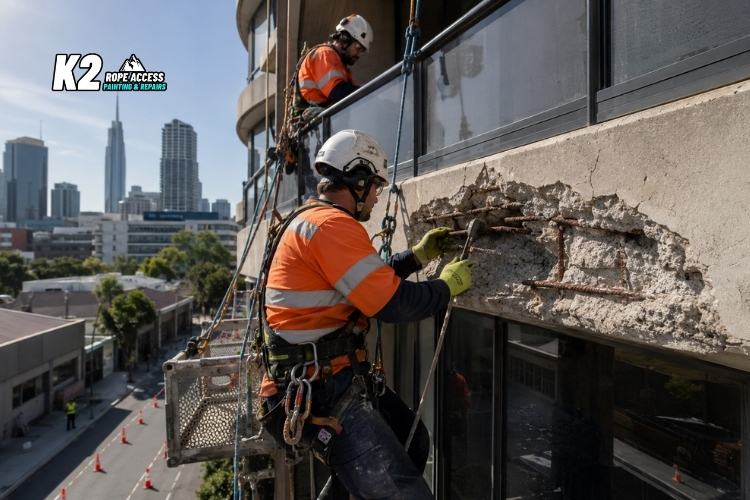
If water is entering through the crack, or rust stains are visible, the issue may be more serious than a simple surface defect. Moisture can reach reinforcement and contribute to concrete spalling.
3. Choose the right repair material
Hairline cracks may suit a flexible concrete crack filler. Wider non-structural cracks may need a patching compound or repair mortar. Epoxy concrete repair can be useful in some structural bonding situations, but it is not always right for active cracks that continue to move.
4. Protect the repaired surface
External concrete may need sealing, coating or waterproofing after repair. This is especially important for façades, balconies and exposed walls.
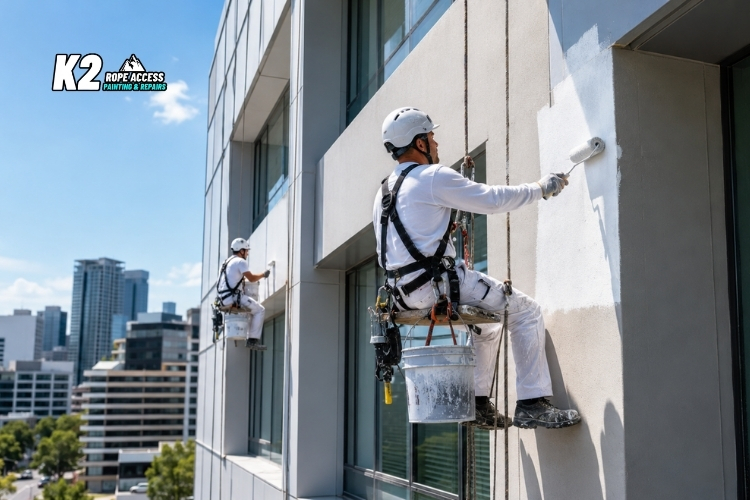
If cracking appears on a building exterior, professional concrete spalling repair services can help identify whether the defect is isolated or part of a wider façade issue.
Structural vs non-structural concrete cracks
Knowing the difference between structural vs non-structural concrete cracks is important. Non-structural cracks are often caused by shrinkage, minor surface movement or ageing. They may affect appearance and allow moisture in, but they do not always indicate immediate structural risk.
Structural cracks are more concerning. They may appear near columns, beams, balcony edges, foundations, load-bearing walls or suspended slabs. They can be wider, deeper, spreading or associated with movement, rust, hollow concrete or water ingress.
Concrete foundation crack repair, balcony crack repair and façade crack repair should be treated with caution. These areas can affect safety, waterproofing and long-term building performance.
When to call a professional for concrete cracks
You should call a professional for concrete cracks when the issue is beyond a simple surface repair. Warning signs include:
- cracks wider than a few millimetres
- cracks that keep growing
- rust stains or exposed reinforcement
- loose, hollow or drummy concrete
- water leaking through the crack
- cracking on a commercial façade or balcony
- cracks near structural elements
- repeated failure after previous patching
- concrete breaking away from the surface
For commercial and strata buildings, professional concrete repair services are usually the safer option when cracks appear on exterior walls, parapets, balcony slabs, car park ceilings or high-access façades. These defects may require inspection, breakout, steel treatment, repair mortar, protective coatings and ongoing façade maintenance.
Where cracks are linked to coatings, water ingress or exterior deterioration, specialist façade remediation and painting services can help address both the visible crack and the protective system around it.
Patching large cracks in concrete needs the right diagnosis
Patching large cracks in concrete should not be rushed. A large crack may need more than a filler. It may require saw cutting, routing, reinforcement treatment, repair mortar, injection, waterproofing or engineering advice.
If the crack is active, rigid materials may fail again. If the surrounding concrete is weak, a patch may detach. If water is still entering, the repair may hide the problem while deterioration continues behind the surface.
This is why diagnosis matters. The repair method should match the cause of the crack, not just the size of the opening.
Why commercial concrete cracks need extra care
Commercial buildings, strata properties and high-rise assets have different risks from small domestic concrete surfaces. A crack on a commercial façade may affect waterproofing, structural façade integrity, resident safety, public areas or long-term asset value.
Access can also be more complex. Rope access may be needed to inspect and repair difficult façade areas safely without unnecessary scaffolding or disruption. For building managers and owners corporations, clear documentation and a proper repair scope are just as important as the repair itself.
If you are unsure whether a crack is minor or serious, contact K2RA for a concrete crack repair assessment before applying a quick patch.
The safest approach: repair the cause, not just the crack
Concrete crack repair is not only about filling a gap. It is about understanding why the crack appeared and choosing a repair that suits the surface, location and risk level.
DIY fixes are useful for small, stable, low-risk cracks. But professional support is needed when cracking involves water ingress, corrosion, structural areas, façades, balconies or commercial buildings.
A good repair protects the concrete, reduces future damage and helps preserve the building for the long term.

Move from research to the right remedial scope
Related K2RA insights

Need this assessed on an actual building?
Send the building location, photos, defect information and available scope documents. K2RA can review the project context and help determine the next practical step.