Insurance Painting Work for Damage Home & Office Building: What Property Owners Need to Know
Insurance Painting Work for Damage Home & Office Building requires more than repainting visible marks. Learn when insurance painting contractors, repair scopes and façade specialists may be needed.
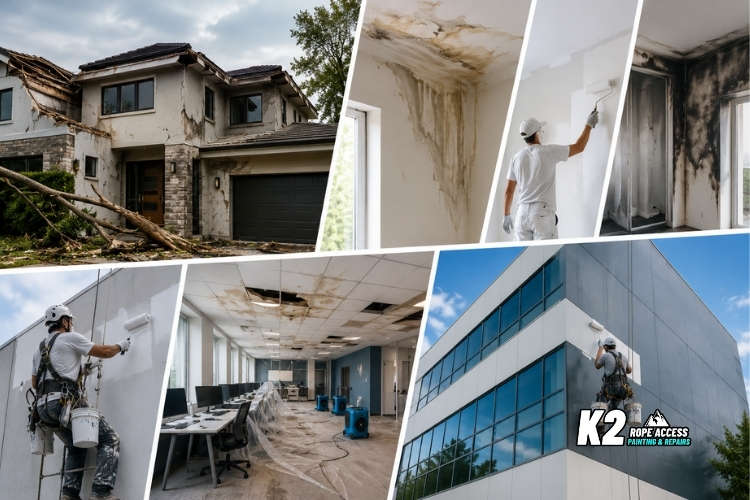
Insurance Painting Work for Damage Home & Office Building: What Property Owners Need to Know starts with understanding what caused the damage, what your policy may cover, and what type of painting repair is actually required.
After storm damage, water ingress, fire damage or façade deterioration, repainting is often only one part of the restoration process. The surface may need cleaning, drying, patching, sealing, concrete repair, coating removal or substrate preparation before any new paint is applied. For homes, offices and commercial buildings, the goal is not just to make the area look presentable again. It is to restore protection, durability and safety.
This is where experienced insurance painting contractors can make the process clearer for property owners, strata managers and commercial asset teams.
What insurance painting work usually involves
Insurance painting work is typically needed after a covered event causes damage to walls, ceilings, façades, cladding, coatings or exterior surfaces. This may include water damage painting restoration after leaks, exterior painting after storm damage, fire damage painting contractors for smoke-affected areas, or property damage painting repair after impact or structural movement.
In simple cases, the work may involve repairing drywall and painting for insurance after internal water damage. In more complex commercial or strata buildings, the damage may affect exterior coatings, concrete, sealants, membranes or façade systems. Those projects usually require more technical investigation before painting starts.
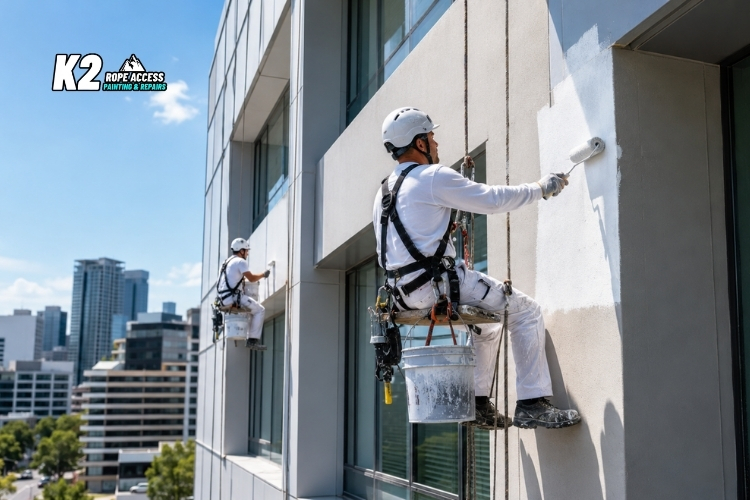
For high-access buildings, specialist façade remediation and painting services can help property owners understand whether the job is only painting or part of a wider exterior repair scope.
Insurance claim for painting: what property owners should check first
Before hiring painters for insurance jobs, it is important to document the damage clearly. Take photos, record dates, note the likely cause and keep any reports from builders, engineers, insurers or strata managers.
An insurance claim for painting may depend on whether the damage was sudden and accidental, or caused by long-term wear, poor maintenance or gradual deterioration. Policies vary, so property owners should always check the details with their insurer or broker.
The painting contractor’s role is not to decide policy coverage. However, a professional contractor can help by providing clear scopes, photos, repair notes and practical information that supports the assessment process.
When painting is enough — and when restoration is needed
Some damage is mostly cosmetic. For example, a small internal stain after a repaired leak may only need surface preparation, stain blocking and repainting. In that case, home insurance painting services or residential damage painting services may be enough.
Other issues need more than paint. Bubbling coatings, recurring water stains, cracked render, loose concrete, corrosion marks or damp exterior walls may point to underlying problems. Painting too early can trap moisture or hide damage that continues to spread.
For office building painting restoration or commercial building painting repair, the correct sequence often includes investigation, repair, preparation, primer and coating. This is especially true where façades are exposed to weather, UV, moisture and movement.
Common causes of insurance-related painting repairs
Water damage painting restoration
Water damage is one of the most common reasons for repainting. Internally, it may leave stains, peeling paint or damaged plasterboard. Externally, it may reveal failed sealants, cracks, waterproofing issues or façade defects.
Before repainting, the source of the water must be fixed. Otherwise, the same stain or coating failure will return.
Fire and smoke damage painting
Fire damage painting contractors may need to clean soot, remove smoke residue, seal affected surfaces and repaint with suitable systems. Smoke can leave odours and staining if preparation is not handled correctly.
Storm and exterior impact damage
Storms can damage exterior coatings, cladding, parapets, sealants and façade elements. Exterior painting after storm damage should include a careful review of loose materials, moisture entry points and exposed surfaces.
Building façade and coating failure
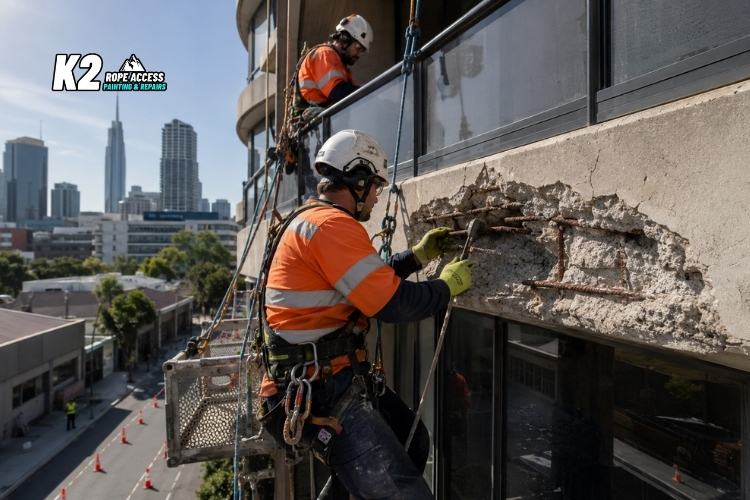
On commercial buildings, what looks like an insurance painting issue may actually be linked to concrete spalling, corrosion, failed membranes or long-term façade deterioration. This is why property restoration painting should be assessed properly before a repair scope is confirmed.
How to handle insurance painting claims more smoothly
A smoother process starts with organisation. Property owners and managers should gather evidence, ask for written scopes and keep communication clear between the insurer, contractor and building stakeholders.
Helpful steps include:
- photograph the damaged areas before temporary repairs
- record when the issue occurred
- confirm whether the cause has been fixed
- request a written repair and painting scope
- ask whether substrate repair is needed before repainting
- keep invoices, reports and correspondence in one place
If the damage affects a commercial façade or difficult-access building, K2 Rope Access façade specialists can help assess the exterior condition and identify whether rope access remediation is suitable.
Choosing an insurance approved painting company or specialist contractor
The phrase insurance approved painting company can mean different things depending on the insurer, location and type of claim. Some insurers may have preferred suppliers, while others allow property owners to obtain independent quotes.
When choosing a contractor, look for clear communication, relevant experience and the ability to explain what needs to happen before painting. For simple internal repainting, a standard painter may be suitable. For high-rise façades, commercial buildings or damaged exterior envelopes, a specialist remediation contractor may be more appropriate.
Ask whether the contractor can provide:
- a clear written scope
- photos and condition notes
- safe access planning
- repair recommendations before coating
- experience with commercial or strata buildings
- suitable coating systems for exposed areas
For buildings with façade damage, speak with K2RA about insurance-related façade painting and remediation before approving a repaint-only scope.
Why commercial and office buildings need extra care
Commercial and office buildings often have larger surfaces, higher access requirements and more complex building systems than homes. Damage may affect tenants, business operations, entryways, façades, car parks, balconies or external walls.
Office building painting restoration should consider business continuity, site safety, access hours, documentation and long-term coating performance. In some cases, rope access may reduce disruption compared with scaffold or large access equipment, especially for targeted repairs.
Commercial building painting repair should also consider whether the damage is isolated or part of a broader maintenance issue. A single water stain or crack may be the visible symptom of a larger façade problem.
Painting after damage should restore protection, not just appearance
Insurance-related painting work should never be rushed purely to cover visible marks. The best result comes from identifying the cause, repairing the affected substrate and applying the right coating system for the surface.
For homes, that may mean drywall repair, stain blocking and repainting. For commercial and strata buildings, it may involve façade assessment, waterproofing review, concrete repairs, sealants and high-access coating works.
When painting is part of a proper restoration process, the building is not only made to look better. It is better protected against future damage, weather exposure and premature coating failure.
Move from research to the right remedial scope
Related K2RA insights

Need this assessed on an actual building?
Send the building location, photos, defect information and available scope documents. K2RA can review the project context and help determine the next practical step.