Concrete Crack Repair Bunnings: When DIY Products Are Enough and When to Call a Specialist
Concrete Crack Repair Bunnings searches often start with DIY products, but not every crack should be patched at home. Learn when fillers are enough and when a specialist is needed.
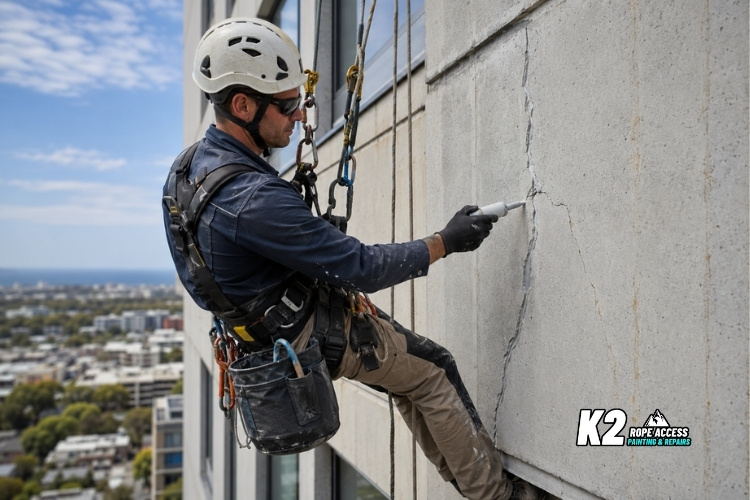
Concrete Crack Repair Bunnings: When DIY Products Are Enough and When to Call a Specialist is a useful question because not every crack needs a contractor — but some cracks should never be treated as a quick weekend patch.
If you are searching for concrete crack repair Bunnings, you are probably trying to understand whether a concrete crack filler, patching compound or epoxy concrete repair kit can solve the problem. For small, non-structural cracks around driveways, paths, patios or minor surface areas, DIY concrete repair products can be practical. But when cracking appears on a building façade, balcony edge, suspended slab, foundation wall or commercial structure, the risk changes.
The key is knowing when a crack is cosmetic and when it may point to movement, water ingress, corrosion or structural concrete damage.
When Bunnings concrete repair products can be enough
DIY products can work well for small, stable cracks where the concrete is not carrying major structural load and there are no signs of water damage, rust or movement.
A concrete crack filler Bunnings product may be suitable for hairline crack repair concrete on a driveway, small patio, garden path or low-risk surface. Concrete patching compound can also be useful for shallow chips, small holes and minor surface repairs.
In these cases, the goal is usually appearance, basic sealing and preventing small cracks from collecting water or dirt. If the crack is narrow, dry, stable and easy to access, a DIY repair may be reasonable.
When DIY concrete repair is not the right solution
DIY vs professional concrete repair becomes a serious decision when the crack is wider, growing, damp, rusty or located on a building element that affects safety or durability.
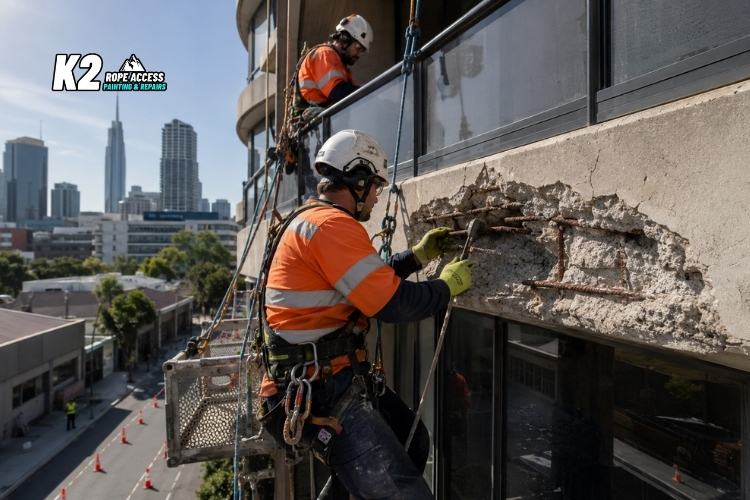
A store-bought filler may hide the issue, but it will not fix deeper causes such as reinforcement corrosion, slab movement, water ingress behind the façade or concrete spalling. If the substrate is deteriorating, the repair material may fail quickly, especially on exposed commercial buildings or strata properties.
For high-risk cracks, professional concrete spalling repair services can help identify whether the issue is only surface-level or part of a larger concrete deterioration problem.
Signs a concrete crack needs a specialist
Some cracks should be inspected before any product is applied. These warning signs suggest it may be time to call a concrete repair specialist:
- cracks that are widening or spreading
- rust stains around the crack
- loose, hollow or drummy concrete
- exposed steel reinforcement
- water leaking through or around the crack
- cracking near balcony edges, columns, beams or façades
- concrete foundation cracks
- cracks on suspended slabs or multi-level buildings
- repeated patch failure after previous repairs
Structural concrete cracks should not be treated like minor driveway damage. They may require investigation, preparation, corrosion treatment, reinstatement mortar, protective coatings or a broader remedial scope.
Bunnings driveway repair vs commercial façade repair
Bunnings driveway repair products are usually aimed at accessible, ground-level surfaces. That is very different from repairing cracking on a commercial façade, high-rise wall, balcony slab or multi-level building exterior.
Driveway cracks often involve surface wear, shrinkage or minor movement. Commercial building cracks may involve building envelope failure, moisture entry, coating breakdown or reinforcement corrosion. The access requirements are also different. A driveway repair can usually be done from the ground. A façade repair may need rope access, safety documentation, anchor systems and trained technicians.
That is why the best concrete patch Bunnings option for a small home repair may not be suitable for a strata or commercial building defect.
How to fix cracked concrete properly
The right repair process depends on the cause of the crack. A simple patch may be enough for a small surface crack, but a professional repair usually involves a more controlled sequence.
1. Assess the crack
The first step is to understand whether the crack is stable, active, structural or moisture-related. Location matters. A crack in a garden path is not the same as a crack on a building façade.
2. Prepare the surface
Loose material, dust, failed coatings and weak concrete need to be removed. Poor preparation is one of the main reasons DIY repairs fail.
3. Choose the right material
Hairline cracks may need a flexible sealant or filler. Wider cracks may need a repair mortar. Some structural cracks may require an epoxy concrete repair kit or specialist injection system, but these should be used carefully and only when appropriate.
4. Protect the repaired area
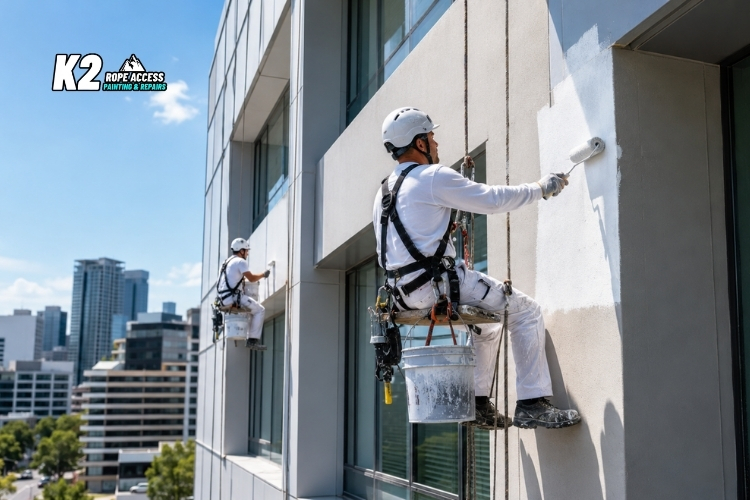
On exposed buildings, the repair may need protective coatings, waterproofing or façade painting to prevent future weather damage.
If the crack is part of a larger building issue, K2RA’s high-access concrete repair team can assess the façade and recommend a repair approach suited to the building, not just the visible crack.
When to hire a concrete contractor
You should hire a concrete contractor or specialist façade repair team when the crack affects safety, water ingress, structural integrity or long-term building performance.
This is especially important for strata buildings, commercial properties and high-rise assets across NSW and ACT, where small exterior defects can become costly if left untreated. A professional contractor can check whether cracking is connected to concrete spalling, failed coatings, corrosion or movement in the building envelope.
For building managers and owners corporations, requesting a concrete repair assessment is usually more cost-effective than repeatedly patching the same defect.
DIY repair has its place — but know its limits
Concrete crack repair products from Bunnings can be useful for small, stable and low-risk repairs. They are convenient, affordable and practical when the problem is genuinely minor.
But if the crack is on a commercial façade, balcony, suspended slab, foundation area or high-access building exterior, it deserves a closer look. The cost of using the wrong product is not just a failed patch. It can mean trapped moisture, worsening concrete damage and more expensive repairs later.
The safest approach is simple: use DIY products for minor surface repairs, but involve a specialist when the crack suggests movement, water ingress, corrosion or structural risk.
Move from research to the right remedial scope
Related K2RA insights

Need this assessed on an actual building?
Send the building location, photos, defect information and available scope documents. K2RA can review the project context and help determine the next practical step.