Build and Paint: How Commercial Façade Works Protect and Upgrade Buildings
Build and paint projects for commercial façades should combine repair, preparation and protective coatings. This article explains how commercial façade works protect and upgrade buildings for long-term performance.
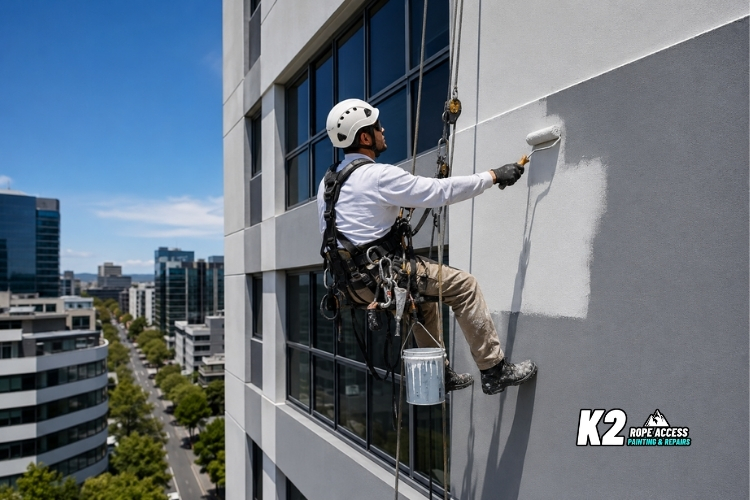
Build and Paint: How Commercial Façade Works Protect and Upgrade Buildings is not just about applying a new colour to an exterior wall. It is about protecting the building envelope, improving long-term performance and making sure the façade can handle weather, movement and daily exposure.
For commercial, strata and high-access properties, building exterior painting should rarely be treated as a standalone cosmetic task. If the façade has cracking, water ingress, concrete deterioration, failed sealants or ageing coatings, simply painting over the surface can hide problems rather than solve them. A smarter build and paint approach combines repair, preparation, coating selection and access planning into one coordinated façade strategy.
Why commercial façade works should start before the paint
A durable commercial facade upgrade begins with the condition of the substrate. Paint will only perform as well as the surface beneath it. If the wall is damp, cracked, contaminated or deteriorating, even premium exterior facade coating systems may fail early.
This is why commercial facade restoration often includes pressure cleaning, defect inspection, crack repairs, concrete patching, sealant review and priming before painting starts. For building managers and owners corporations, this preparation stage is where the long-term value is created.
Where the façade has more complex defects, specialist façade remediation and painting services can help align the painting scope with the actual repair needs of the building.
Build and paint means repair first, finish second
The phrase “build and paint” can sound simple, but on commercial façades it should mean strengthening and protecting the exterior before applying the final finish. This may include building envelope repair, commercial masonry repair, structural facade repair and exterior wall protection.
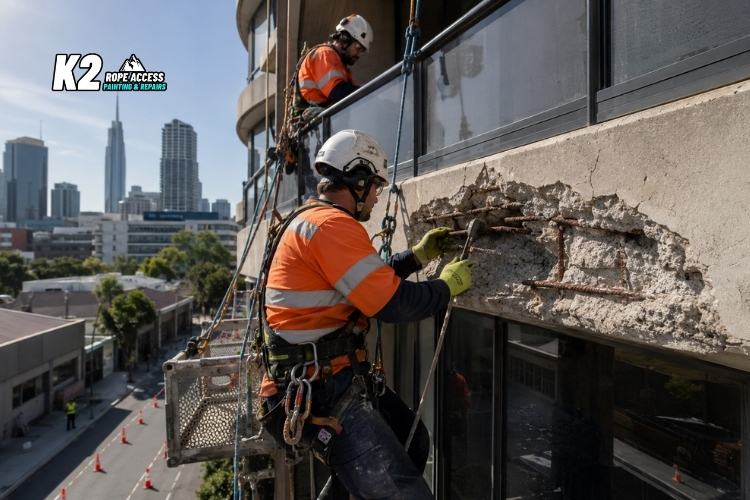
If cracks, spalling or hollow concrete are ignored, the final coating may look clean for a short time but fail as moisture continues moving through the structure. That can lead to bubbling paint, staining, delamination and repeated maintenance costs.
For concrete façades, commercial concrete spalling repair specialists should be involved when there are rust stains, exposed reinforcement, loose concrete or visible cracking around balconies, ledges and wall panels.
How façade renovation services protect commercial buildings
Facade renovation services are about extending the usable life of the building exterior. They help reduce weather damage, improve presentation and support asset value. For strata and commercial properties, this can be especially important before capital works planning, leasing activity, compliance reviews or major maintenance cycles.
A well-planned façade renovation may include:
- repairing cracks, spalling and damaged render
- replacing failed sealants and joint materials
- restoring exterior building cladding
- applying primers, membranes or protective coatings
- repainting exposed façades with suitable exterior systems
- checking roof anchors and access systems before works begin
This integrated approach supports both commercial building aesthetics and practical protection.
Choosing the right exterior façade coating
Not every coating is suitable for every commercial building. The right exterior facade coating depends on exposure, substrate, movement, moisture levels and the desired maintenance cycle.
Acrylic coatings for general façade protection
Acrylic coatings are commonly used for building exterior painting because they offer good weather resistance, colour retention and flexibility on many masonry and rendered surfaces.
Elastomeric coatings for movement and crack bridging
Where minor movement or hairline cracking is present, elastomeric coatings may provide additional flexibility. These systems are often useful when weatherproofing buildings that are exposed to heavy rain, UV and temperature variation.
Membrane systems for higher moisture protection
Some façades need a more robust membrane system, especially where water ingress has been an ongoing issue. These systems can support exterior wall protection when correctly specified and applied.
The coating choice should always follow proper investigation. A façade painting contractor should be able to explain why a system suits the building, not just quote a colour and number of coats.
Access planning matters on high-rise and difficult façades
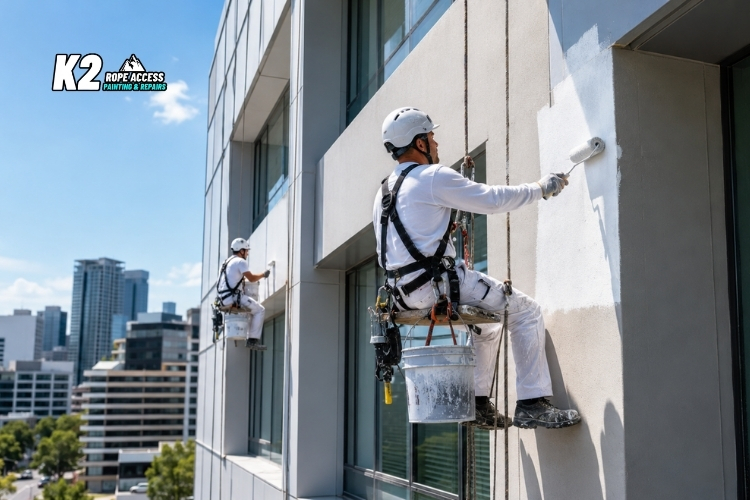
Commercial façade works often involve difficult access areas: parapets, vertical walls, balcony edges, lift overruns, window surrounds and upper-level elevations. Rope access can be a practical option when scaffolding is disruptive, costly or unnecessary for the scope.
Before works begin, access points, anchor systems and safety requirements need to be reviewed. In many cases, roof anchor testing and certification should be considered as part of the planning process for safe high-access maintenance.
A good access methodology helps minimise disruption to tenants, residents, customers and building operations. It also allows technicians to work directly on targeted façade defects without overcomplicating the project.
Commercial building maintenance is easier when defects are handled early
Commercial property upgrade projects often become more expensive when visible defects are left too long. Small cracks can widen, failed coatings can allow moisture through, and minor spalling can develop into larger concrete repair needs.
Preventative commercial building maintenance helps reduce that risk. Instead of waiting for widespread façade failure, building managers can plan inspections, targeted repairs and repainting before the building reaches a more expensive stage of deterioration.
Signs that a building may need attention include peeling paint, chalking, water stains, cracking, exposed concrete, rust marks, failed sealants, flaking render and discoloured exterior cladding.
How to choose façade painting contractors
The right facade painting contractors should understand more than paint application. Look for a team that can assess defects, recommend repair methods, manage high-access work safely and select coatings that suit the building’s exposure.
A strong contractor should provide clear scopes, practical communication and a remediation-first mindset. For strata, commercial and government assets, this is especially important because façade works often involve approvals, safety documentation, resident communication and long-term maintenance planning.
If your building needs more than a surface repaint, speak with K2RA about commercial façade remediation and plan the right repair and coating pathway before works begin.
Building better façades starts with the right sequence
A successful build and paint project protects the façade before it upgrades the appearance. That means repair first, preparation second, coating third and maintenance planning after completion.
When commercial façade works are handled properly, the result is more than a cleaner exterior. The building gains better weather resistance, stronger visual presentation, improved durability and a clearer maintenance strategy for the years ahead.
For commercial, strata and high-access buildings, the best outcome comes from treating painting as part of a complete façade protection system — not the final layer of a rushed repair.
Move from research to the right remedial scope
Related K2RA insights

Need this assessed on an actual building?
Send the building location, photos, defect information and available scope documents. K2RA can review the project context and help determine the next practical step.