Concrete crack repair materials play a critical role in what commercial buildings need for long-term façade protection, especially when cracks are exposed to rain, UV, coastal air and daily building movement.
For strata, commercial and high-rise assets, a crack in the façade is rarely just a surface issue. It may indicate moisture movement, coating failure, concrete stress, corrosion risk or early deterioration within the building envelope. Choosing the right repair material matters because the wrong product can trap moisture, fail under movement or simply hide a defect until it becomes more expensive to repair.
Long-term façade maintenance starts with understanding the crack, not just filling it.
Why concrete cracks need more than a quick patch
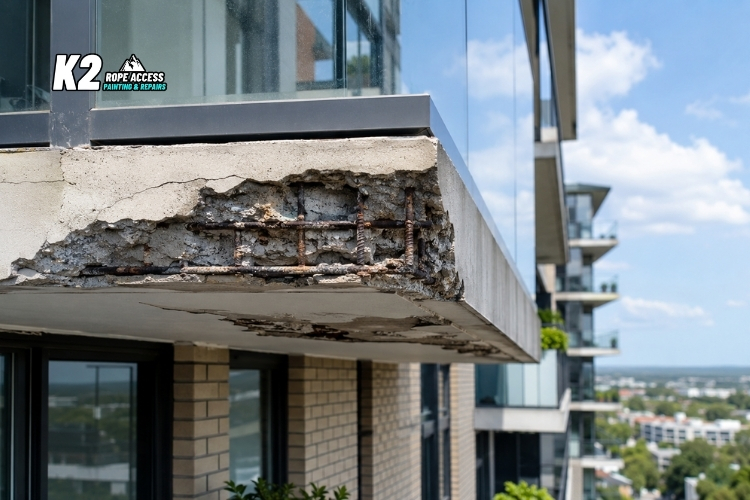
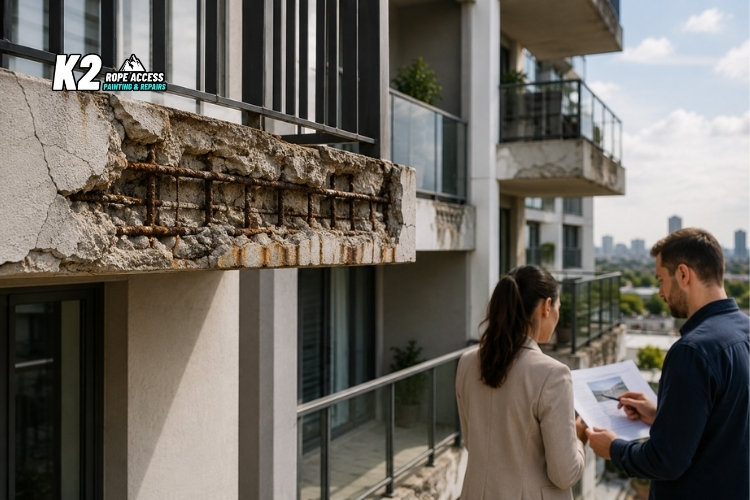
A visible crack can allow water to enter the façade system. Once moisture gets behind coatings, into concrete or around exposed reinforcement, it can contribute to spalling, staining, delamination and ongoing building envelope protection issues.
This is why commercial façade protection requires a more complete approach. The repair material must suit the crack type, exposure level, substrate condition and future movement of the building. A rigid filler may fail where flexibility is needed. A flexible sealant may not be suitable where structural repair is required.
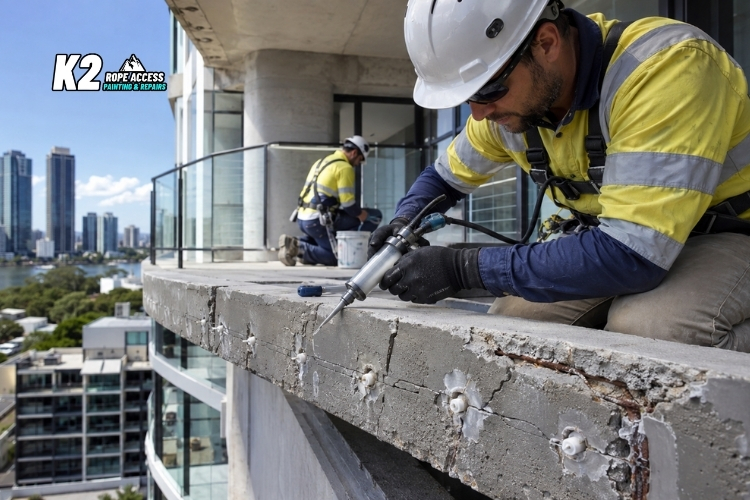
For buildings with cracking, spalling or exposed reinforcement, professional concrete spalling repairs for commercial façades can help ensure the repair is matched to the real cause of the defect.
Common concrete crack repair materials used on commercial buildings
Different crack repair systems are used depending on whether the crack is cosmetic, active, structural, moisture-related or part of a larger façade deterioration problem.
Epoxy injection for structural cracks
Epoxy injection is often used where a crack needs to be bonded and strengthened. It creates a hard, high-strength repair, making it suitable for certain structural crack scenarios. However, it is not ideal for active cracks that continue to move, because rigid materials can fracture again if the substrate shifts.
Polyurethane injection for water ingress control
Polyurethane injection is commonly used where water ingress is present. It expands and reacts with moisture, helping seal cracks and voids. This can support commercial exterior weatherproofing, particularly where leaks are active or difficult to access from the outside.
Flexible sealants for movement cracks
Commercial building sealants are used where movement is expected, such as façade joints, expansion areas, panel junctions and some non-structural cracks. The correct sealant must be compatible with the substrate, UV exposure, coatings and joint design.
Cementitious repair mortars
Repair mortars are used to reinstate damaged concrete, patch areas around cracks and rebuild sections affected by spalling or surface deterioration. They are often part of larger façade restoration services, especially when cracking is linked to corrosion or concrete breakdown.
Protective coatings and membrane systems
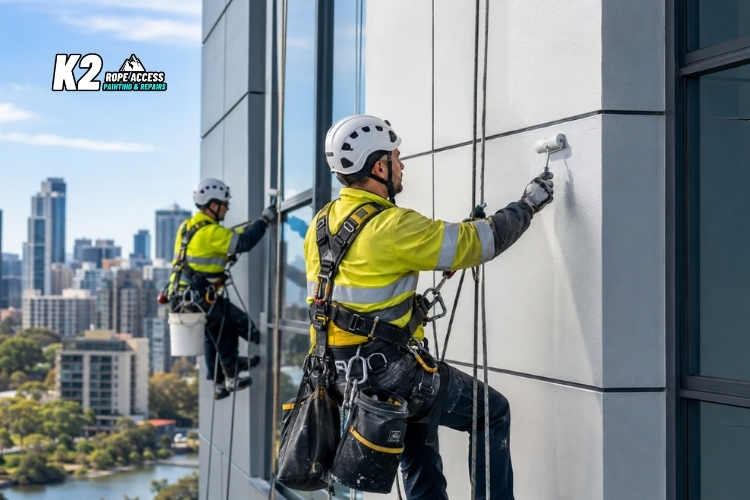
Facade protective coatings help protect repaired surfaces from UV, rain and pollutants. In some cases, UV resistant façade coatings or membrane systems are used to improve weather damage prevention for buildings and reduce future moisture entry.
Matching repair materials to the building condition
The best material is not always the strongest product. It is the one that suits the defect.
Before choosing a repair system, the façade should be assessed for crack width, depth, movement, moisture, hollow concrete, rust staining, failed coatings and surrounding substrate condition. If there are signs of concrete spalling, exposed reinforcement or repeated water ingress, the project may need more than crack filling.
This is especially important for exterior cladding maintenance and commercial masonry waterproofing, where different façade surfaces may behave differently under heat, rain and movement. Treating every crack the same way can lead to early failure.
Façade waterproofing systems and protective coatings
Once cracks are repaired, the façade still needs protection. This is where façade waterproofing systems and protective coatings become important.
A coating system may include primers, crack-bridging membranes, elastomeric coatings, anti-carbonation coatings or weather-resistant exterior finishes. The purpose is not only to improve appearance, but to support commercial exterior preservation and protect the repaired surface from further exposure.
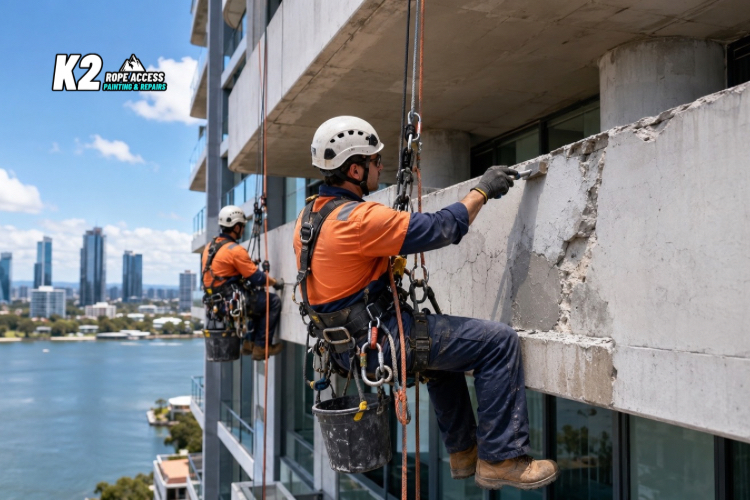
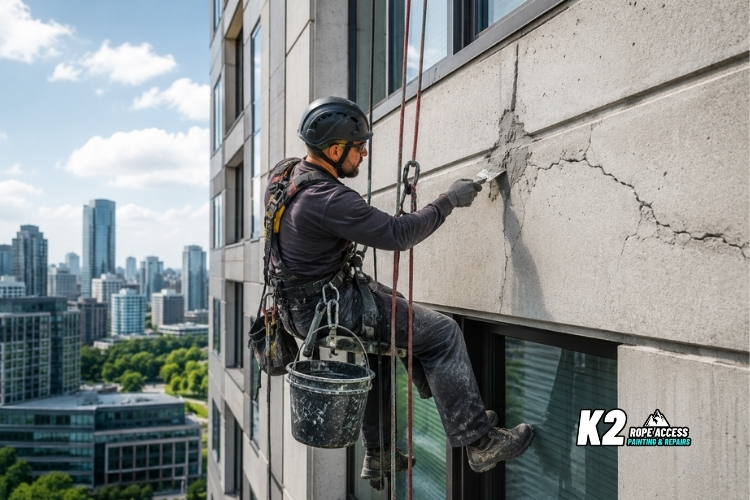
For high-rise and difficult-access buildings, coating selection should also consider maintenance cycles, rope access requirements and future inspection access. A good repair should make future preventative façade maintenance easier, not harder.
How cracks affect structural façade integrity
Not all cracks are structural, but all cracks should be taken seriously on commercial buildings. Even small cracks can become pathways for moisture, especially around balconies, parapets, ledges, penetrations and exposed elevations.
Over time, water entry can affect reinforcement, coatings and adjacent materials. This can weaken structural façade integrity and create safety risks if loose concrete or façade elements develop.
For buildings with multiple exterior defects or high-access areas, rope access high-rise maintenance services can help inspect, repair and maintain difficult-to-reach façades without unnecessary disruption.
What commercial buildings need for long-term façade protection
Long-term protection depends on a full system, not a single product. Commercial assets usually need a combination of inspection, diagnosis, concrete repair, sealant replacement, waterproofing, coating application and ongoing maintenance.
The most reliable approach includes:
- identifying why the crack appeared
- repairing damaged concrete before coating
- using flexible sealants where movement is expected
- selecting compatible waterproofing and coating systems
- protecting exposed areas from UV, rain and pollutants
- planning inspections before defects become costly
This is the difference between a temporary patch and a durable façade repair strategy.
When to speak with a façade repair specialist
A specialist should be involved when cracks are spreading, water ingress is present, rust stains appear, concrete sounds hollow, coatings are bubbling, or pieces of concrete have started to break away.
Commercial buildings in NSW and coastal environments can face strong weather exposure, salt air and high UV levels. That makes the right repair methodology even more important.
If your building has visible cracking, water ingress or signs of façade deterioration, contact K2RA for a commercial façade repair assessment before the damage progresses.
Protecting the façade means protecting the asset
Concrete crack repair materials are only effective when they are selected as part of a complete façade protection strategy. A good repair considers movement, moisture, access, coatings, waterproofing and long-term maintenance.
For commercial and strata buildings, the goal is not simply to make cracks disappear. The goal is to protect the façade, preserve the building envelope and reduce the risk of repeated repairs.
With the right materials, proper preparation and a specialist access methodology, façade repairs can support long-term performance and give owners a clearer path for future maintenance planning.