Concrete Repair: What Building Owners Should Know Before Starting Repairs
Concrete Repair: What Building Owners Should Know Before Starting Repairs explains how to identify early warning signs, understand deterioration causes and plan repairs that support long-term building performance.
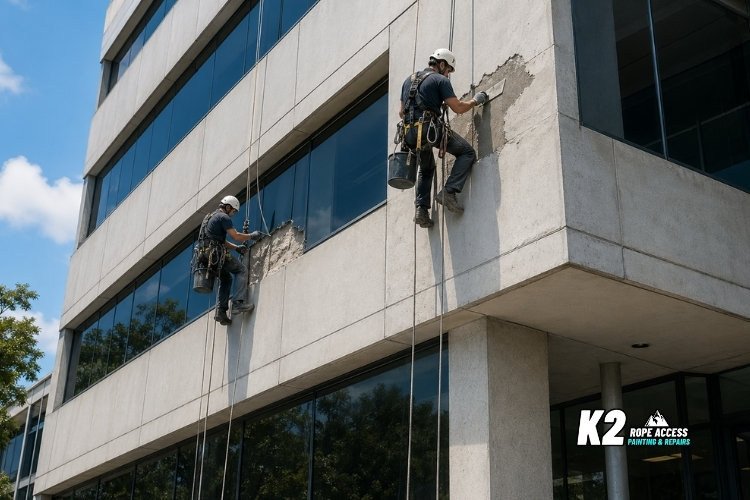
Concrete Repair: What Building Owners Should Know Before Starting Repairs begins with a simple reality: visible damage is often only part of the problem. By the time concrete starts cracking, delaminating or breaking away, there may already be deeper issues affecting durability, safety and long-term building performance.
For building owners and managers, concrete repair is not just a patching exercise. On commercial and strata buildings, it often sits within a larger façade and asset protection strategy. A small defect can point to water ingress, corrosion, movement, poor previous repairs or ageing materials. That is why the right scope matters from the start. A rushed repair may improve appearance temporarily, but it rarely solves the reason the damage appeared in the first place.
Why concrete damage should not be ignored on commercial buildings
Concrete defects tend to get more expensive over time. What begins as minor cracking or staining can develop into loose material, exposed reinforcement, water penetration and wider façade deterioration. That is especially true on older buildings or exposed elevations where moisture and movement have been affecting the structure for years.
For owners dealing with commercial concrete repair, the first step is understanding that appearance and performance are closely linked. Damaged concrete does not only affect presentation. It can also affect waterproofing, maintenance costs and the ongoing reliability of the building envelope.
If your property is already showing signs of active spalling or deteriorated concrete, review concrete spalling repair solutions for commercial and strata buildings.
Common signs of concrete damage building owners should watch for
Not all problems start with large visible failures. Some of the most important signs of concrete damage are smaller and easier to dismiss at first.
Early warning signs to take seriously
These include:
- cracking around slab edges, beams or columns
- rust staining on concrete surfaces
- bubbling, drummy or hollow-sounding areas
- pieces of concrete breaking away
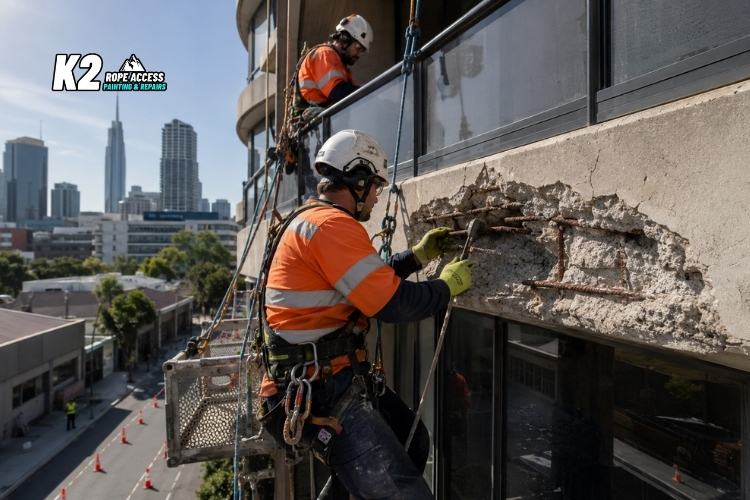
- exposed reinforcement
- recurring moisture marks near damaged sections
These issues may point to corrosion, substrate failure, water penetration or other concrete deterioration causes that need more than a cosmetic fix.
What usually causes concrete deterioration
There is no single explanation for every defect. In practice, most problems come from a combination of age, exposure and unresolved building issues.
Typical concrete deterioration causes include moisture ingress, reinforcement corrosion, poor drainage, carbonation, chloride exposure, movement, inadequate cover and previous repairs that did not address the full defect properly. On coastal or weather-exposed buildings, the process can accelerate significantly.
This is why concrete crack repair should never be treated automatically as a standalone solution. A crack might be superficial, but it might also be connected to movement, water entry or wider substrate stress. The same goes for concrete spalling repair. The spalled area is often only the visible edge of a bigger issue.
Concrete repair is not always the same as restoration
Owners often use repair terminology broadly, but there is a practical difference between minor remedial works and wider concrete restoration.
A local repair may involve removing unsound material, treating reinforcement, reinstating the profile and applying a protective system. Broader restoration works may involve repeated defect zones across the façade, associated sealant failures, waterproofing concerns or multiple elevations with declining performance.
That is why the repair strategy should reflect the condition of the building, not just the most obvious damaged area.
For owners planning broader remedial works, explore specialist concrete spalling repairs and façade remediation support.
Why structural thinking matters before repairs start
Not every defect is structural, but every defect should be reviewed with structural performance in mind. That is where structural concrete repair differs from simpler patch-based work.
When concrete damage is connected to reinforcement corrosion, substrate instability or repeated deterioration, the question is not only how to make it look better. The question is how to restore durability and protect the building’s concrete structural integrity over time.
A proper assessment helps determine whether the job needs localised treatment, broader remedial scope, protective coatings, joint works or staged investigation before repairs begin. That is also one of the reasons experienced concrete repair contractors are valuable. They should be able to identify whether a defect is isolated or part of a broader façade problem.
What affects the cost of concrete repair
The cost of concrete repair depends on more than the size of the damaged patch. Access, height, investigation requirements, repair depth, reinforcement condition, repair methodology, protective coatings and site complexity all influence the final scope.
A small defect in a hard-to-access location can cost more to address properly than a larger defect in an easy ground-level area. That is why budget planning should be based on realistic site conditions rather than simple square-metre assumptions.
This is particularly relevant for property management concrete repair decisions, where managers may need to compare repair urgency, access logistics and long-term maintenance implications across multiple areas of the building.
When concrete resurfacing helps and when it does not
Some owners look at concrete resurfacing as a way to refresh worn areas, but resurfacing is not a substitute for proper remedial work where concrete is already delaminating, cracking through or spalling.
It can improve appearance in the right situation, but it does not fix corrosion, active moisture problems or compromised substrate conditions. If the underlying cause remains, the surface treatment can fail sooner than expected.
Preventative concrete maintenance is often cheaper than delayed repair
One of the most practical parts of building maintenance concrete planning is early intervention. Waiting for visible failure to spread usually increases cost, disruption and scope.
Good preventative concrete maintenance may include routine inspections, early crack treatment where appropriate, monitoring water ingress, checking surrounding joints and coatings, and addressing small failures before they become larger spalling repairs. For commercial and strata assets, that kind of planning supports better budgeting and reduces reactive repair pressure later.
If you need help assessing current defects or planning the right next step, speak with a concrete repair specialist about your building.
Conclusion
Concrete damage should never be treated as a surface-only problem without proper review. Whether the issue is cracking, spalling, corrosion or broader deterioration, the right repair strategy depends on understanding the cause, the extent and the long-term risk to the building.
For owners and managers, the goal is not simply to patch visible defects. It is to protect durability, reduce repeat failures and support the building’s long-term performance. If your property is showing early warning signs, request advice on concrete repair and spalling remediation.
Move from research to the right remedial scope
Related K2RA insights

Need this assessed on an actual building?
Send the building location, photos, defect information and available scope documents. K2RA can review the project context and help determine the next practical step.