Building Painting: How to Protect and Upgrade Commercial Façades
Building painting for commercial façades is about more than colour. Learn how preparation, coatings and façade repairs protect and upgrade building exteriors.
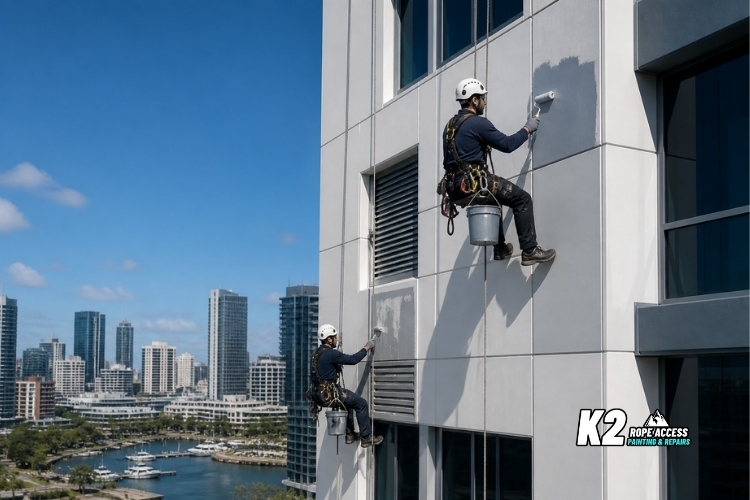
Building Painting: How to Protect and Upgrade Commercial Façades starts with one simple idea: paint should protect the asset, not just improve how it looks.
For commercial, strata and multi-level buildings, painting is rarely just a cosmetic job. The façade is constantly exposed to UV, rain, wind, coastal air, pollution and movement in the building structure. When the wrong coating system is used, or preparation is rushed, the result is often peeling paint, water ingress, cracking, staining and expensive rework.
A well-planned commercial building painting project should upgrade the building exterior, protect commercial facades and extend the life of the substrate beneath the paint. That is why owners corporations, building managers and asset owners need to think beyond colour selection and focus on preparation, access, defects and long-term coating performance.
Why commercial building painting is different from standard repainting
Commercial building painting involves larger surfaces, more complex access requirements and higher performance expectations than a standard residential repaint. A contractor may need to work across rendered walls, concrete, FC sheeting, balcony edges, parapets, plant rooms, exposed slabs and difficult high-access areas.
This is where building facade painting becomes part of a broader maintenance strategy. If the façade has cracks, concrete spalling, failed sealants or moisture issues, painting over the surface will not solve the problem. It may hide it temporarily, but the defect will usually return.
Before starting exterior commercial painting, the building should be assessed for coating failure, water entry points, movement cracks and exposed reinforcement. For complex façades, specialist façade remediation and painting services can help make sure the painting works are supported by proper repair and preparation. The Collaroy façade remediation project shows this type of work in practice.
Signs your commercial building needs painting or façade attention
Not every building needs a full repaint immediately. However, visible deterioration is often a warning that the façade system is no longer performing as it should.
Common signs your commercial building needs painting include fading, chalky residue, peeling coatings, bubbling paint, staining below windows or joints, visible cracks, rust marks, damp patches and uneven colour. In coastal or exposed locations, deterioration can appear faster because salt, wind and moisture place extra stress on coatings.
Another important sign is recurring water ingress. If leaks keep appearing after rain, the issue may not be the paint alone. Failed sealants, cracks, porous surfaces or damaged membranes may be contributing to the problem.
Preparation is what makes building facade painting last
The most successful commercial painting services usually spend more time preparing the surface than applying the final coats. Preparation may include pressure washing, scraping failed paint, sanding, treating rust, repairing cracks, removing loose material, replacing sealants and priming exposed areas.
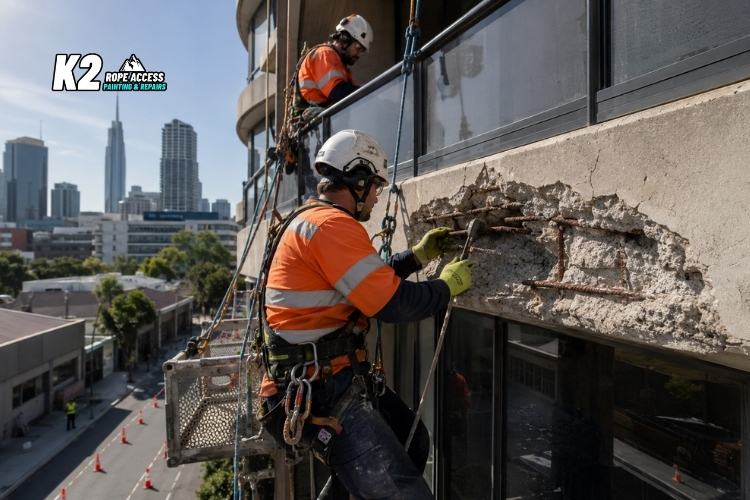
For concrete buildings, this stage is especially important. Spalling concrete, exposed steel reinforcement or hollow sections need repair before any coating system is applied. If the substrate is weak, even the best paint for commercial building exteriors will struggle to perform.
Where cracking or concrete deterioration is present, professional concrete spalling repair services should be considered before painting begins. This helps protect the structure and reduces the chance of paint failure caused by unresolved defects.
Choosing the right commercial exterior paint types
There is no single coating that suits every building. The best system depends on the substrate, location, exposure, existing coating condition and the level of protection required.
Acrylic exterior coatings
Acrylic coatings are commonly used for commercial façades because they offer good colour retention, flexibility and weather resistance. They are suitable for many rendered and masonry surfaces when the substrate is properly prepared.
Elastomeric and membrane coatings
Elastomeric coatings and membrane systems are often used where flexibility, waterproofing and crack-bridging performance are required. These systems can help with weatherproofing commercial buildings, especially where movement or minor cracking is expected.
Anti-corrosion primers and protective systems
Where metal elements, fixings or exposed reinforcement are present, anti-corrosion treatment may be required before repainting. This is particularly relevant for coastal buildings or structures with visible rust staining.
A qualified contractor should recommend a coating system based on the condition of the building, not just the cheapest product available.
How often should commercial buildings be painted?
The repainting cycle depends on the building’s exposure, coating system, surface condition and maintenance history. As a general guide, many commercial façades may need repainting every 7 to 10 years, but exposed coastal properties, poorly prepared surfaces or low-quality coating systems may fail sooner.
The better question is not only how often should commercial buildings be painted, but whether the existing façade is still protected. A building may look acceptable from a distance while the coating system is already failing around joints, corners, balconies or high-exposure elevations.
Regular inspections can help identify early deterioration before it becomes a larger capital works issue.
Cost to paint a commercial building facade
The cost to paint a commercial building facade varies widely because each project has different access, preparation and repair requirements. Key cost factors include building height, façade size, substrate condition, rope access requirements, coating specification, number of coats, safety documentation and whether remedial works are needed before painting.
A low quote may look attractive at first, but if it excludes repairs, preparation or suitable coatings, it can become more expensive later. For strata and commercial assets, value should be measured by durability, safety, documentation and long-term performance — not just the upfront price.
For buildings that require rope access, façade repairs or a more technical scope, K2 Rope Access commercial façade specialists can help assess the building and recommend a practical project approach.
How to choose a commercial painting contractor
Choosing the right contractor is one of the most important decisions in a façade painting project. Look for a team with experience in commercial exterior paint types, façade restoration and painting, access planning, safety systems and remedial building works.
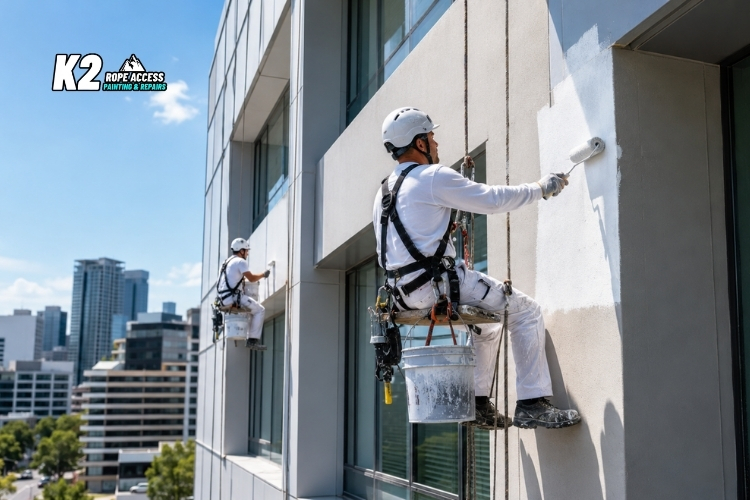
A reliable contractor should be able to explain the preparation process, identify defects, recommend suitable coatings and provide a clear scope. For multi-level buildings, rope access capability can also reduce the need for bulky scaffold in suitable situations, helping minimise disruption for occupants and building operations.
Ask whether the contractor understands concrete repairs, sealant issues, waterproofing risks and coating compatibility. A commercial façade is a system. The paint is only one part of it.
Building painting should protect the asset for years, not months
Good building painting upgrades the appearance of a commercial property, but its real value is protection. When preparation, repairs, coating selection and access are handled properly, the façade becomes more resilient against weather, moisture and daily exposure.
For building owners and strata managers, the smartest approach is to treat painting as part of façade maintenance, not an isolated cosmetic project. That means inspecting the building carefully, repairing defects first and choosing a contractor who understands both presentation and performance.
If your building is showing signs of coating failure, cracking or façade deterioration, contact K2RA for commercial façade painting and remediation advice before the problem becomes harder to control.
Move from research to the right remedial scope
Related K2RA insights

Need this assessed on an actual building?
Send the building location, photos, defect information and available scope documents. K2RA can review the project context and help determine the next practical step.