Preparing a Façade Remediation Brief for a Canberra Building
Prepare a useful project brief before discussing façade remediation for a Canberra building. Organise the available evidence, distinguish confirmed requirements from open questions and clarify the decision your team needs to make.
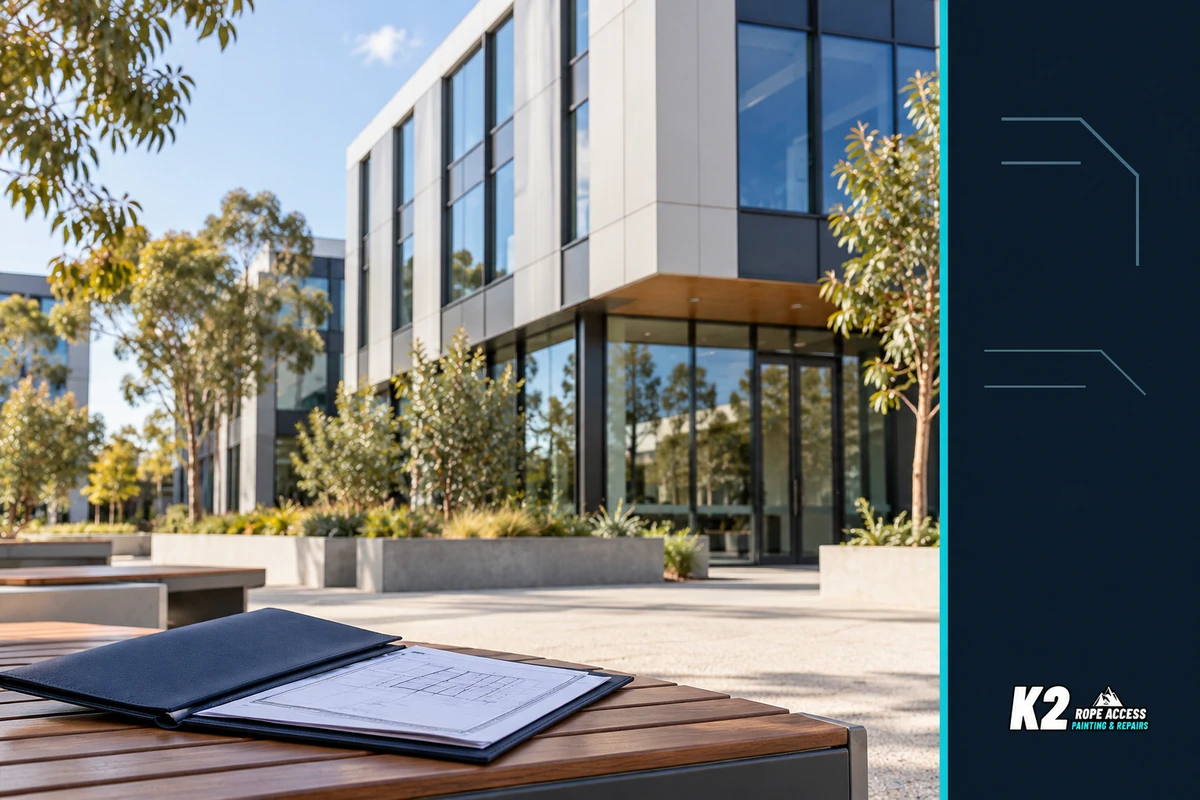
A useful façade remediation brief explains the building, the concerns already recorded and the decision your team needs help making. For a Canberra property, include the ACT location, available consultant documents, affected elevations and known access constraints. For example, a facilities manager seeking a quotation for repairs above an occupied entrance should identify the relevant report, the areas it covers and any unresolved scope questions before asking a contractor to price the work.
Identify the asset and the decision your team needs to make
Begin with the building address, suburb, asset type and the organisation requesting the work. Identify whether the enquiry concerns one building, several blocks or selected external elements within a larger property.
Describe the decision in a sentence. Your team might need to establish the next assessment step, obtain a quotation against a consultant’s specification or understand whether a proposed package is sufficiently defined to seek approval.
These are different requests. A contractor receiving an early enquiry needs to know which information remains uncertain. A contractor pricing a documented package needs a clear reference to the documents and areas included.
State who will review the response and who can authorise the next stage. A strata manager may coordinate the enquiry while the owners corporation considers the proposed expenditure. Record the actual arrangement for your property without assuming that the person submitting the brief can approve the work.
Include any genuine decision deadline and explain what it relates to, such as a scheduled committee meeting. Keep it separate from a requested construction start date.
Summarise known defects and available consultant information
Organise concerns by location so the recipient can connect each item with the supporting evidence. “Cracking on the western elevation near level four” is more useful than “the building needs concrete repairs”.
Describe what has been observed without assigning an unconfirmed cause. Staining, visible cracking, deteriorating finishes and reported water entry can be recorded as observations. Whether they are connected, and what treatment is appropriate, may require further assessment.
For each consultant document, note its title, author, date and revision. Identify whether it is an inspection report, defect schedule, specification or another document. Include relevant drawings and photographs where you have permission to share them.
Make the document status clear. A preliminary report or superseded specification should not be presented as the current instruction for pricing.
Assemble the information safely
Use records already held and observations available from normal, safe locations:
- Building address, suburb and affected block or elevation.
- Location-labelled photographs taken from accessible areas.
- Available defect reports, specifications and drawings.
- Previous repair records relevant to the same areas.
- Known gaps in the documentation.
- A short list of questions requiring clarification.
Do not access roofs, lean beyond balcony barriers or approach damaged material to complete the brief. If photographs cannot be obtained safely, describe the location and explain that further access assessment is needed.
Describe access and operating constraints
Explain how the property functions around the proposed work. Relevant details may include occupied apartments, commercial trading hours, public entrances, loading areas, shared courtyards and other scheduled contractors.
Identify constraints the contractor needs to assess, without selecting an access method yourself. Existing roof-access information, anchor records or previous access arrangements can be included as background. Their existence does not establish suitability for the new scope.
Ask what additional information or site assessment is needed before access arrangements can be proposed. Avoid making rope access, scaffolding or another method a fixed requirement unless the project documentation has already established that requirement appropriately.
For an ACT enquiry, request confirmation of project suitability, deployment arrangements and any information needed before a site visit can be discussed. Do not assume availability or mobilisation dates from general service coverage.
Mention practical coordination issues early: who can arrange authorised entry, which spaces have restricted availability and who represents tenants or residents. Share operational constraints without including access codes, personal schedules or unnecessary occupant details.
Separate confirmed scope from open questions
Structure the brief so a recipient can distinguish documented requirements from items still under consideration.
| Brief section | What to record |
|---|---|
| Confirmed requirements | Areas and work described in the current documents issued for the enquiry. |
| Assumptions to test | Information that has not yet been confirmed, such as the extent of similar defects elsewhere. |
| Open questions | Matters requiring assessment, consultant clarification or a separate proposal. |
| Exclusions and interfaces | Areas outside this request and work managed by another party. |
For example, in a hypothetical brief, a consultant’s schedule might identify repairs to selected balcony edges while the manager also reports staining elsewhere. Keep the scheduled repairs and the additional concern separate. Ask how the latter should be assessed rather than silently extending the repair package.
Clarify whether you are requesting an assessment proposal, a preliminary budget discussion or a quotation for defined work. Ask the contractor to state assumptions and exclusions in its response.
Where engineering input is required, establish who would appoint the consultant and which services would be commissioned separately. A contractor’s quotation should not be treated as confirmation that an unresolved engineering question has been answered.
Prepare the enquiry and decision record
Bring the information together in a short covering brief with clearly named attachments. Give it a date and version so later responses can be matched to the information supplied.
A useful covering note states the decision sought, documents attached, confirmed areas, unresolved questions and requested next step. Ask the recipient to identify missing information and explain the basis of any proposal.
K2 Rope Access’s Canberra and ACT façade remediation services are a relevant pathway for discussing high-access remedial work, subject to the building, scope and deployment requirements. K2RA is a remediation contractor; any engineering consultancy required should be identified and commissioned appropriately.
Keep the response with the brief. Record what was proposed, what remains unresolved, who will make the next decision and which document version will form the basis of further discussion. If the brief changes, identify the changes before requesting revised pricing.
Frequently asked questions
Can we enquire without an engineer’s report?
Yes. Provide the location, observed concerns and safe photographs available. Explain that no report is held and ask what assessment or specialist input may be needed before a repair scope can be defined.
Can the same brief be used for several Canberra buildings?
A shared format can help, but identify each building separately. Keep its defects, documents, access constraints and requested decision distinct so a response does not rely on assumptions carried over from another asset.
Does confirmed ACT coverage mean a site visit or start date is available?
No specific date should be assumed. Ask the contractor to confirm project suitability, the information needed and proposed arrangements for the next step.
Prepare your enquiry with the building location, safely obtained photographs, available reports and the decision your team needs to make. Leave out sensitive personal information and access credentials.
Move from research to the right remedial scope
Related K2RA insights


Need this assessed on an actual building?
Send the building location, photos, defect information and available scope documents. K2RA can review the project context and help determine the next practical step.