Epoxy Concrete Repair: When to Use It for Cracks, Strengthening and Structural Damage
Epoxy Concrete Repair: When to Use It for Cracks, Strengthening and Structural Damage explains when epoxy injection, sealing and bonding are suitable. Learn when epoxy works, when it does not, and why proper diagnosis matters.
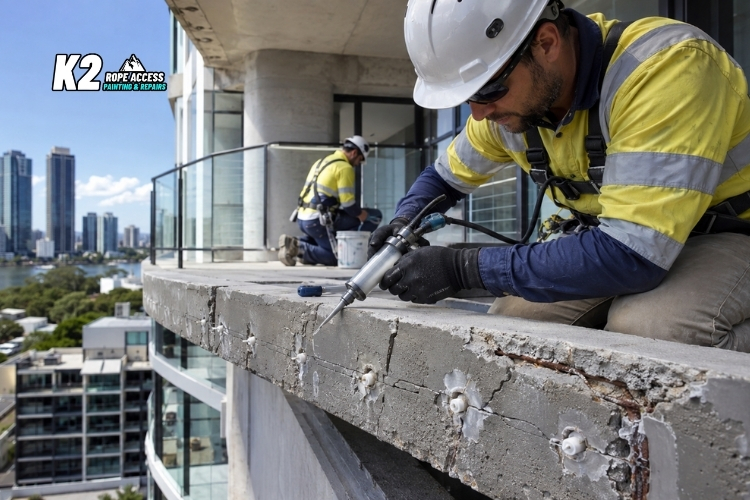
Epoxy Concrete Repair: When to Use It for Cracks, Strengthening and Structural Damage is about choosing the right repair method for the actual problem, not simply filling a visible gap.
Epoxy concrete repair is often recommended when concrete cracks need more than a surface patch. Used correctly, epoxy can bond cracked concrete, restore load transfer and seal defects before moisture causes deeper deterioration. Used in the wrong situation, however, it can trap moisture, fail under movement or hide a structural issue that needs proper remediation. For strata, commercial and multi-storey buildings, the decision should always start with diagnosis.
What is epoxy concrete repair?
Epoxy concrete repair uses a two-part resin system designed to bond strongly to concrete. Depending on the product and method, it may be used as an epoxy concrete crack sealer, an injection resin, a bonding agent or a high strength epoxy concrete patch for selected repair areas.
The main advantage is adhesion. Epoxy can create a rigid, high-strength bond, making it useful where cracks are stable and structural continuity matters. This is why structural concrete epoxy repair is common in engineered repair scopes, especially where cracks affect beams, slabs, columns, walls or façade elements.
When to use epoxy on concrete cracks
The best use of epoxy is on clean, dry and stable cracks where the goal is to bond the two sides of the concrete back together. It is not automatically suitable for every crack.
Stable structural cracks
Structural crack repair concrete projects may use epoxy where an engineer confirms the crack is no longer moving and the concrete can be bonded safely. In these cases, epoxy crack injection concrete methods can help restore strength and reduce the risk of water entering the crack.
Fine cracks needing deep penetration
Low viscosity epoxy concrete repair is often used for fine cracks because the resin can travel deeper into narrow openings. This makes it useful when surface sealing alone would not reach the full depth of the defect.
Cracked concrete requiring bonding
Bonding cracked concrete with epoxy can be effective where the crack is clean and properly prepared. Surface contamination, dampness or active movement can reduce performance, so preparation matters as much as the product itself.
If your building has cracking linked to façade deterioration, spalling or exposed reinforcement, it is worth getting expert advice from concrete spalling repair specialists before choosing an epoxy-only repair.
When epoxy is not the right solution
Epoxy is strong, but it is not flexible. If a crack is still moving because of thermal movement, settlement or structural stress, a rigid epoxy repair may crack again. It can also be the wrong choice where active water ingress is present, unless the correct injection system is specified.
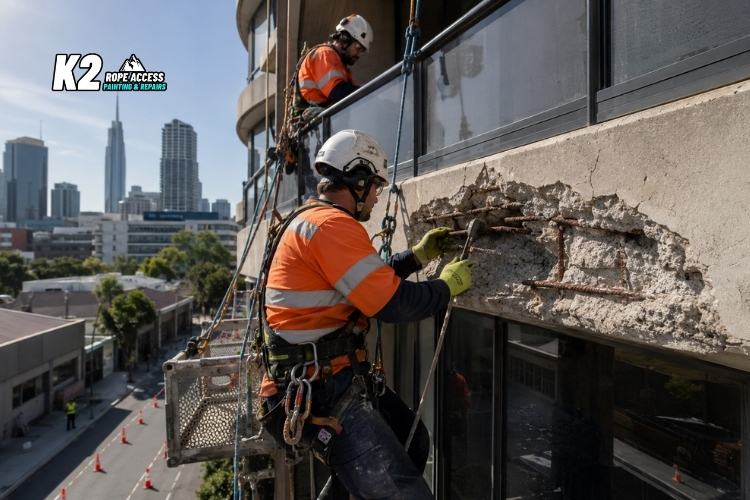
Epoxy resin concrete repair is also not a complete solution for concrete cancer. If reinforcement is corroding, the damaged concrete usually needs to be broken out, the steel cleaned or treated, corrosion protection applied and the concrete rebuilt with suitable repair mortar. Simply sealing the surface with epoxy may leave the root cause untouched.
Epoxy vs mortar concrete repair
A common mistake is treating epoxy and mortar as interchangeable. They solve different problems.
Epoxy is mainly used for bonding, sealing and injection. Repair mortar is used to rebuild missing concrete, restore cover and reinstate the original profile after damaged material has been removed.
In epoxy vs mortar concrete repair decisions, the right answer may involve both. For example, a concrete spalling repair may require breakout and mortar reinstatement, while nearby stable cracks may be treated with structural epoxy injection. The repair scope depends on the defect, the exposure conditions and the structural role of the concrete element.
For larger façade or balcony issues, façade remediation and concrete repair services can help address both the visible damage and the moisture pathways that caused it.
Can epoxy strengthen damaged concrete?
Epoxy concrete strengthening can help in specific cases, especially where cracks need to regain load transfer. However, epoxy should not be treated as a universal strengthening product. If the concrete has lost section, reinforcement is corroded or the structure has moved, an engineer may need to design a broader repair.
To repair structural damage concrete epoxy systems must be selected carefully. The repair may require structural assessment, crack mapping, injection ports, controlled pressure injection and curing checks. On commercial or strata buildings, documentation is also important for asset records, insurance and future maintenance planning.
What the epoxy crack injection process involves
A typical structural epoxy injection process may include:
- inspecting and mapping the crack
- confirming whether the crack is active or stable
- cleaning and preparing the surface
- sealing the crack face
- installing injection ports
- injecting epoxy under controlled pressure
- allowing proper cure time
- removing ports and finishing the surface
This process may look simple from the outside, but poor preparation can lead to incomplete penetration or weak bonding. The concrete must be assessed before repair, especially where cracks appear near spalling, leaks, rust staining or hollow concrete.
Epoxy repair in high-rise and commercial buildings
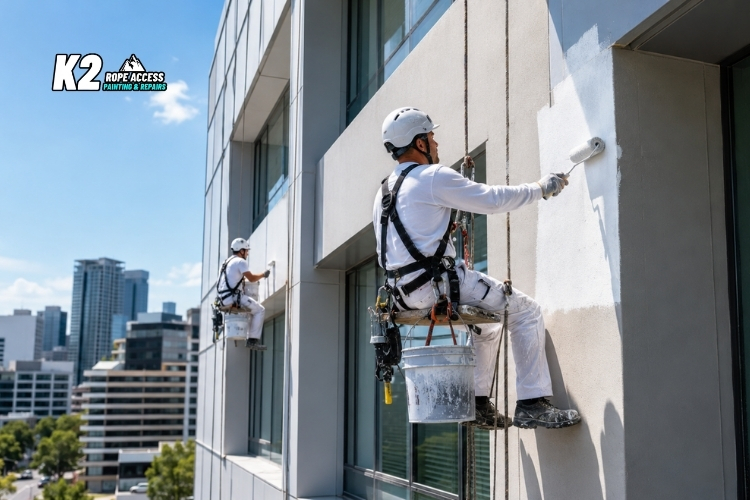
In multi-level buildings, the challenge is not only material selection. Access, safety, resident disruption and long-term façade performance all matter. Rope access can be useful where cracks, spalling or façade defects are located on external elevations, balcony edges or difficult-to-reach concrete areas.
The best repair outcome comes from combining the right access method with the right technical scope. That may include epoxy concrete repair, spalling remediation, crack sealing, waterproofing interfaces, coating systems and expansion joint repairs.
If you manage a strata or commercial asset with cracking, spalling or suspected concrete cancer, speak with K2 Rope Access through their specialist concrete repair and spalling remediation team.
Final thoughts on epoxy concrete repair
Epoxy concrete repair can be highly effective when the crack is stable, dry and suitable for bonding. It can help seal defects, restore strength and prevent moisture from worsening the damage. But it is not a shortcut for every concrete problem.
For structural cracks, spalling, concrete cancer or façade deterioration, the safest approach is to diagnose the cause first. Once the source of movement, moisture or corrosion is understood, epoxy can be used where it genuinely supports a durable repair.
Move from research to the right remedial scope
Related K2RA insights

Need this assessed on an actual building?
Send the building location, photos, defect information and available scope documents. K2RA can review the project context and help determine the next practical step.