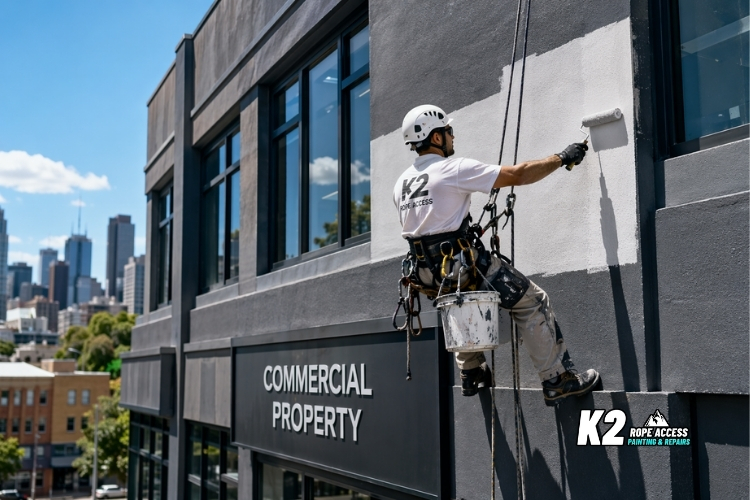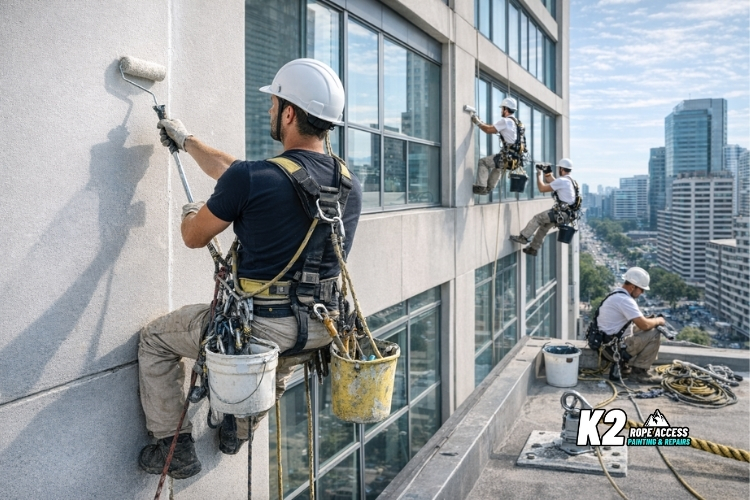

Is painting a commercial building a capital improvement? Usually, painting by itself is treated as a repair or maintenance cost rather than a capital improvement, but the answer can change when the painting is part of a larger upgrade, restoration or tenant improvement project.
That is why this question causes so much confusion for owners, asset managers and finance teams. The real issue is not just paint. It is the broader commercial building painting tax treatment. If the work simply restores appearance, it may be deductible. If it improves, adapts or restores a building as part of a larger capital project, it may need to be capitalised and depreciated. For K2RA clients planning exterior renewal, that distinction matters just as much as the coating system or access method.
Commercial painting capital improvement or repair: the rule of thumb
In practical terms, commercial painting capital improvement or repair comes down to what the work is really doing. If the painting is ordinary upkeep, it often falls into maintenance or repair. If it is tied to a broader building improvement, it may become part of the capital cost.
This is why people often ask, is painting considered a repair or capital improvement? The answer is usually “repair” when the work is routine repainting. It becomes more likely to be a capital item when it is bundled into facade restoration, structural correction, major fit-out works or substantial building upgrades.
If you are reviewing an exterior scope that includes access planning, coating renewal and broader facade concerns, it is worth exploring facade remediation and painting services for commercial buildings before treating the project as a simple repaint.
When painting is more likely to be deductible
A painting commercial property tax deduction is more likely when the work is recurring maintenance rather than a betterment. For example, routine maintenance painting vs capital improvement is often the key distinction. Repainting weathered external surfaces, refreshing tired internal common areas or carrying out standard presentation works may be expensed, depending on the taxpayer’s facts and accounting treatment.
That is also why many owners ask, capitalize or expense painting a building? If the work is just keeping the property in ordinary operating condition, expensing is often the more likely treatment. This can apply to some interior painting office building tax deductible scenarios where the work is cosmetic and not part of a larger fit-out or reconstruction.
When painting may need to be capitalised
Painting is more likely to be capitalised when it directly benefits a broader capital works package. That can happen with exterior painting capital improvement commercial projects tied to major facade upgrades, structural remediation, substantial restorations or full tenant reconfigurations.
This is also where commercial property maintenance vs capital improvement becomes a real accounting question. If the repaint follows a major facade overhaul, accompanies replacement works or forms part of a substantial building improvement, finance teams may decide the painting cost belongs with the overall capital project.
A similar issue comes up with tenant improvements painting commercial space. If the painting is part of a tenant improvement package that changes or upgrades the space in a meaningful way, the tax treatment may differ from a simple maintenance repaint.
Can you capitalize painting a commercial building?
Yes, can you capitalize painting a commercial building? In some situations, yes. But that does not mean you always should. The deciding factor is whether the painting stands alone as maintenance or whether it supports a larger improvement to the property.
This is where IRS rules for painting commercial property often come into the conversation. The IRS generally treats painting by itself as a current repair expense, but when painting directly benefits or is incurred as part of a capital improvement, it can become part of that capitalised cost. That is the practical answer behind repainting commercial building depreciation: painting is not usually depreciated on its own unless it has been capitalised as part of a larger improvement.
How to deduct commercial painting costs properly
For owners asking how to deduct commercial painting costs, the first step is to define the scope accurately. Was the work routine repainting? Was it part of a remediation project? Did it accompany structural, waterproofing or fit-out works? The accounting treatment should follow the real nature of the project, not just the invoice label.
That is one reason contractors matter. A properly scoped exterior project makes it easier for finance and tax advisers to assess whether the work looks like maintenance or capital expenditure. If your building is showing coating failure, surface defects or broader facade deterioration, speak with K2RA about the full facade scope before assuming it is only a paint expense.
The practical takeaway for owners and managers
So, is painting a commercial building a capital improvement? Usually not when it is routine repainting. More often, it is a repair or maintenance cost. But when painting forms part of a broader upgrade, restoration or tenant improvement, the answer can shift.
The safest approach is to look at the whole project, not just the paint line item. If you are weighing commercial building painting tax treatment, involve your accountant early and make sure the scope reflects the real building condition. And if the project includes access complexity, coating failure or facade-related defects, review your commercial painting and remediation options with K2RA before committing to the wrong scope.