
How much does commercial painting cost? The short answer is that it depends on the size of the building, the condition of the surfaces, the access method, the coating system and whether the job is a simple repaint or part of a wider remediation scope.
For building owners, strata managers and facilities teams, that is where the real challenge starts. The commercial painting cost of one project can look completely different from another, even when the buildings seem similar at first glance. Height, facade condition, site access, protection requirements and prep work all shape the final number. In Sydney, NSW and the ACT, exterior projects on live buildings often need more planning than people expect, which is why the cheapest quote is not always the most cost-effective one.
What affects the cost to paint a commercial building?
If you are trying to estimate the cost to paint a commercial building, start with the factors that drive pricing in the real world.
Building size and scope
Larger buildings usually mean more labour, more materials and longer project duration. But total area alone does not tell the full story. A straightforward warehouse can price very differently from a multi-level facade with difficult access points.
Surface condition and preparation
This is one of the biggest cost variables. The average cost of commercial painting rises when surfaces need washing, patching, crack repairs, sealant replacement or substrate treatment before coatings can be applied. If peeling paint, water ingress or concrete defects are present, the job may be closer to facade remediation than a standard repaint.
Access method
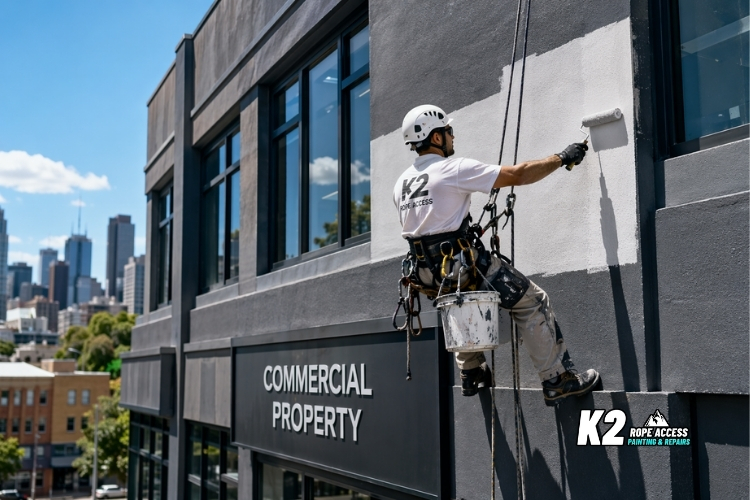
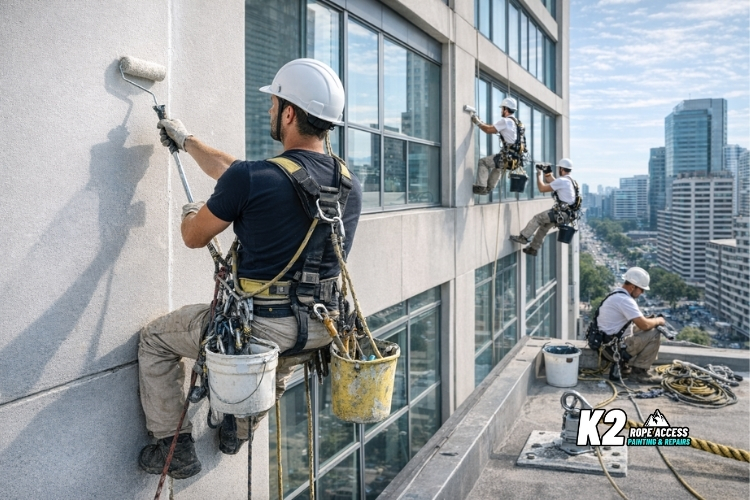
For high-rise and multi-level sites, access can significantly affect commercial painter prices. Rope access, scaffolding, elevated work platforms and staged site setups all influence labour, timing and disruption differently. On many facade projects, access is one of the biggest reasons the final price changes.
Coating system and durability requirements
Higher-performance coatings usually cost more upfront, but they may deliver better life-cycle value. Exterior buildings in exposed conditions often need a more robust system than a low-risk internal repaint.
If your building has coating failure or visible exterior defects, it is often smarter to review facade remediation and painting services before comparing paint-only quotes.
Is commercial painting cost per square foot the best way to estimate price?
A lot of owners search for commercial painting cost per square foot, and it can be a useful starting point. But it should be treated as a rough guide, not a final answer.
Square-foot pricing can work reasonably well for simple interior jobs or open-plan spaces. It becomes less reliable when the project includes facade access, difficult elevations, staging constraints or remedial prep. That is why a generic commercial painting cost estimator can only go so far. It may help frame expectations, but it will not replace a site-based assessment.
How to price a commercial painting job properly
If you are wondering how to price a commercial painting job, the process should begin with the real condition of the building, not just a measurement.
A proper quote usually considers:
- total paintable area
- substrate condition
- access complexity
- prep and repair work
- coating specification
- weather exposure
- protection of surrounding areas
- project staging and live-site constraints
This is why strong commercial painting quotes are built from scope, inspection and delivery method rather than guesswork. For owners, that matters because a vague estimate can lead to variation claims later.
Cost to paint commercial exterior vs interior work
The cost to paint commercial exterior surfaces is often higher than interior painting because exterior works are more exposed to access issues, weather, site coordination and coating performance requirements.
Exterior painting may involve facades, balcony edges, exposed concrete, steel elements or difficult elevations. Interior work is not always simple, but it is often easier to stage and protect.
For example, the cost to paint a warehouse interior may be more straightforward when the space is open and access is clear. By contrast, office building painting cost per sq ft can vary more if the building is occupied, staged floor by floor or linked to fit-out requirements. A retail store painting cost can also rise quickly when the program must work around trading hours, signage, customer access and finish expectations.
Why commercial painting labour rates vary so much
Many people focus on materials, but commercial painting labor rates often drive the bigger share of project cost. Labour changes based on height, complexity, prep intensity, access method and the experience of the contractor.
A low labour rate can look attractive on paper, but if the team underestimates prep, site coordination or access planning, the job can become more expensive over time. That is why the most useful approach is to compare scope quality, not just headline price.
The practical answer for owners and managers
So, how much does commercial painting cost? There is no single rate that fits every building. The true cost depends on access, condition, prep, coatings and whether the work is routine maintenance or part of a larger facade upgrade.
For building owners and managers, the smartest move is to get clear on the scope first. If the project is a simple repaint, pricing is usually easier. If there are signs of cracking, failed coatings, deterioration or access complexity, the job should be assessed more carefully before a budget is locked in.
If you want clearer pricing guidance for your site, you can request a commercial facade painting assessment or speak with K2RA about your building and quote requirements. A well-scoped quote usually leads to a better outcome than chasing the lowest number.