What Is Commercial Painting? A Practical Guide for Building Owners and Managers
What is commercial painting? This guide explains how commercial painting works, how it differs from residential work, and what building owners and managers should consider before starting a project.
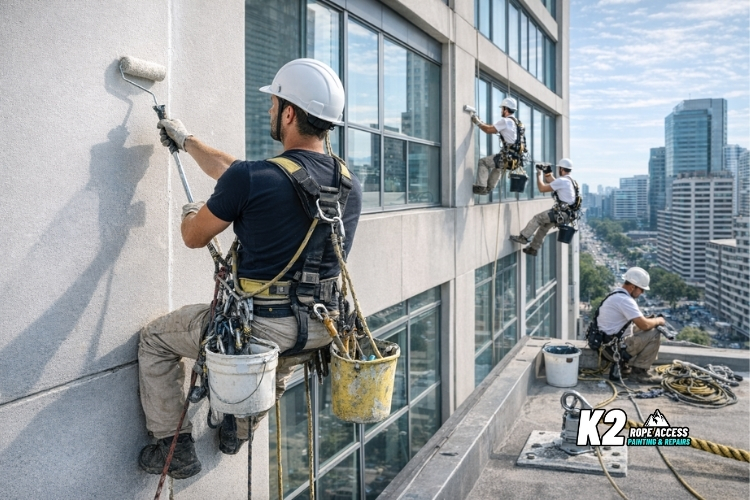
What is commercial painting? It is the planning, preparation and application of specialised paint systems on business, strata and public buildings to protect surfaces, improve presentation and support long-term maintenance.
For building owners and managers, commercial painting is not just about making a property look fresh. It is part of asset protection. A well-run commercial building painting project can improve durability, reduce future repair costs and keep a property aligned with tenant, resident and stakeholder expectations. In markets like Sydney, NSW and the ACT, where buildings face sun, rain, wind and general wear, the difference between a quick repaint and a properly managed scope matters.
What commercial painting actually includes
Commercial painting services cover far more than a crew arriving with rollers and paint tins. Depending on the building and the scope, they can include surface preparation, crack repairs, wash-downs, priming, sealant checks, coating selection and staged access planning.
For many commercial properties, the work is split between exterior commercial painting and interior commercial painting. Exterior scopes focus on facades, exposed concrete, steel, cladding, balustrades and weather-exposed surfaces. Interior scopes often involve common areas, foyers, corridors, amenities, plant rooms and tenancy-related upgrades.
For larger or more complex sites, especially multi-storey buildings, painting is often tied to maintenance strategy. That is why many owners and managers now look for commercial facade remediation and painting services rather than a simple cosmetic repaint.
Commercial vs residential painting: why the approach is different
One of the biggest misunderstandings in the market is assuming commercial vs residential painting is mainly about project size. Size matters, but it is not the main difference.
Commercial property painting usually involves more stakeholders, stricter safety controls, more complex access requirements and coatings that need to perform under heavier use or harsher exposure. A residential painter may be experienced with houses, but commercial painting contractors are expected to manage live sites, coordinate around tenants or residents, work with property teams and understand compliance, access and staging.
That is especially true when painting for property managers, strata committees and facility teams. The job is not only to paint. It is to deliver the works with minimal disruption, clear communication and a scope that makes sense for the building.
How commercial painting fits into building maintenance
For many owners, commercial painting sits inside a broader maintenance program. That is where facility maintenance painting becomes relevant. Instead of waiting for visible deterioration to become a larger issue, maintenance painting can be planned around wear patterns, coating performance and access opportunities.
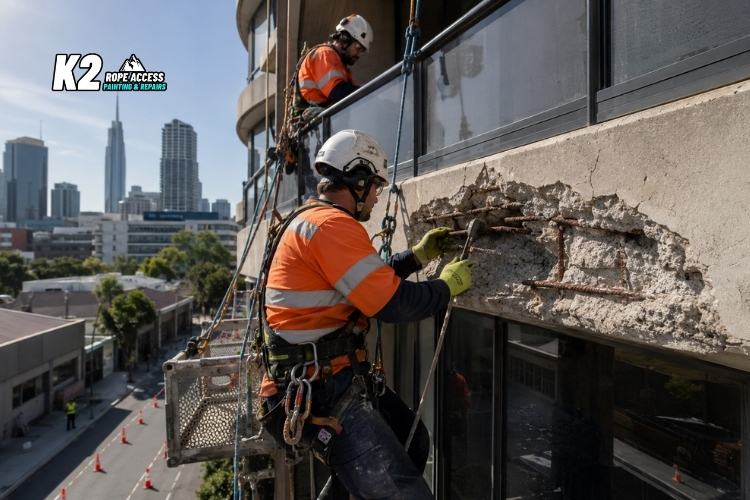
On external buildings, this often overlaps with remediation. Peeling paint may be linked to substrate issues, water ingress, failed joints or concrete deterioration. In those cases, a painter alone is not enough. You need a contractor who understands the building envelope, access method and long-term coating performance.
If your site already has signs of facade wear, failed coatings or defect-related concerns, it is worth requesting a facade remediation and painting review before locking in a paint-only scope.
What building owners should look for when hiring a commercial painter
When hiring a commercial painter, start by asking the right questions. What access method will be used? What surface preparation is included? Are the proposed commercial paint coatings suited to the environment? Has the contractor worked on similar building types before?
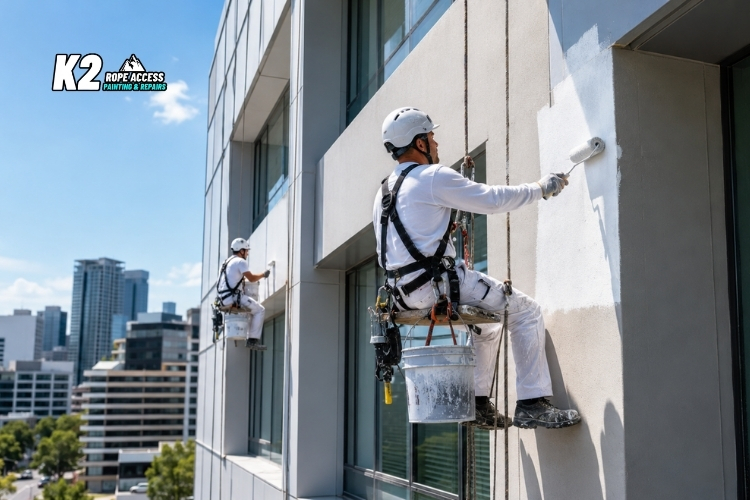
For high-rise or multi-level sites, access can change the entire project. Rope access, elevated work platforms or scaffold each affect cost, staging and disruption differently. For strata and commercial buildings, it is often worth choosing a contractor who understands both painting and remedial building conditions.
You should also ask how the contractor approaches documentation, sequencing and communication. Good commercial painting contractors are rarely the cheapest on paper, but they are often the most reliable over the full project lifecycle.
Planning a commercial painting project properly
Planning a commercial painting project should begin well before the first day on site. The most successful projects usually start with a site assessment, condition review and clear understanding of what the painting works are meant to achieve.
That may include presentation improvement, coating replacement, defect management or part of a staged capital works program. This is also where commercial painting cost estimation becomes more realistic. Accurate pricing depends on access conditions, substrate condition, preparation requirements, coating system, site constraints and project sequencing.
A low quote that ignores these factors can become expensive later. A better approach is to define the actual need first, then price the right scope.
Industrial vs commercial painting: are they the same?
Not quite. Industrial vs commercial painting is another comparison that causes confusion. Industrial painting often relates to plants, heavy infrastructure, factories and specialist protective systems under more aggressive operating conditions. Commercial painting is generally focused on offices, strata buildings, retail, mixed-use sites, public buildings and similar assets.
There can be overlap, especially in coating selection and access complexity, but the building use, stakeholder environment and project goals are often different.
The practical takeaway for owners and managers
If you manage a commercial or strata property, the best view of commercial painting is this: it is a building protection and presentation service, not just a finishing trade. Done well, it supports maintenance planning, protects surfaces and helps preserve asset value.
The more complex the building, the more important it is to choose a contractor who understands access, preparation, coatings and the realities of live-site delivery. If you are weighing up the next stage of commercial building painting, or trying to understand whether your property needs repainting, remediation or both, speak with the K2RA team about your building and the most practical way forward.
Move from research to the right remedial scope
Related K2RA insights

Need this assessed on an actual building?
Send the building location, photos, defect information and available scope documents. K2RA can review the project context and help determine the next practical step.